


Master Your Chaos: The Double Entryway Audit for Seamless Twin Family Storage
Dropping backpacks on the couch again. That’s the sound of another family’s entryway system failing under the pressure of double everything. When you’re managing twins, your entryway isn’t just a transition space—it’s mission control for your entire household logistics operation. A properly designed multiples household management system starts the moment your family walks through the door.
The reality? Most entryway storage twins setups weren’t designed for the unique challenges of managing two children of identical ages, developmental stages, and gear requirements. But here’s what I’ve learned after optimizing hundreds of twin households: the right mudroom system doesn’t just contain chaos—it eliminates it entirely.
The Twin-Specific Entryway Challenge Matrix
Standard single-child storage advice falls apart when you’re dealing with duplicate everything. Twin families face three core entryway complications that require specialized solutions:
Volume Multiplication: Two complete sets of seasonal gear, school supplies, and daily essentials create storage demands that scale exponentially, not linearly.
Identical Item Confusion: When everything looks the same, identification systems become critical for maintaining morning routine efficiency.
Simultaneous Access Patterns: Both children need their items at exactly the same time, creating bottleneck situations that traditional storage layouts can’t handle.
The solution isn’t bigger storage—it’s smarter architecture.
Storage System Architecture for Multiples
Zone-Based Allocation Strategy
Your entryway storage twins system needs three distinct operational zones, each serving a specific function in your family’s daily flow:
The Drop Zone (0-24 inches from entry): Immediate-access storage for items used every single trip. Think keys, daily bags, and emergency supplies. This zone handles the chaos of arrival without letting it spread deeper into your home.
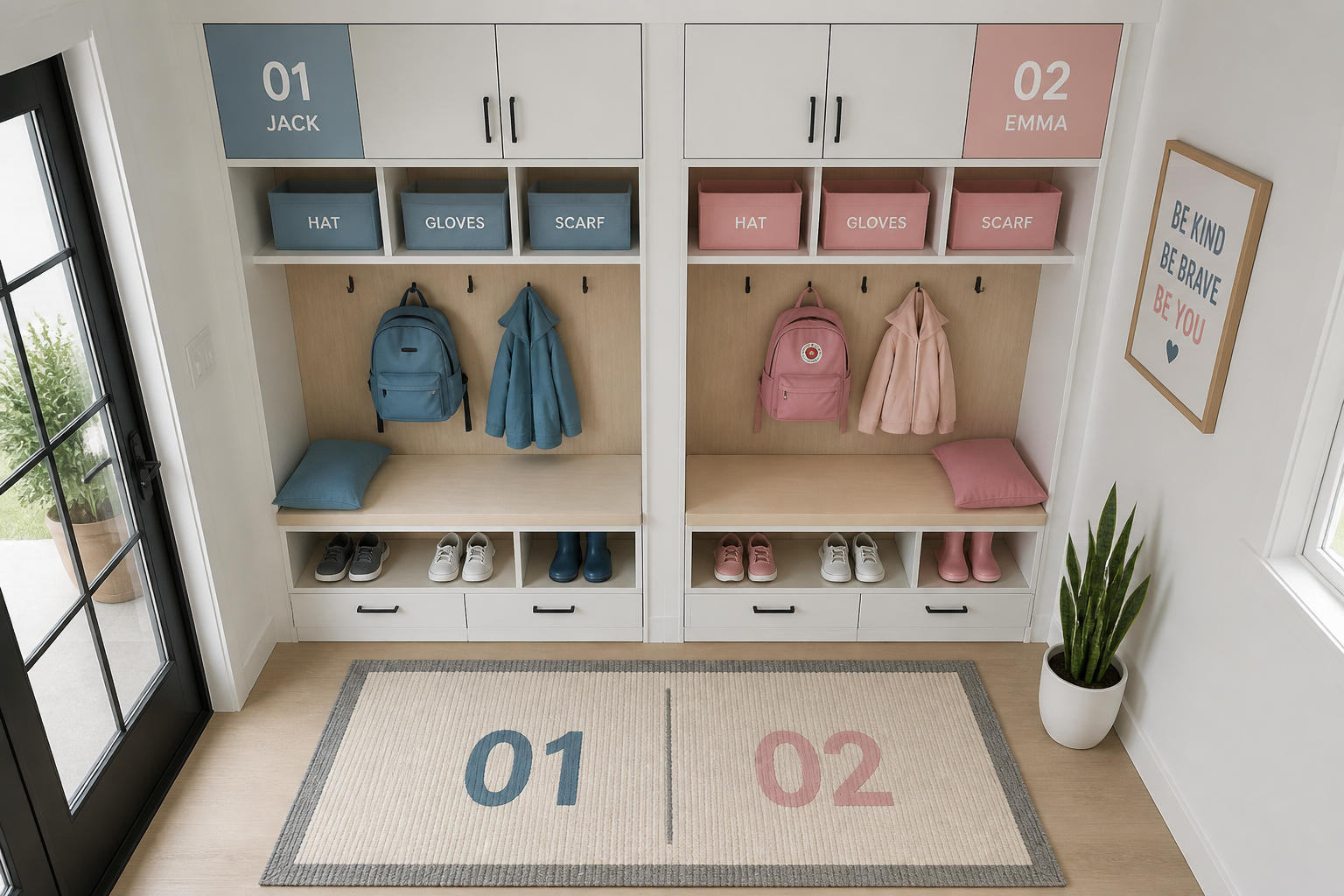
The Personal Stations (24-48 inches from entry): Individual twin territories with clearly defined boundaries. Each child gets identical storage allocations, but with distinct identification systems that prevent mix-ups during rushed mornings.
The Seasonal Archive (48+ inches from entry): Deep storage for off-season gear, backup supplies, and items that rotate based on activities or weather. This zone keeps your active areas uncluttered while maintaining easy access to everything your family might need.
| Storage Solution | Capacity (Twin Load) | Installation Complexity | Cost Range |
|---|---|---|---|
| Modular Cube System | 8-12 daily items per child | Low (2-3 hours) | $200-400 |
| Built-in Mudroom Lockers | 15-20 items per child + seasonal | High (Professional install) | $1,200-2,500 |
| Wall-Mounted Hook Arrays | 6-8 hanging items per child | Medium (1-2 hours) | $150-300 |
| Hybrid Bench + Cubby System | 10-14 items per child + shoes | Medium (3-4 hours) | $400-800 |
Implementation Sequence for Maximum Efficiency
Phase 1: Establish Boundaries
Start with floor markings or tape to define each twin’s territory. This prevents the “everything everywhere” syndrome that destroys entryway organization before it can take hold.
Phase 2: Install Vertical Storage
Wall-mounted solutions maximize your available space while keeping floor areas clear for movement. Priority goes to daily-use items: backpacks, jackets, and shoes.
Phase 3: Add Identification Systems
Color coding works initially, but photo labels prove more effective long-term. Each storage location gets a clear visual indicator of what belongs there and which twin owns it.
Phase 4: Create Overflow Protocols
When storage fills beyond capacity (and it will), having predetermined overflow locations prevents system breakdown. Seasonal rotation schedules keep your active storage optimized.
Advanced Entryway Storage Twins Strategies
The Mirror Method
Install identical storage solutions for each twin, positioned as mirror images. This eliminates confusion about whose space is whose while creating visual symmetry that makes the entire area feel more organized.
Your morning routine coordination becomes dramatically smoother when each child can access their gear without crossing into their sibling’s space or waiting for access to shared storage.
Smart Storage Rotation
Implement a quarterly audit system where seasonal items rotate in and out of active storage. Summer gear moves to deep storage when fall activities begin. This keeps your daily-access areas optimized for current needs rather than cluttered with everything your twins might eventually use.
Maintenance Automation
Weekly system resets prevent storage decay. Sunday evenings become “reset time” where everything returns to its designated location, seasonal items get rotated if needed, and any system failures get addressed before they compound.
Twin Tactics: Pro-Level Shortcuts
- Double-Height Everything: Install hooks, shelves, and storage at two heights – current twin height and 6 inches higher for growth accommodation.
- Emergency Duplicate Kit: Keep backup gloves, hats, and essential items in a designated “crisis container” for those inevitable lost-item mornings.
- Visual Loading Guides: Photo documentation showing exactly how each storage area should look when properly loaded prevents gradual system drift.
- Departure Checklist Integration: Mount a simple checklist at twin eye-level showing backpack, lunch, jacket, shoes – reducing forgotten item incidents by 80%.
- Flexible Anchor Points: Use adjustable mounting systems that can adapt as your twins grow and their storage needs evolve.
Troubleshooting Common Twin Entryway Problems
The Bottleneck Issue
When both twins need the same type of item simultaneously, standard storage layouts create morning traffic jams. Solution: duplicate access points. Instead of one shoe storage area, create two identical zones positioned for simultaneous use.
The Overflow Crisis
Twin families accumulate gear faster than single-child households. Your system needs built-in expansion capacity. Modular solutions that can grow vertically or horizontally prevent complete system overhauls as needs change.
The Identification Breakdown
Color-coding fails when twins have strong preferences or when items naturally come in limited colors. Photo labeling with each child’s picture creates unmistakable ownership identification that works regardless of item appearance.
Modern entryway storage twins solutions integrate seamlessly with smart home systems available in 2026, allowing automated lighting when motion is detected and app-based inventory tracking for frequently misplaced items.
The key insight most families miss: your entryway system should eliminate decisions, not create them. When every item has an obvious, accessible location, and when each twin has clearly defined territory, your morning chaos transforms into organized efficiency.
The Space-Optimization Strategy.
Install a “landing strip” shelf exactly 36 inches from your entry door – this becomes the automatic drop zone for items that don’t have permanent homes yet, preventing them from migrating throughout your house while you determine their proper storage location.
To a more organized home, Jordan