


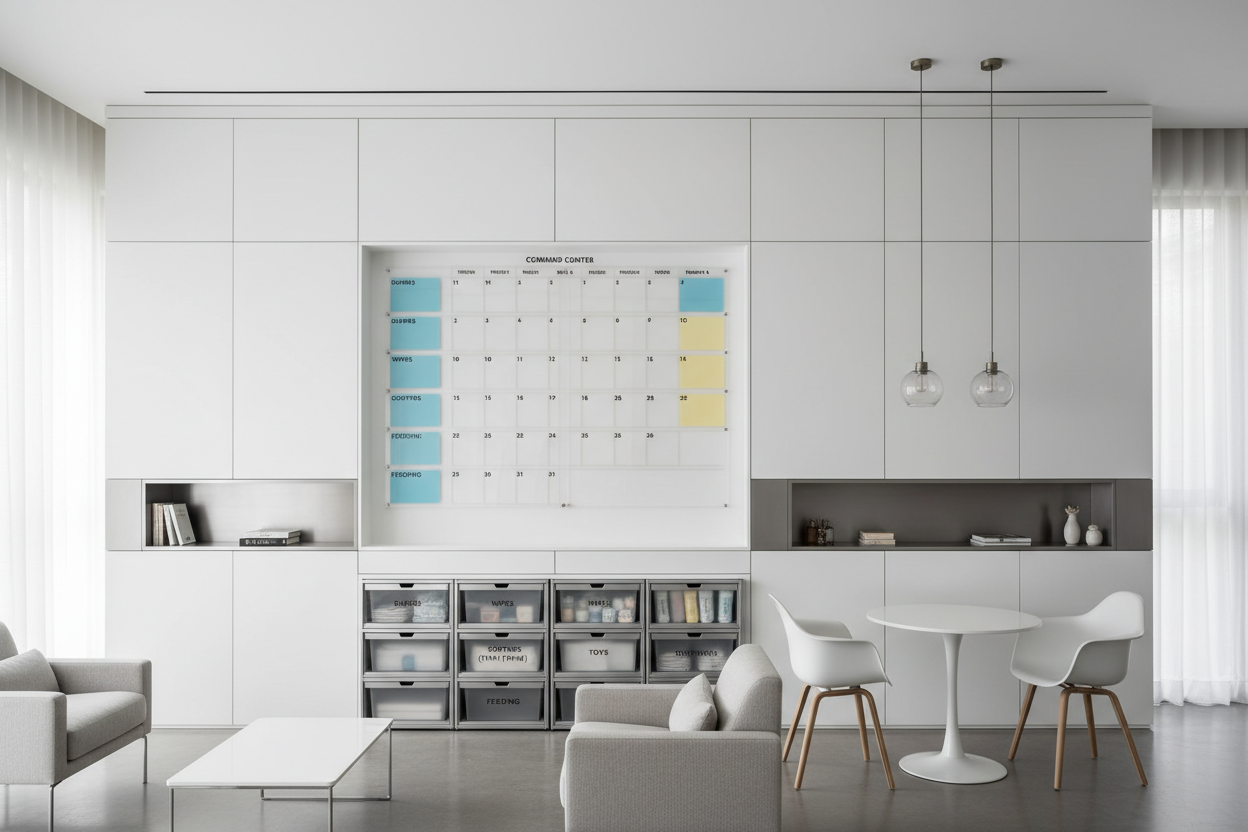
Systems for Success: The Organized Multiples Home
Welcome to the world of multiples parenting—where having twice (or more) the love also means twice the laundry, twice the gear, and often half the sleep! If you’ve found yourself standing in the middle of your home surrounded by matching onesies, wondering how you’ll ever create order from the beautiful chaos that comes with twins or higher-order multiples, you’re in exactly the right place.
As parents of multiples ourselves, we at TwinTactics understand that the traditional parenting advice often falls short when applied to our unique situations. The truth? Raising multiples isn’t just parenting on a larger scale—it’s parenting on an entirely different operating system.
Why Systems Matter More for Multiples Families
Systems aren’t just helpful for multiples families—they’re essential. When you’re managing multiple children at the same developmental stage simultaneously, the margin for error shrinks dramatically. A forgotten diaper change for one baby quickly cascades into a full wardrobe change for both. A delayed feeding schedule can result in a synchronized meltdown that tests even the most patient parent.
But here’s the good news: with thoughtfully designed systems in place, you can transform your home from survival mode to thriving mode. These aren’t rigid rules that add more stress to your day—they’re flexible frameworks that reduce decision fatigue and create predictable flows that benefit everyone in your household.
The Three Pillars of Multiples Home Organization
Through our work with hundreds of multiples families, we’ve identified three foundational elements that make the difference between chaos and calm:
- Physical Systems – How you arrange your space, organize essential supplies, and create functional zones that work for multiple children simultaneously
- Time Systems – How you structure your day, sync schedules, and create routines that accommodate the unique rhythm of multiples
- Support Systems – How you build reliable help networks, delegate effectively, and maintain your well-being as the orchestrator of it all
In this comprehensive guide, we’ll walk through each of these pillars, providing practical solutions tailored specifically for homes with twins, triplets, or more. We’ll move beyond the standard organization advice to address the specific challenges of raising children who are at the exact same developmental stage simultaneously.
Whether you’re expecting multiples and preparing your home, or you’re in the trenches with toddler twins wondering how to restore order, this guide offers systems that scale as your children grow. Because the right systems don’t just organize your physical space—they create the mental space you need to truly enjoy this extraordinary parenting journey.
Let’s create a home that runs so smoothly, you’ll actually have time to appreciate those magical twin moments rather than just survive them.
Creating a Systematic Approach to Twin Feeding
Feeding two babies simultaneously is perhaps one of the most logistically complex challenges for parents of multiples. When implemented correctly, a systematic approach transforms this potential chaos into a manageable, even efficient routine. Let’s break down how to create a feeding system that preserves both your sanity and precious time.
The Tandem Feeding Setup
A dedicated feeding station becomes your command center. Position this in a comfortable area where you’ll spend significant time each day. The ideal station includes:
- A specialized twin nursing pillow or two single pillows arranged strategically
- Side tables within arm’s reach on both sides
- A rolling cart with multiple tiers for supplies
- Comfortable seating with proper back support
- Dimmable lighting for nighttime feedings
As we explored in our deep dive on automated feeding stations, integrating technology can dramatically improve efficiency. Smart bottle warmers with dual capacity and app controls allow you to prepare the second bottle while feeding the first baby, eliminating wait times.
Synchronizing Feeding Schedules
While responding to hunger cues is important, establishing synchronized feeding times creates predictability and efficiency:
- When one baby wakes to feed, gently wake the second baby
- Allow a 15-minute maximum gap between starting each feeding
- Document feeding times in a dedicated app or logbook
- Track patterns to predict and preemptively prepare for feeding times
For formula-feeding families, batch preparation becomes essential. Prepare a day’s worth of bottles each morning and store them properly. This front-loaded effort saves precious minutes during each feeding session.
The Feeding Flow Chart
Develop a systematic flow chart for feeding sessions that all caregivers can follow:
| Stage | Action Items | Efficiency Tips |
|---|---|---|
| Pre-Feeding (15 min prior) | Warm bottles/prepare nursing station | Use timer alerts to maintain schedule |
| Feeding Initiation | Position babies, secure feeding method | Use positioning aids for hands-free support |
| During Feeding | Monitor intake, provide stimulation if needed | Keep intake log nearby for quick notation |
| Post-Feeding | Burping, diaper check, return to sleep space | Maintain identical routines for both babies |
Divide and Conquer Strategies
When possible, engaging a partner or helper transforms the feeding process:
- Alternating feeding responsibility allows for rest periods
- One person feeds while another prepares the next feeding cycle
- Weekend “batch prep” sessions can prepare formula or expressed milk for the week
- Night shifts can be divided into time blocks rather than alternating babies
Remember that systematic feeding isn’t just about efficiency—it’s about creating predictability that allows you to occasionally accommodate flexibility when needed. Your twin feeding system should be robust enough to handle variations while maintaining its core structure.
Designing a Developmentally Supportive Twin Nursery
Creating a nursery for twins presents unique challenges, but it also offers remarkable opportunities to implement thoughtful design that supports both babies’ development from day one. By incorporating Montessori principles, you can create an environment that not only manages the logistics of caring for two babies simultaneously but also fosters independence, movement, and cognitive development.
Montessori Principles for Twin Spaces
The Montessori approach emphasizes “freedom within limits” – a concept particularly valuable for twin parents. As we explored in our comprehensive guide to Montessori twin nurseries, this philosophy creates structure while encouraging autonomy, which helps twins develop their individual identities alongside their special bond.
Key Montessori elements to incorporate include:
- Floor beds: Replace traditional cribs with floor beds (after the newborn stage) to allow freedom of movement and body autonomy
- Child-height mirrors: Install unbreakable mirrors at floor level to encourage self-recognition and visual stimulation
- Low shelves: Display a limited rotation of toys at the twins’ eye level to encourage independent play choices
- Natural materials: Prioritize wood, cotton, and other natural elements over plastic for sensory development
Creating Individual Zones in Shared Spaces
While twins share much of their early environment, establishing distinct personal zones helps nurture individuality:
- Designate separate sleep spaces with visual cues like different colored sheets
- Create individual toy shelves labeled with each twin’s name or photo
- Include personalized artwork or name displays above each area
- Consider small, separate reading nooks if space allows
Practical Organization for Developmental Support
The most successful twin nurseries balance organization with developmental opportunities:
| Montessori Element | Twin-Specific Implementation | Developmental Benefit |
|---|---|---|
| Rotating toy system | Two small collections that can be swapped between twins | Prevents overstimulation while providing novelty |
| Visual order | Color-coded storage systems for each twin | Builds early categorization skills and reduces parental confusion |
| Movement zones | Shared climbing area with duplicate elements | Supports gross motor development while minimizing sharing conflicts |
| Practical life station | Side-by-side self-care areas (once mobile) | Fosters independence and reduces caregiver workload |
Adaptable Spaces for Growing Twins
The most successful developmentally supportive nurseries evolve alongside your twins. Begin with a simple environment focused on their immediate needs, then introduce more complex elements as they grow. For example, a movement mat for newborns can later transform into a climbing area for toddlers.
By thoughtfully applying Montessori principles to your twins’ nursery, you create a foundation for both order and independence—a winning combination that supports not only your babies’ development but also your ability to manage the beautiful complexity of raising twins.
Managing Twin Toy Systems
When you have twins, toys can quickly take over your home—doubling the clutter and chaos. The key is creating intentional systems that manage stimulation while preventing your living space from resembling a toy store explosion. Let’s explore how to create order from the potential chaos.
The Rotation Revolution
Toy rotation isn’t just about decluttering—it’s about creating novelty and extending the lifespan of your twins’ playthings. As we discussed in our guide on rotating toys for twins, implementing a strategic rotation system can reduce fighting while making old toys feel new again.
The ideal rotation system for twins includes:
- 3-4 toy bins stored out of sight (labeled by category or developmental stage)
- Weekly or bi-weekly rotation schedule (mark it in your family calendar)
- Only 30-40% of toys available at any given time
- A mix of individual and shared items in each rotation
Color-Coding Without Stereotyping
For items that need individual ownership identification, consider a color system that transcends gender norms:
- Assign each twin a color for their personal items (blue/green, red/orange, etc.)
- Use colored tape or silicone bands for quick visual identification
- Apply the same color system to storage bins, water bottles, and other items
Zone Defense: Strategic Toy Placement
Different toy categories should live in different areas of your home, aligned with their purpose:
| Zone | Toy Types | Storage Solution |
|---|---|---|
| Active Play Zone | Larger motor toys, climbing equipment | Collapsible bins, wall-mounted racks |
| Quiet Zone | Books, puzzles, sensory items | Forward-facing bookshelves, labeled drawers |
| Creative Zone | Art supplies, building blocks | Clear containers, rolling carts |
| Shared Family Space | Family games, limited “showcase” toys | Decorative baskets, built-in cabinets |
The One-In, One-Out Protocol
Establish a household rule that for every new toy that enters, another must leave—through donation, consignment, or storage rotation. This prevents accumulation while teaching valuable lessons about resourcefulness.
Twin-Specific Solutions
Some challenges require twin-specific approaches:
- Duplicate or Divide? Rather than buying two of everything, identify which toys truly need duplicates (usually items that cause frequent conflicts) and which can be shared with turn-taking systems.
- Parallel Play Stations: Create mirrored activity areas where twins can engage in similar activities side-by-side without direct competition.
- Ownership Transitions: Use visual timers for toys that must be shared, creating predictable transitions that reduce power struggles.
Remember, your toy management system should evolve as your twins grow. What works for toddlers will need adjustment for school-age children, but the fundamental principles of rotation, organization, and intentional curation remain the same throughout childhood.
Streamlining Twin Bathing Routines
Bath time with twins can quickly transform from a soothing end-of-day ritual into a logistical challenge that leaves you soaked and exhausted. After working with hundreds of twin parents, I’ve developed systematic approaches that prioritize both safety and efficiency when you’re handling bath time solo.
Safety First: The Non-Negotiables
- Never leave either baby unattended – even for a second to grab a towel or answer the door
- Prepare everything in advance – towels, pajamas, lotions, diapers all within arm’s reach
- Use non-slip mats inside and outside the tub
- Keep water temperature between 98-100°F (invest in a reliable bath thermometer)
- Lower water level to 2-3 inches maximum
Sequencing Methods That Work
As we explored in depth in our guide on The One-Parent Bath Time: A Step-by-Step System, there are three proven approaches to bathing twins alone:
1. The Assembly Line Method
Bathe one baby completely while the second remains secured in a bouncer or safely strapped seat within arm’s reach and direct line of sight. After finishing with the first (including drying and dressing), switch babies. This method works particularly well for parents of newborns to 6-month-olds.
2. The Bathing Buddy System
For twins aged 6+ months who can sit independently, bathing them simultaneously becomes viable. Use a divided bath seat or place them at opposite ends of the tub. The key here is to establish a strict routine: wash Twin A’s hair while Twin B plays with a specific toy, then switch. This creates predictability and reduces chaos.
3. The Staggered Schedule
Some parents find success with morning/evening split bathing routines. Twin A gets bathed in the morning, Twin B in the evening, alternating each day. This approach works well for working parents who may have limited evening time.
Automation & Time-Saving Techniques
- Bath bins: Labeled containers for each twin with their specific products
- Color-coding system: Assign each twin a color for washcloths, towels and bath toys
- Shower speaker: Create a bath time playlist that lasts exactly as long as bath time should (builds time awareness)
- Hanging mesh organizers: Keep soaps and shampoos accessible but secure from grabbing hands
Managing the Inevitable Protests
When one twin must wait their turn, provide special “bath waiting toys” that only appear during this time. A rotation of novel items creates positive associations with waiting. A nearby mirror where the waiting twin can see bath activities often reduces FOMO (fear of missing out).
Remember that consistency is your greatest ally. The more you repeat your chosen system, the more your twins will adapt to the routine, making bath time less stressful for everyone involved.
Whole-Home Organization for Twin Parents
Managing a household with twins requires strategic planning that extends beyond the nursery. Let’s transform your entire home into a twin-friendly efficiency zone with systems that minimize stress and maximize your precious time.
Command Central: Your Family Hub
Every multi-child household needs a command center—a dedicated space that keeps family logistics visible and accessible:
- Install a large wall calendar color-coded for each family member
- Create a “daily dashboard” with slots for immediate paperwork, medication schedules, and feeding charts
- Designate a charging station for all parental devices to ensure communication tools are always ready
- Implement a family message board with clear sections for reminders, needed supplies, and appointments
Laundry Systems That Scale
Twin parents face double the laundry volume. Implement these systems to prevent being buried under tiny clothes:
- Sort laundry into mesh bags as it’s generated rather than waiting until laundry day
- Use the “one touch” rule—handle each clothing item once from removal to storage
- Install a simple pulley system for hanging clothes in laundry areas to maximize vertical space
- Pre-sort twin outfits into daily bundles using drawer dividers or hanging organizers
Supply Chain Management
Running out of essentials with twins can trigger emergency situations. Create proactive inventory systems:
- Designate “par levels” for critical supplies (diapers, wipes, formula) and mark containers with visible “reorder” lines
- Create secondary storage zones throughout the house—hidden diaper stations in decorative baskets in every room where babies spend time
- Set up auto-delivery subscriptions for consumables, scheduling them to arrive before you reach critical levels
- Maintain a “just-in-case” bin with emergency supplies (extra pacifiers, medication, backup outfit) in each zone of your home
Batch Processing for Daily Tasks
Applying manufacturing principles to household management saves tremendous time:
- Prepare bottle components in assembly-line fashion—clean, fill, and store all at once
- Dedicate 20-minute “power tidy” sessions twice daily rather than continuous cleaning
- Create “grab and go” twin kits for common scenarios (doctor visits, playdates, grocery trips) with all necessary supplies pre-packed
- Implement “twin zones” in shared spaces where containment and entertainment options are always ready
The “Minimum Viable Cleanup” Approach
Perfectionism must yield to pragmatism with twins. Define your non-negotiable baseline:
- Identify the three spaces that most affect your mental health when cluttered and prioritize those daily
- Create “cleanup caddies” in each room for rapid deployment when unexpected visitors arrive
- Establish “drop zones” near entryways with dedicated twin gear storage (diaper bags, strollers, carriers)
- Implement the “one in, one out” rule religiously for toys and baby items to prevent accumulation
By implementing these whole-home systems, you’ll create an environment that supports your family’s unique needs while preserving your sanity during the demanding early years with twins.
Implementing and Maintaining Twin Systems
Creating functional systems for twins is not a one-time setup but an evolving process that requires thoughtful implementation and regular maintenance. As your twins grow from infants to toddlers and beyond, your organizational needs will shift dramatically. Let’s explore how to implement effective systems that can adapt as your multiples develop.
Phased Implementation Approach
Rather than attempting to overhaul your entire home at once, consider a phased implementation strategy:
- Pre-arrival phase: Focus on nursery organization, feeding stations, and diaper changing systems
- First 3 months: Refine sleep and feeding routines, establish laundry systems
- Months 4-12: Implement meal prep systems, toy rotation, and mobility-focused organization
- Year 2+: Develop systems for independent play, toddler-accessible storage, and early responsibility training
This gradual approach prevents overwhelm and allows you to perfect each system before introducing new ones.
Selecting Systems That Scale
When choosing organizational systems for twins, prioritize options with growth potential:
- Adjustable shelving that can accommodate different-sized items as needs change
- Color-coding systems that can evolve from parent-focused to child-recognized
- Digital tracking apps that offer customizable categories and reporting
- Storage solutions with convertible features (e.g., changing table to bookshelf)
Maintenance Schedule for Twin Systems
Even the best systems require regular maintenance. Create a schedule that includes:
| Timeframe | Maintenance Task |
|---|---|
| Weekly | Toy rotation, meal planning refresh, supply inventory |
| Monthly | Clothing size assessment, medicine cabinet check, digital photo organization |
| Quarterly | Storage system evaluation, seasonal gear rotation, deep cleaning of high-use areas |
| Biannually | Major system reviews, furniture arrangement assessment, technology updates |
Iterative Improvement Process
The key to long-lasting systems is continuous refinement:
- Observe: Monitor how systems perform during daily use
- Identify: Pinpoint friction points or inefficiencies
- Adjust: Make incremental changes to address problems
- Test: Try the modified system for at least two weeks
- Establish: Once optimized, document the system for consistency
When to Overhaul vs. When to Adjust
Not every challenge requires a complete system redesign. Use these guidelines:
- Adjust when: The system works 70%+ of the time; problems are minor; twins still fit demographic parameters of the system
- Overhaul when: Multiple workarounds are needed; the system causes consistent stress; twins have reached a major developmental milestone
Remember that flexibility is the hallmark of successful twin systems. What works today may need adjustment tomorrow as your twins develop new skills and interests. The most effective parents are those who view organization as an evolving practice rather than a fixed destination.
Building Your Family’s Success Systems
Throughout this guide, we’ve explored numerous systems and organizational strategies designed specifically for the unique challenges of raising multiples. The journey of parenting twins or triplets is undoubtedly demanding, but implementing thoughtful systems transforms what could be chaos into manageable, even enjoyable, daily routines.
The Real Return on Investment
The true value of well-designed home systems isn’t measured in perfectly aligned sock drawers or color-coded calendars—it’s calculated in precious minutes saved and stress reduced. Every system you implement creates space for what matters most: quality time with your children. When feeding supplies are consistently stocked and accessible, when morning routines flow without constant decision-making, when bedtime follows a predictable path—you’re buying yourself the luxury of presence rather than perpetual firefighting.
Many parents of multiples report that their organizational systems quite literally preserved their sanity during the most challenging phases. As one mom of identical twins told me, “The systems weren’t just helpful—they were essential. They gave me permission to focus on enjoying my babies instead of constantly searching for missing items or reinventing solutions.”
Start Small, Build Gradually
If you’re feeling overwhelmed by the comprehensive systems outlined in this guide, remember this fundamental truth: you don’t need to implement everything at once. In fact, trying to overhaul your entire household simultaneously is a recipe for frustration. Instead:
- Identify your biggest pain point and tackle that system first
- Master one system before introducing another
- Involve your partner and other family members in maintaining systems
- Be willing to adjust and customize as your family’s needs evolve
- Celebrate small victories along the way
Many parents find that starting with morning or bedtime routines creates the most immediate relief. Others prioritize feeding systems or laundry management. There’s no single correct starting point—only what will most benefit your unique household.
The Evolution of Your Systems
As your multiples grow from newborns to toddlers to school-age children, your organizational needs will transform dramatically. The systems that saved you during the newborn phase may become obsolete by the time your twins are walking. This isn’t a failure—it’s exactly as it should be.
Build flexibility into your expectations and revisit this guide as your family enters new developmental stages. The principles of effective systems remain constant even as the specific applications evolve.
Remember that organizing a household with multiples isn’t about achieving perfection—it’s about creating sustainable rhythms that support your family’s wellbeing and happiness. When systems are working well, they fade into the background, allowing the joy of parenting multiples to take center stage.
From all of us at TwinTactics, we wish you success in creating a home environment where both organization and loving chaos can coexist beautifully.