


Mastering the Twin Toddler Bed Transition: Your Strategic Blueprint for Two
The moment you walk into your twins’ room at 2 AM and find one child standing in their crib calling for “big kid bed” while the other has somehow managed to climb out completely, you know it’s time. The twin toddler bed transition isn’t just about swapping furniture—it’s about orchestrating a complete sleep system overhaul that maintains your hard-won bedtime routine while ensuring two newly mobile toddlers stay safe and settled.
Unlike single-child transitions where you can focus entirely on one set of behaviors, transitioning twins to toddler beds requires anticipating how their individual sleep patterns, climbing abilities, and nighttime wandering tendencies will interact. The key lies in strategic timing, synchronized setup, and fail-safe systems that prevent midnight escapes from turning into living room dance parties.
Strategic Timing: Reading the Twin Readiness Matrix
The biggest mistake parents make is assuming both twins will be ready simultaneously. While genetic similarities might suggest parallel development, sleep readiness often varies by weeks or even months between twins. One twin might be scaling crib walls at 18 months while their sibling remains contentedly contained until 2.5 years.
Evaluate each child independently using these concrete markers: consistent climbing attempts, leg length reaching 35 inches (the safety threshold for most cribs), and demonstrated ability to follow simple sleep rules like “stay in bed until morning music.” When only one twin shows readiness, resist the urge to transition both—this often backfires spectacularly.
Consider your household’s current stress levels. Avoid transitions during illness, travel, potty training, or major schedule changes. The twin toddler bed transition requires your full attention and consistency for the first two weeks.
Room Configuration: The Physical Setup Strategy
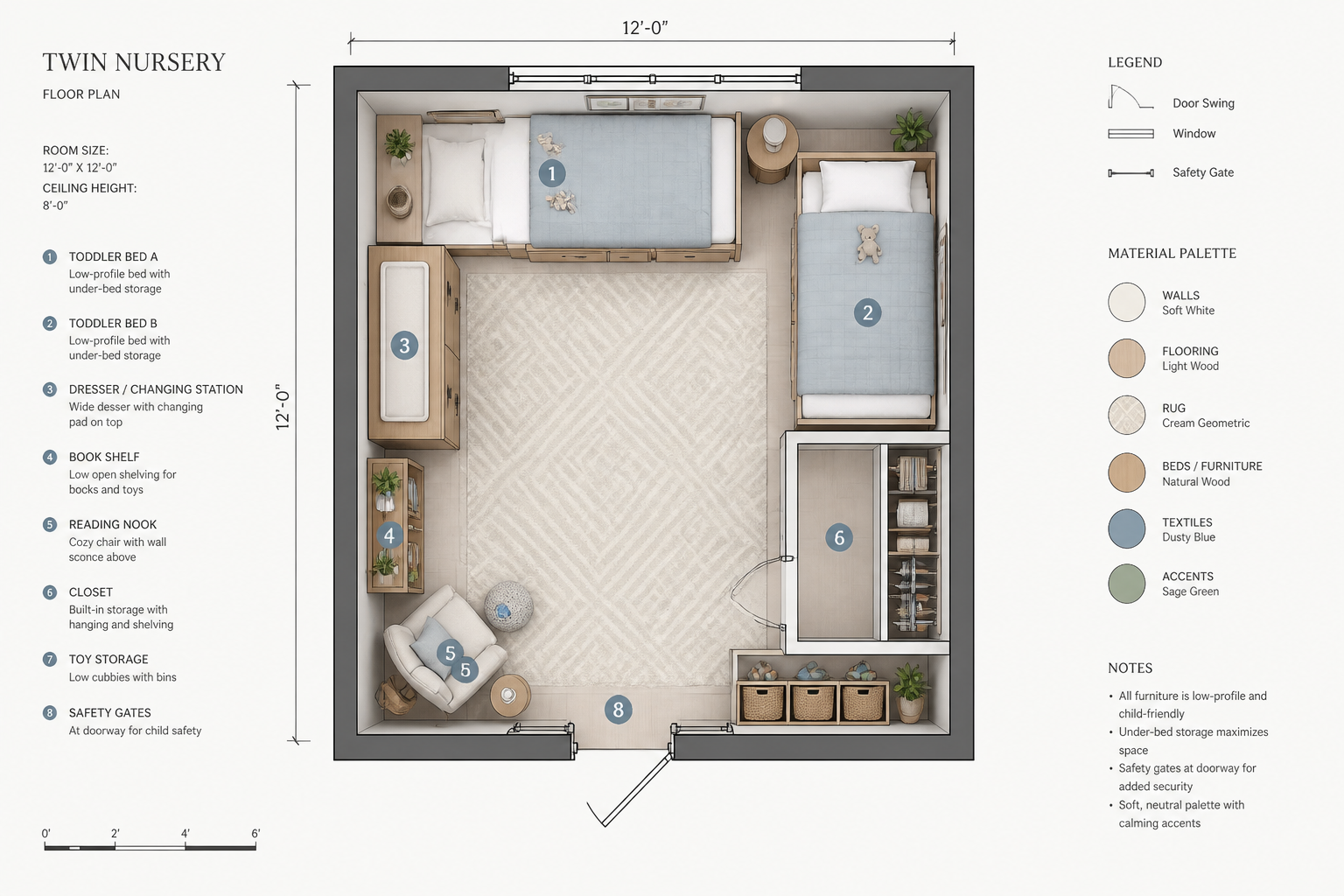
Your room layout becomes critical when two mobile toddlers gain nighttime freedom. Start by conducting a comprehensive safety audit at 24-inch height—the eye level of a wandering toddler.
| Bed Placement Option | Space Efficiency | Interaction Level | Safety Features | Best For |
|---|---|---|---|---|
| Parallel (side by side) | High | Maximum interaction | Requires dual safety rails | Social sleepers who settle together |
| L-Shape (perpendicular) | Medium | Moderate interaction | Corner protection essential | Balanced sleep/play needs |
| Opposite walls | Low | Minimal interaction | Individual zones possible | Light sleepers or different schedules |
| Bunk configuration | Maximum | Structured hierarchy | Age 6+ recommendation | Older toddlers in small spaces |
For families still determining the optimal sleep environment, twins sharing a room provides valuable insights into how room arrangements affect sleep quality and sibling dynamics.
Install door knob covers or baby gates at the room entrance—this creates a safe boundary while maintaining the “big kid” bed freedom within their space. Position beds away from windows, and secure all furniture to walls. The 2026 safety standards now recommend magnetic cabinet locks over traditional latches for faster emergency access.
The Transition Timeline: Your 14-Day Implementation Plan
Days 1-3: Introduction Phase
Set up the toddler beds but maintain cribs for actual sleep. Allow exploration time during the day. Read books about “big kid beds” and let twins help with sheet selection and arrangement. This reduces anxiety and builds excitement.
Days 4-6: Nap Trials
Begin napping in toddler beds while keeping nighttime in cribs. Naps offer lower stakes for testing boundaries and adjustment challenges. Monitor which twin adapts faster—they’ll often become your inadvertent helper in encouraging their sibling.
Days 7-10: Full Transition
Remove cribs entirely. Consistency becomes non-negotiable here. Expect 2-3 nights of increased wake-ups, room exploration, and testing boundaries. Maintain your bedtime routine exactly as before—the familiarity provides stability during physical changes.
Days 11-14: Reinforcement Phase
Fine-tune your response strategies. Some twins will attempt coordinated escape attempts while others may regress to wanting “baby bed back.” Hold firm while providing extra comfort and reassurance.
Managing the Escape Artists: Containment Without Conflict
Twins often feed off each other’s energy, turning simple bed exits into elaborate midnight adventures. Create clear, consistent consequences that don’t inadvertently reward the behavior with attention or entertainment.
Implement the “Silent Return” method: minimal interaction, no conversation, immediate return to bed. For persistent wanderers, consider floor beds initially—removing the climbing challenge often eliminates the appeal.
Install motion sensors connected to your smartphone for immediate awareness of room exits. Many parents find that knowing instantly when movement occurs allows for faster intervention before twins fully wake and engage each other.
Sleep System Optimization: Technology and Routine Integration
Modern sleep management for twins benefits significantly from smart home integration. Programmable nightlights that dim gradually, white noise machines with dual-zone control, and app-controlled room temperature create an environment that supports continued sleep even during transition turbulence.
Create individual sleep totems—special stuffed animals, blankets, or small comfort items that belong exclusively to each twin. This provides security and reduces competition over shared items during vulnerable nighttime moments.
Consider implementing a reward system for staying in bed until morning. Simple sticker charts or small privileges often provide motivation during the adjustment period.
- Twin Tactics: Pro-Level Shortcuts
- Stagger bedtimes by 15 minutes: Put the more compliant twin down first to model calm behavior, then add the second twin to an already settled room environment.
- Create “bed islands”: Place thick rugs beside each bed to muffle landing sounds when inevitable falls occur, preventing one twin’s tumble from waking the other.
- Install dimmer switches with preset levels: Program specific lighting for different scenarios—bright for bedtime routine, dim for middle-of-night returns, off for sleep—eliminating fumbling and maintaining calm.
- Use matching but distinguishable bedding: Same pattern in different colors allows twins to easily identify their own space while maintaining room cohesion.
- Position beds to face away from each other initially: Reduces visual stimulation and giggling fits while still maintaining room sharing benefits, then gradually adjust as they adapt.
For families managing the broader organizational challenges that come with growing twins, twin closet organization strategies can help maintain the systematic approach that makes daily routines with two toddlers more manageable.
Troubleshooting Common Twin-Specific Challenges
The Midnight Switcher: Some twins will successfully stay in bed—just not their own bed. While harmless, this can disrupt sleep quality and create morning confusion. Use distinctive sheets, small nightlights, or subtle room positioning to reinforce individual spaces.
The Leader-Follower Dynamic: Often one twin instigates room exploration while the other follows. Address the leader’s behavior primarily, as the follower typically complies once the instigator settles.
Different Sleep Needs: When one twin adapts quickly but the other struggles, resist returning the successful twin to a crib. Instead, provide extra support and patience for the struggling twin while maintaining consistency.
Room Destruction: Two mobile toddlers can accomplish remarkable feats of creative chaos. Ensure the room can be completely darkened, all stimulating toys are removed, and anything climbable is secured or relocated.
Long-Term Success Strategies
The twin toddler bed transition extends beyond the initial two weeks. Plan for periodic regression during illness, schedule changes, or developmental leaps. Having backup strategies prevents panic when previously successful methods stop working.
Document what works for each twin—their preferred comfort items, effective calming techniques, and successful room arrangements. This information becomes invaluable during future sleep disruptions or when transitioning to larger beds later.
Consider the transition complete when both twins consistently stay in their beds from bedtime until morning wake-up time for two full weeks. Some families achieve this in 10 days; others require six weeks. Your twins’ timeline is the correct timeline.
The Space-Optimization Strategy
Position toddler beds in an L-shape with the heads at the corner—this maximizes floor play space while creating natural conversation distance that prevents bedtime giggling escalation, and the corner positioning provides psychological security for newly independent sleepers.
To a more organized home, Jordan