


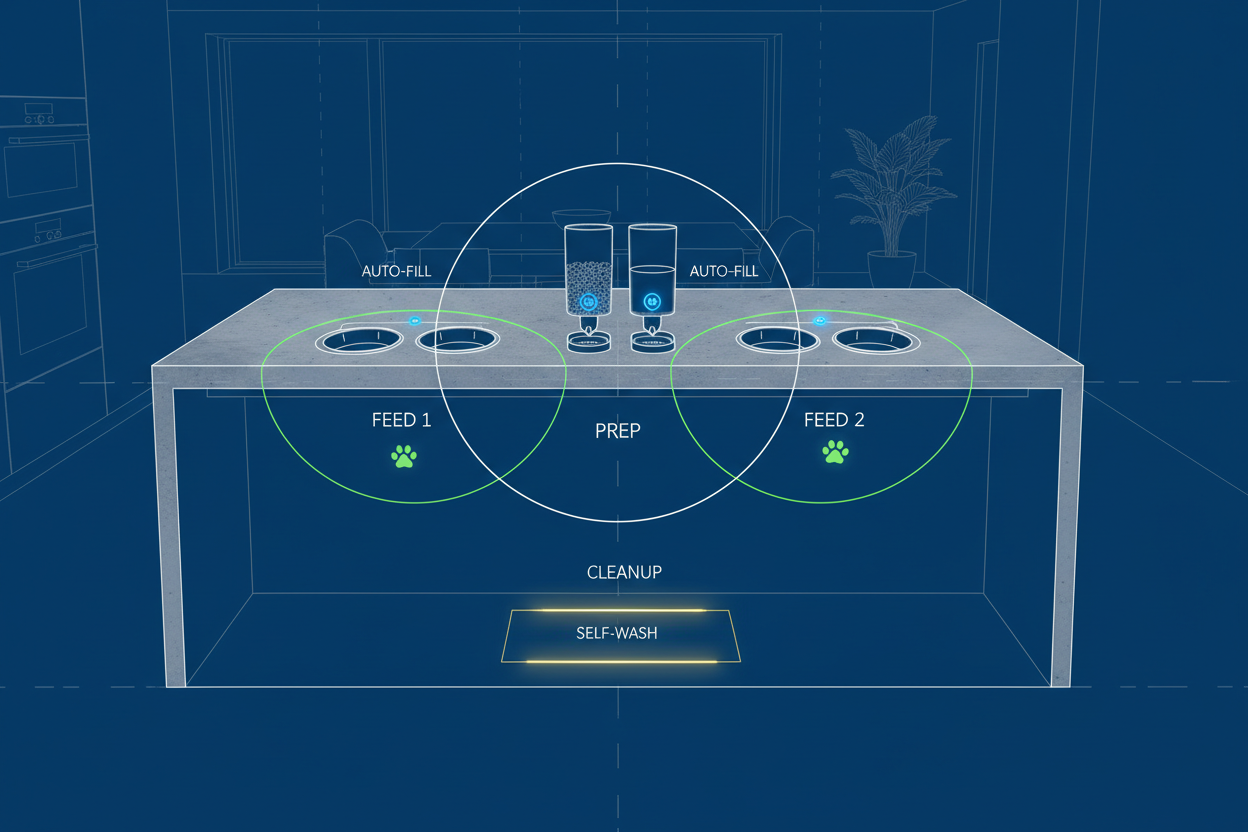
Twin Feeding Stations: Efficiency Architecture for Double Duty
I just finished consulting with a family who went from chaotic feeding times to synchronized meal success in under a week. The transformation hinged on one core element: a well-designed twin feeding station. The 2026 automated feeding technology has revolutionized multi-baby mealtimes, but the spatial organization remains the cornerstone of any successful system.
The Science Behind Synchronized Feeding
A twin feeding station isn’t just furniture—it’s command central for one of your most repeated daily operations. The average parents of twins will prepare and serve approximately 3,650 bottles in the first year alone. That’s enough repetition to demand serious operational efficiency.
The Core Components of an Effective Twin Station
A functional twin feeding station requires three distinct zones:
1. Preparation Zone – Where bottles, formula, and feeding supplies are assembled
2. Feeding Zone – The physical space where babies receive nourishment
3. Cleanup Zone – Designated area for post-feeding sanitization
The new SmartSync systems integrate these zones with minimal footprint, but they still require thoughtful placement within your home’s flow patterns.
Station Location Analysis
The ideal placement of your twin feeding station depends on your home’s layout and your family’s schedule demands. Let’s examine the pros and cons of common locations:
| Location | Advantages | Disadvantages | Optimization Tips |
|---|---|---|---|
| Kitchen Island | Close to water source, counter space, easy cleanup | Potential food cross-contamination, household traffic | Install under-counter mini-fridge for formula |
| Nursery Corner | Proximity to cribs, quiet environment, nighttime convenience | Limited water access, smaller workspace | Add portable sanitizing station with UV sterilization |
| Living Room Hub | Central location, entertainment during feeds, family integration | Disrupts main living space, less storage | Use modular storage that converts to standard furniture |
| Dedicated Feeding Room | Purpose-built efficiency, maximum organization | Requires extra space, potential isolation | Install two-way monitoring system for connection |
The AutoFeeder Revolution: 2026 Models
Today’s automated feeding systems have advanced significantly from the clunky prototypes of 2023. The PerfectPour Pro and TwinSync Ultra both offer programmable dispensing that calibrates temperature, volume, and nutrition metrics with precision that would have seemed impossible just three years ago.
The key differentiator in the 2026 models is the adaptive learning algorithm that tracks consumption patterns and adjusts to your twins’ individual feeding cues.
Equipment Integration Strategy
A successful twin feeding station seamlessly integrates:
– Formula management systems with humidity control
– Bottle warming technology with dual-temperature settings
– Synchronized cleaning cycles
– Supply inventory monitoring
– Position-adaptive seating for single-parent feeding
The TwinSync’s modular design works particularly well in apartments under 1200 square feet, while the BabyStation Pro excels in open concept homes where visual integration matters.
Twin Tactics: Pro-Level Shortcuts
- The Formula Measuring Hack: Pre-measure formula into silicone portion cups for the entire day during morning prep. This eliminates the 3am fumbling with scoops and containers.
- The Bottle Battalion Method: Set up all bottles in sequence order with time labels. As each feeding concludes, the bottle moves to the sanitizing station, creating a visual inventory system.
- The 15-Minute Reset: Implement a dedicated reset period between feedings where all components are sanitized and restaged. This prevents compound messes that become overwhelming.
- The Audio Anchor: Associate specific gentle sounds with feeding time to create natural feeding rhythms for both babies simultaneously.
- The Component Color-Coding: Assign each twin their own color for bottles and feeding accessories to quickly identify which baby has consumed what amount.
Adapting Your Station for Growth Phases
Your twin feeding station should evolve as your children develop. The transition from bottles to solid foods doesn’t eliminate the need for a dedicated feeding station—it transforms it.
Many parents make the mistake of dismantling their efficient systems just when twin toy rotation and mealtimes begin to overlap in complexity. A modular station design accommodates this growth, allowing section repurposing without complete reconfiguration.
The Toddler Transition
At approximately 10 months, begin introducing elements of independent feeding within your station architecture:
1. Lower-height access points
2. Self-service snack options
3. Cleanup tools sized for small hands
4. Visual cue cards for food choices
The Montessori approach works particularly well for twin feeding independence, building on principles that can extend to your Montessori twins nursery design.
Single-Parent Operation Protocols
For solo feeding sessions, position optimization becomes critical. The 120-degree seating arrangement allows for simultaneous bottle feeding while maintaining eye contact with both babies. The newer feeding chairs feature:
– Support cushioning for extended sessions
– Bottle holders that maintain proper angles
– Accessible storage within arm’s reach
– Quick-release mechanisms for when one baby needs attention
Nighttime Configuration
The overnight feeding station requires special consideration:
1. Minimal light pollution with targeted illumination
2. Sound-dampened preparation surfaces
3. Pre-staged components to eliminate searching
4. Warming systems with automatic shut-offs
5. Return-to-sleep transition tools
The NightSync system’s integration with smart home features allows voice-activated preparation while you’re already holding a hungry baby.
The Space-Optimization Strategy
Create a “ghost station” duplicate of essential feeding supplies in a secondary location of your home. This backup prevents the need to return to the primary station during unexpected feeding demands, saving approximately 37 minutes daily in transit time.
To a more organized home,
Jordan