

Twin Night Terrors vs. Nightmares: Co-Regulating Two Distressed Toddlers
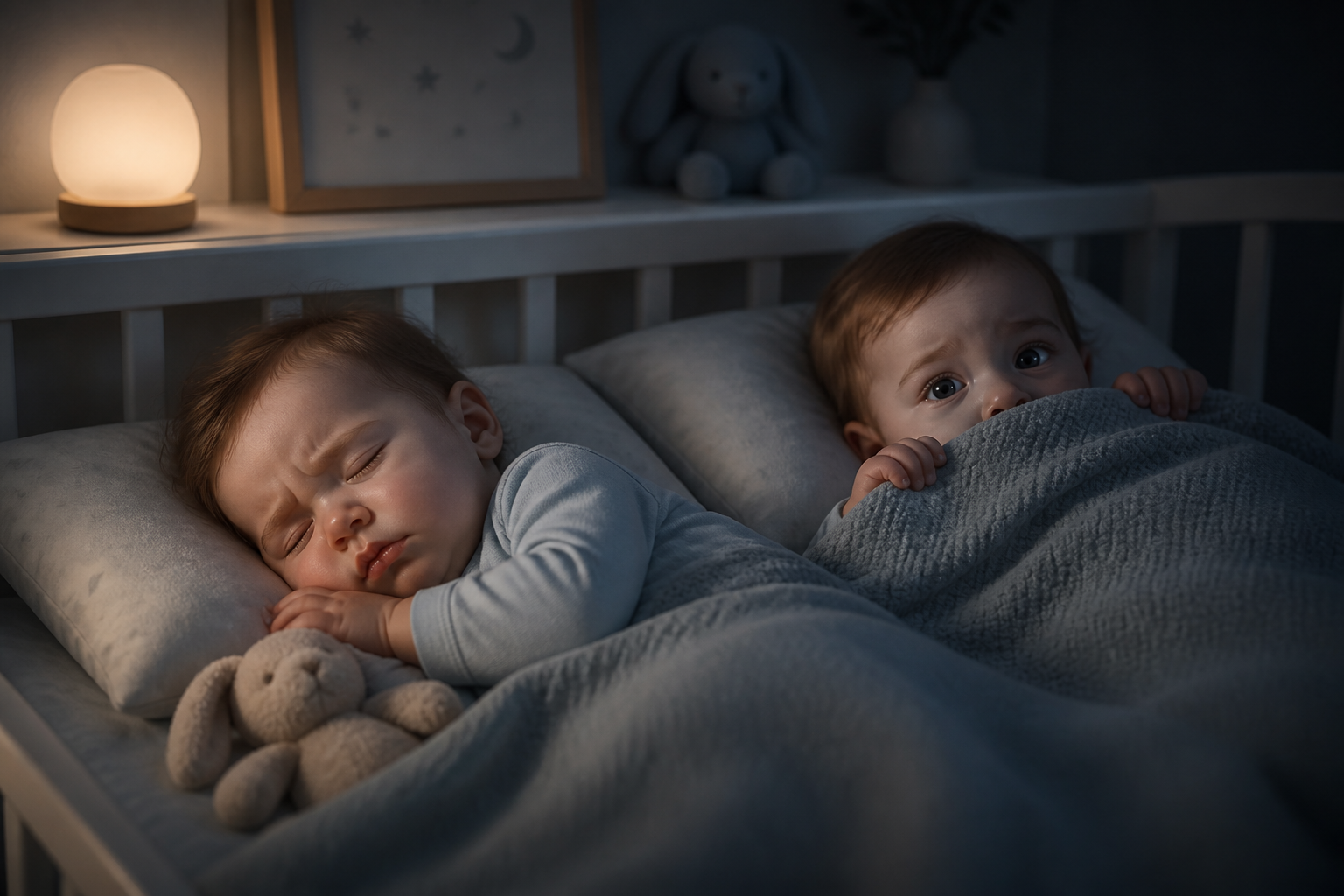
At 2:30 AM, piercing screams echo from the nursery. You rush in to find one twin sitting upright, eyes wide with terror, while the other thrashes inconsolably—seemingly awake but unreachable. Welcome to the complex world of twin night terrors, where managing one distressed toddler becomes an intricate dance of simultaneous comfort and crisis intervention.
Understanding twin night terrors requires both clinical precision and tactical parenting strategies. Unlike typical singleton sleep disruptions covered in our comprehensive twin toddler sleep solutions guide, night terrors in multiples create a cascading effect that can destabilize your entire household’s sleep architecture.
The Clinical Distinction: Night Terrors vs. Nightmares in Twins
Night terrors and nightmares operate on fundamentally different neurological pathways, creating distinct challenges when managing twins simultaneously.
Night terrors occur during deep non-REM sleep, typically 1-3 hours after bedtime. The affected child appears awake but remains in a dissociative state, often inconsolable and unresponsive to comfort. Their autonomic nervous system floods with stress hormones, causing rapid heart rate, sweating, and intense distress.
Nightmares emerge during REM sleep, usually in the early morning hours. Children experiencing nightmares are genuinely awake, aware of their surroundings, and able to receive comfort. They typically remember the frightening dream content.
The twin factor amplifies both conditions through emotional contagion and sleep disruption patterns. When one twin experiences a night terror, the intense screaming frequently triggers sympathetic distress in their sibling, creating a feedback loop of escalating anxiety.
| Characteristic | Night Terrors | Nightmares | Twin-Specific Impact |
|---|---|---|---|
| Sleep Stage | Deep Non-REM (Stage 3-4) | REM Sleep | Synchronized sleep cycles increase co-occurrence |
| Timing | First 1-3 hours after bedtime | Early morning (4-6 AM) | Affects different twins at predictable intervals |
| Consolability | Inconsolable, unresponsive | Responsive to comfort | Non-affected twin may become secondary distressed |
| Memory Retention | No memory of event | Detailed dream recall | Sibling may remember trauma even if not dreaming |
| Duration | 5-15 minutes | Brief awakening | Extended due to cross-twin activation |
The Twin Night Terror Protocol: Immediate Response Strategies
When twin night terrors strike, your response sequence determines whether the episode resolves quickly or escalates into a prolonged family crisis.
Phase One: Rapid Assessment and Triage
Enter the room calmly but swiftly. Identify which twin is experiencing the terror versus reactive distress. The primary affected child will display classic terror symptoms: dilated pupils, profuse sweating, and complete unresponsiveness to verbal cues.
Do not attempt to wake the child experiencing the night terror. Physical intervention often intensifies the episode and can trigger aggressive responses. Instead, ensure their physical safety by removing nearby objects and creating a protective perimeter.
Phase Two: Sibling Stabilization
Your immediate priority shifts to the awakened twin. Their genuine fear and confusion require active comfort and reassurance. Remove them from the immediate vicinity if possible, using a calm, steady voice to explain that their sibling is safe but having “big feelings while sleeping.”
This separation prevents emotional contagion while allowing the terror to run its natural course. The twins waking each other up phenomenon becomes particularly challenging during night terrors due to the intense auditory stimulation.
Phase Three: Environmental Management
Maintain dim lighting and minimize stimulation. Night terrors resolve more quickly in low-stimulation environments. Avoid bright overhead lights, which can prolong the dissociative state and create additional disorientation.
Monitor the affected twin’s safety without direct intervention. Position yourself close enough to prevent injury but avoid physical contact unless absolutely necessary for safety reasons.
Advanced Co-Regulation Techniques for Twin Families
Co-regulation—the process of helping children regulate their emotional and physiological states through calm, consistent adult presence—becomes exponentially complex with twins experiencing simultaneous distress.
The Dual-Comfort Strategy
When both twins require comfort simultaneously, implement strategic positioning. Sit between their beds or cribs, extending physical comfort to both while maintaining your own regulated state. Your nervous system becomes the stabilizing anchor for both children.
Use bilateral stimulation techniques: gentle, rhythmic movements that engage both sides of the body. Pat one twin’s back while offering your other hand to their sibling. This creates synchronized comfort without overwhelming either child.
Breathing Bridge Technique
Establish audible, deep breathing patterns that both twins can unconsciously synchronize with. Count slowly: “In for three, out for four.” Even during night terrors, the affected child’s autonomic nervous system may begin to entrain to your regulated breathing pattern.
This technique proves particularly effective with twins because their natural tendency toward behavioral mirroring amplifies the calming effect.
Prevention Strategies: Modifying Twin Sleep Architecture
Twin night terrors often emerge from specific sleep disruption patterns unique to multiples sharing space and schedules.
Sleep Debt Management
Overtired toddlers experience deeper non-REM sleep, increasing night terror frequency. With twins, sleep debt accumulates differently due to cross-twin sleep interruptions and synchronized early rising patterns.
Implement staggered bedtimes when night terrors become frequent. Put the more terror-prone twin to bed 15-20 minutes earlier, allowing them to move through their initial deep sleep phase before their sibling’s bedtime routine potentially disrupts the environment.
Environmental Modifications for 2026 Safety Standards
Modern twin nursery design incorporates advanced sleep monitoring technology. Smart sleep sensors can detect pre-terror physiological changes—elevated heart rate and increased movement during deep sleep phases.
Consider installing sound dampening panels between twin sleep spaces. The new 2026 acoustic foam standards provide superior noise reduction while maintaining safe air circulation.
When to Escalate: Medical Red Flags in Twin Night Terrors
Certain patterns require immediate pediatric consultation, particularly when managing multiple children simultaneously.
Frequency and Intensity Markers
Night terrors occurring more than twice weekly in either twin warrant medical evaluation. The stress of repeated episodes can create chronic sleep disruption affecting both children’s development and family functioning.
Multiple night terrors in a single evening, or episodes lasting longer than 20 minutes, may indicate underlying sleep disorders or neurological concerns requiring specialized assessment.
Daytime Behavioral Changes
Monitor for behavioral regression, increased aggression, or significant mood changes in either twin following night terror episodes. The non-affected sibling may develop sleep anxiety or bedtime resistance after witnessing repeated terror episodes.
Persistent fear of sleep or bedtime stalling behaviors in either twin suggests the need for pediatric sleep medicine consultation and possible play therapy intervention.
Twin Tactics: Pro-Level Shortcuts
– Create a “Terror Kit”: Keep a basket near the nursery containing a small flashlight, noise-canceling headphones for the unaffected twin, and a comfort object for immediate deployment during episodes.
– Implement Offset Sleep Cycles: Shift one twin’s bedtime by 30 minutes to reduce synchronized deep sleep phases where night terrors typically occur.
– Use the “Invisible Comfort” Method: During active night terrors, hum or whisper familiar lullabies without physical contact—the auditory familiarity can sometimes shorten episodes without triggering defensive responses.
– Document Environmental Triggers: Track room temperature, humidity, and household noise levels on terror nights—twins often share environmental sensitivities that predispose to episodes.
– Practice “Emergency Separation” Routes: Identify quick, safe ways to move the unaffected twin to an alternate sleep location (portable travel crib, parent’s room setup) for immediate deployment during prolonged episodes.
The Pediatrician’s Medical Survival Tip
Record night terror episodes on your phone’s voice memo while they’re happening—capture duration, intensity, and both twins’ responses. This real-time documentation provides invaluable clinical data for your pediatrician and helps identify patterns you might miss in exhausted retrospective reporting.
Stay healthy, Dr. Sarah