


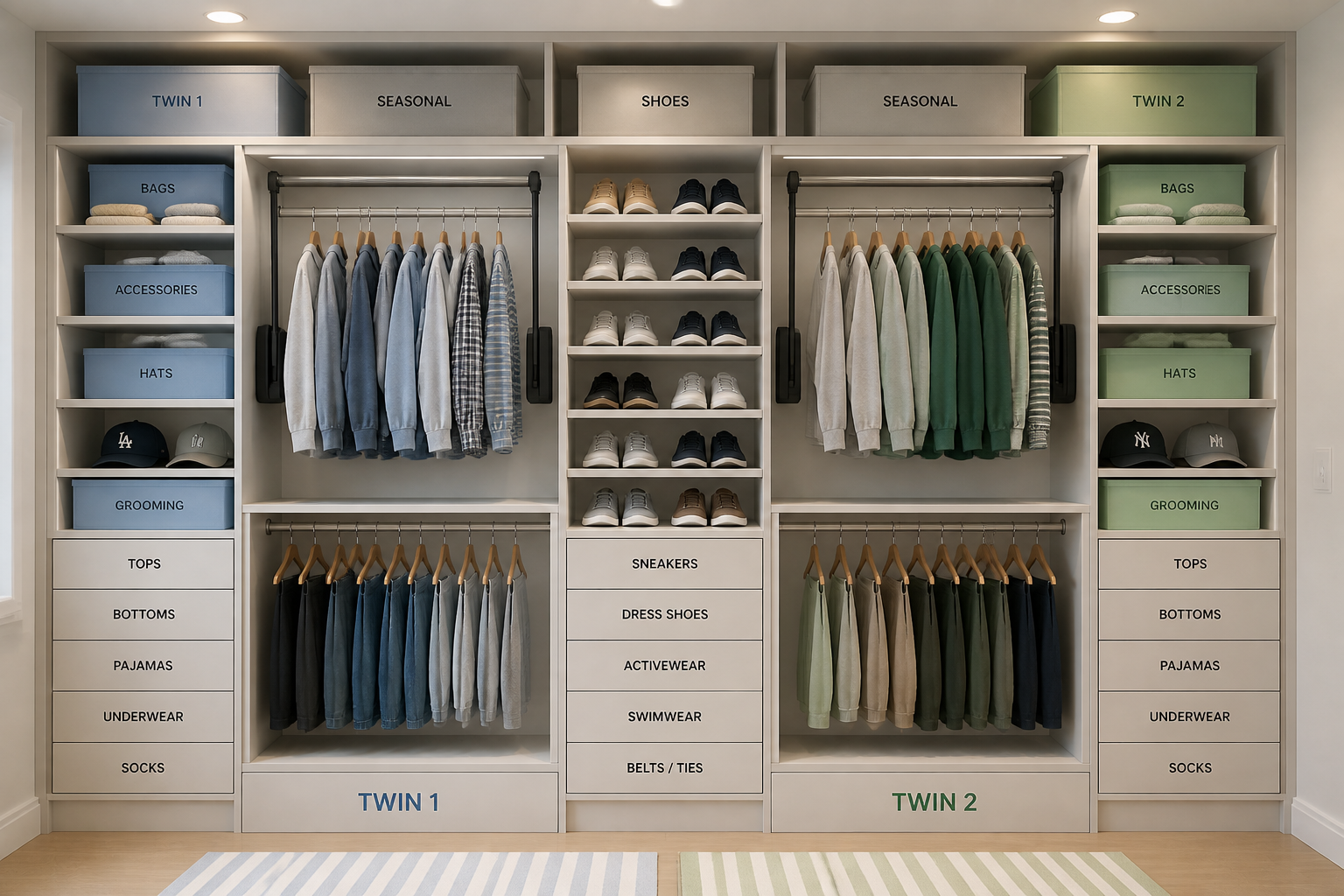
Double the Clothes, Triple the Storage Solutions: Twin Closet Organization Mastery
You’re staring at two identical outfits, wondering how something so small can generate such massive laundry loads. The reality hits fast: twin closet organization isn’t just about buying double hangers. It’s about creating a system that scales with your growing duo while keeping your sanity intact.
Most parents approach twin storage with the “buy two of everything” mindset. Wrong move. Smart families understand that effective twins sharing a room requires strategic vertical thinking and zone-based organization that grows with your children’s independence.
The Vertical Revolution: Why Going Up Changes Everything
Traditional closet systems fail twins because they’re designed for single-child households with gradual accumulation. Twins arrive with immediate doubling needs. The solution? Systematic vertical maximization.
Install adjustable shelving systems that reach the full ceiling height. The top 18 inches become your “future storage” zone for next-season clothes. Middle sections handle current rotation. Bottom areas stay accessible for emerging independence.
Twin closet organization thrives on the 3-Zone Vertical System:
– Zone 1 (0-36″): Daily access items, child-reachable by age 3
– Zone 2 (36-60″): Adult-managed current inventory
– Zone 3 (60″+ ceiling): Seasonal rotation and size-ahead storage
Strategic Layout Configurations for Maximum Efficiency
The key difference between functional and frustrating twin storage lies in traffic flow planning. Two children accessing the same space creates bottlenecks unless you design around dual usage patterns.
| Configuration Type | Space Required | Age Efficiency | Investment Level |
|---|---|---|---|
| Side-by-Side Mirrored | 8+ linear feet | Ages 4-12 optimal | Medium ($800-1200) |
| Central Tower System | 6×6 minimum footprint | Infancy through teens | High ($1200-2000) |
| Modular Cube Matrix | Flexible, 4+ feet | Ages 2-8 peak | Low-Medium ($400-800) |
The Central Tower System proves most effective for long-term twin closet organization. Position the tower in room center with 30-inch clearance on all sides. Each twin gets their dedicated quadrant, while shared items occupy neutral zones.
Color-Coding Systems That Actually Work
Forget Pinterest-perfect rainbow systems that require maintenance PhDs. Successful twin families use the Two-Color Plus Neutral approach. Each twin gets one signature color, with neutral gray/white for shared items.
Apply this consistently:
– Hangers in each twin’s color
– Storage bins with colored handles
– Drawer pulls or labels
– Laundry hampers
This visual system enables independent dressing by age 3 and eliminates the daily “whose shirt is this?” negotiations.
Size-Ahead Storage: Planning for Growth Spurts
Twins often grow at different rates despite identical genetics. Your twin closet organization system must accommodate this reality without creating chaos.
Dedicate the highest shelving tier to clear, labeled containers for next-size clothing. Use the “6-Month Forward” rule: always have the next size up ready in seasonal rotation.
Create separate containers for each twin’s ahead-sizes. Yes, they’re identical twins, but Twin A might hit size 4T three months before Twin B. Individual size-ahead storage prevents mix-ups and enables smooth transitions.
Hardware Solutions for High-Traffic Usage
Standard closet hardware fails under twin usage patterns. The constant opening, closing, reaching, and grabbing demands commercial-grade solutions.
Invest in soft-close drawer slides rated for 100+ pounds. Install pull-down closet rods that lower from 8-foot heights to 4-foot accessibility. Add LED strip lighting with motion sensors for independent nighttime access.
Door-mounted shoe organizers work overtime in twin households. Mount two per door at different heights – lower for current shoes, upper for seasonal/special occasion footwear.
Twin Tactics: Pro-Level Shortcuts
- The Sunday Night Reset: Spend 15 minutes every Sunday evening moving items back to designated zones. This prevents the gradual chaos creep that destroys systems.
- Duplicate Emergency Outfits: Keep identical backup outfits in sealed bags for daycare disasters. Store these outside the main system to avoid daily disruption.
- Growth Transition Bins: Use clear bins labeled “Almost Too Small” for items each twin is outgrowing. When bins fill, donate immediately and rotate next-size-up items down.
- Independent Access Tools: Install a sturdy step stool on a retractable track system. Twins can access higher storage safely without adult assistance by age 4.
- Seasonal Swap Strategy: Store off-season clothes in vacuum bags with color-coded labels. Complete seasonal swaps take 30 minutes instead of weekend projects.
The 2026 safety standards emphasize rounded corners and tip-resistant anchoring for all tall storage units. Secure anything over 30 inches to wall studs, not just drywall anchors.
Maintenance Systems That Sustain Success
Twin closet organization fails when maintenance becomes overwhelming. Build sustainability into your system design.
Implement the “One In, Two Out” rule during rapid growth phases. When new clothes arrive, immediately remove outgrown items. This prevents accumulation overflow that destroys carefully planned systems.
Create visual guides using photos of properly organized zones. Mount these inside closet doors so both children and adults can reset the system to baseline organization.
Schedule quarterly system reviews to adjust shelf heights, rotate seasonal items, and assess what’s working versus what needs modification. Growing twins mean evolving storage needs.
The investment in systematic twin closet organization pays dividends in reduced daily stress, increased child independence, and preserved parental sanity. Start with vertical maximization, implement traffic flow planning, and build maintenance into your routine.
The Space-Optimization Strategy
Install pull-down closet rods at 8-foot height that can be lowered to 4 feet with a simple mechanism. This doubles your hanging space while maintaining child accessibility as they grow.
To a more organized home, Jordan