


Introduction: The Environmental Reality of Twin Parenting
When I discovered I was carrying twins, my first thought wasn’t about double the joy—it was about double the diapers. As a mother of three and someone who’d already been working toward a more sustainable household, the environmental implications hit me immediately. Two babies meant twice the formula containers, double the clothing needs, and what felt like an exponential increase in packaging waste arriving at our doorstep.
The statistics around twin families and environmental impact tell a sobering story. The average singleton family generates approximately 2,000 pounds of baby-related waste in the first year alone. For twin families, this number doesn’t just double—it often triples due to the convenience purchases, bulk buying, and emergency shopping that comes with managing two infants simultaneously. We’re talking about an additional 4,000-6,000 pounds of waste before your babies celebrate their first birthday.
But here’s what I’ve learned through three years of trial, error, and countless conversations with other twin parents: sustainable parenting isn’t just possible with twins—it’s essential, and it can actually save your sanity along with the planet.
Why Twins Change the Sustainability Game
Twin parenting creates unique environmental challenges that singleton families rarely face:
- Synchronized needs: When both babies need feeding, changing, or soothing simultaneously, convenience often trumps sustainability
- Bulk consumption: Everything from diapers to formula gets consumed at an accelerated rate, leading to larger packaging and more frequent purchases
- Emergency preparedness: Twin parents often over-purchase out of fear of running out, leading to excess waste
- Time poverty: The intense demands of caring for two infants can make sustainable choices feel impossible when you’re running on three hours of sleep
The good news? Every sustainable system you implement gets doubled in impact. When you choose cloth diapers, you’re preventing 5,000-6,000 disposable diapers from entering landfills in the first year. When you establish efficient feeding routines, you’re cutting packaging waste in half compared to grab-and-go alternatives.
This guide isn’t about perfect parenting or zero-waste idealism. It’s about building practical, low-impact systems that work for real twin families dealing with real challenges. Because when you’re changing sixteen diapers a day, sustainability has to be simple, or it simply won’t happen.
Sustainable Diapering Solutions for Twins
When you’re changing up to 20 diapers daily with twins, the environmental and financial impact of your diapering choice becomes significant. As we explored in our comprehensive diapering guide, sustainable options can dramatically reduce your family’s ecological footprint while offering substantial long-term savings.
Cloth Diapering Systems for Twin Families
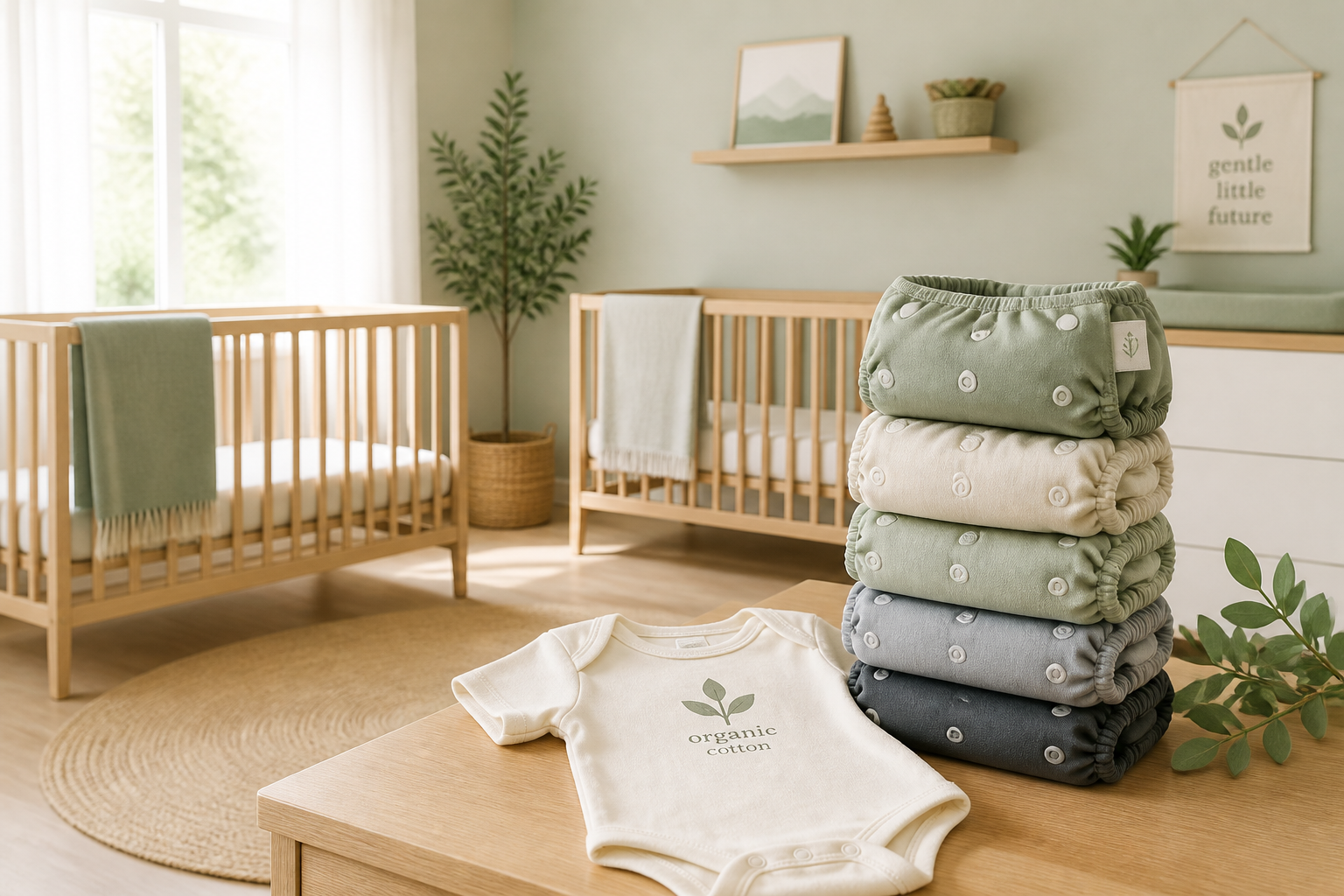
Modern cloth diaper systems have evolved far beyond the safety pins and plastic pants of previous generations. All-in-one (AIO) and pocket diaper systems offer convenience that rivals disposables while maintaining sustainability benefits. For twins, you’ll need approximately 30-40 diapers in your rotation to maintain a wash-every-other-day schedule.
The upfront investment ranges from $600-1,200 for a complete twin cloth diaper system, but this covers both babies from birth through potty training. Consider these efficiency factors:
- Snap-in inserts allow quick changes without complete diaper replacement
- One-size adjustable diapers grow with both babies
- Modern fabrics wick moisture effectively, reducing rash incidents
- Washing systems can be streamlined using mesh laundry bags for easy sorting
Bamboo and Plant-Based Alternatives
Biodegradable disposables made from bamboo fiber, corn starch, or other plant materials offer a middle-ground solution. While more expensive than conventional disposables ($0.45-0.60 per diaper versus $0.25-0.35), they break down in 3-6 years compared to 500+ years for traditional diapers.
Cost and Environmental Impact Analysis
| Diapering Method | Total 2-Year Cost (Twins) | Environmental Impact | Convenience Level |
|---|---|---|---|
| Conventional Disposables | $3,600-4,800 | High (landfill waste) | Highest |
| Bamboo Disposables | $6,500-8,700 | Moderate (biodegradable) | High |
| Cloth System | $800-1,400 | Lowest (reusable) | Moderate |
The environmental benefits extend beyond waste reduction. Cloth diapers eliminate the manufacturing emissions of 10,000+ disposable diapers per twin. Even accounting for washing water and energy usage, cloth systems reduce your diapering carbon footprint by approximately 40%.
Hybrid Approaches for Twin Families
Many twin parents find success with flexible systems: cloth diapers at home, biodegradable disposables for outings and overnight. This approach balances sustainability goals with practical parenting demands while maintaining cost savings compared to full-time disposable use.
Building Minimalist Twin Wardrobes
Creating sustainable wardrobes for twins requires a strategic shift from quantity to quality—a principle I’ve refined through years of dressing my own twins while maintaining our family’s commitment to low-waste living. The key lies in building versatile capsule systems that grow with your children while minimizing environmental impact and storage chaos.
The Foundation System Approach
Start with a foundation of 12-15 high-quality pieces per child, focusing on neutral colors that coordinate across both wardrobes. This creates maximum mixing potential while reducing decision fatigue during those hectic morning routines. As we explored in our comprehensive guide on capsule wardrobes for twins, the goal is creating systems where every piece works with every other piece.
Choose organic cotton, bamboo, or merino wool basics in colors like gray, navy, cream, and one accent color per child. This foundation eliminates the “nothing matches” problem while ensuring clothes can be shared between twins as needed.
Strategic Piece Selection
Focus your investment on items that deliver maximum versatility:
- Layering pieces: Cardigans, lightweight sweaters, and zip hoodies that work across seasons
- Convertible items: Dresses that function as tunics over leggings, shorts with adjustable waists
- Quality basics: Well-constructed t-shirts, leggings, and joggers that withstand frequent washing
- Statement accessories: Scarves, hats, or unique shoes that personalize neutral outfits
Size and Growth Management
Buy slightly larger sizes in quality fabrics that soften and improve with wear rather than deteriorate. Establish a simple rotation system: when twins outgrow items, pass them to younger siblings, friends, or donation programs. This circular approach reduces waste while managing the rapid turnover of children’s clothing.
Implement seasonal storage boxes to rotate weather-appropriate items, keeping closets streamlined and functional. Label everything clearly—when you’re managing two children’s wardrobes, organization becomes essential for maintaining your minimalist system.
The minimalist twin wardrobe isn’t about deprivation; it’s about intentional choices that serve your family’s needs while respecting planetary resources. Every piece should earn its place through versatility, quality, and joy.
Creating a Safe, Non-Toxic Nursery Environment
When preparing for twins, creating a safe nursery environment becomes exponentially more critical. With two babies sharing the same space, exposure risks multiply, making careful material selection essential for their developing respiratory and immune systems.
Understanding Modern Safety Certifications
The nursery furniture landscape has evolved significantly since 2024, with stricter volatile organic compound (VOC) limits and enhanced formaldehyde testing protocols. Look for pieces bearing the GREENGUARD Gold certification, which ensures emissions meet California’s stringent standards for schools and healthcare facilities. For twin families, I prioritize furniture that meets these elevated standards since two babies mean double the sensitivity to airborne contaminants.
Additionally, seek out CertiPUR-US certified foam in mattresses and cushioning. This certification prohibits flame retardants, heavy metals, and ozone depleters—chemicals particularly concerning in the confined nursery environment where twins will spend significant time together.
Material Selection Strategy
Solid wood furniture remains the gold standard, but not all wood finishes are created equal. Water-based polyurethane finishes cure faster and emit fewer ongoing vapors compared to oil-based alternatives. As detailed in our comprehensive material safety guide, prioritize pieces with natural oil finishes or those that have had adequate off-gassing time before delivery.
For textiles, organic cotton and bamboo fabrics processed without chlorine bleaching offer the safest foundation. Since twins often share bedding rotation, having materials that maintain their integrity through frequent washing becomes crucial for long-term safety.
Strategic Room Ventilation
Twin nurseries require enhanced air circulation due to increased occupancy. Position cribs away from direct HVAC vents to prevent drafts, but ensure adequate airflow throughout the space. Consider a HEPA air purifier rated for rooms 50% larger than your actual nursery to handle the increased biological load.
Paint and Wall Treatment Considerations
Zero-VOC paints have improved dramatically, offering durability that matches traditional formulas. Allow minimum 72-hour cure time before introducing any nursery items, extending to one week if possible. This timeline becomes especially important when preparing for twins, as their simultaneous arrival leaves no flexibility for last-minute changes.
Maximizing Value Through Strategic Reselling
Creating a circular economy approach to twin gear isn’t just environmentally responsible—it’s financially smart. With twins requiring double everything, strategic buying and reselling can recover 40-60% of your initial investment while keeping quality items in circulation. As we discussed in our comprehensive guide on reselling twin gear, the key lies in developing systems that maximize both value retention and efficiency.
The Buy-to-Resell Mindset
Start thinking like a savvy investor from day one. When evaluating purchases, consider the item’s resale trajectory alongside its immediate utility. Premium brands like UPPAbaby, Bugaboo, and Baby Jogger maintain stronger resale values, often justifying their higher upfront costs. Document purchase dates, original prices, and retain all accessories—these details significantly impact resale success.
Maintenance Systems for Maximum Recovery
Implement a “resale-ready” maintenance routine that preserves value throughout use. Create a simple weekly checklist: wipe down surfaces, check for wear patterns, and address minor issues immediately. Store instruction manuals and original packaging when space allows—these can increase resale value by 15-25%. For high-ticket items like double strollers, consider professional cleaning before listing.
Timing Your Sales Strategy
Market timing dramatically affects recovery rates. List seasonal items 6-8 weeks before peak demand: strollers in early spring, winter gear in late fall. Monitor local twin groups and parenting networks for demand patterns—twin gear often commands premium prices within twin communities where parents understand the specific challenges.
| Item Category | Optimal Selling Window | Expected Recovery Rate | Key Value Factors |
|---|---|---|---|
| Double Strollers | 12-18 months of use | 45-60% | Brand reputation, wheel condition, fabric cleanliness |
| Twin High Chairs | 8-12 months of use | 35-50% | Safety recalls status, tray condition, adjustability |
| Matching Car Seats | Before expiration (6 years) | 40-55% | Accident-free history, complete installation guides |
| Twin Cribs/Furniture | 2-3 years of use | 50-70% | Solid wood construction, convertible features |
Platform Strategy for Maximum Reach
Diversify your selling channels based on item value and urgency. Facebook Marketplace and local twin groups excel for immediate sales and higher-value items where buyers can inspect before purchasing. Instagram and specialized resale apps work well for clothing lots and smaller accessories. Always include detailed condition descriptions and highlight twin-specific benefits in your listings.
Building Your Sustainable Twin Parenting Future
Creating a sustainable approach to raising twins isn’t about perfection—it’s about building systems that work for your family while reducing environmental impact. Through my experience with twins and countless conversations with other parents, I’ve learned that the most successful families focus on three core principles: intentional consumption, efficient systems, and community support.
Your Implementation Roadmap
Start small and build momentum. Choose one area where you feel most confident making changes, whether that’s switching to cloth diapers, establishing a toy rotation system, or connecting with other families for resource sharing. The key is creating habits that feel natural rather than overwhelming.
For new twin parents, I recommend beginning with purchase decisions. Before buying duplicate items, ask yourself: “Do both babies actually need this simultaneously?” Often, you’ll find that one high-quality item can serve both children, especially for gear like swings, play mats, or feeding chairs.
Long-Term System Benefits
The sustainable practices you establish now will compound over time. Families who embrace secondhand shopping, meal planning, and energy-efficient routines consistently report not just environmental benefits, but significant financial savings and reduced daily stress. These systems become even more valuable if you’re considering expanding your family further.
Measuring Your Progress
Track your wins, not your failures. Keep a simple monthly note of money saved through secondhand purchases, meals prepared in bulk, or energy reductions. These tangible results reinforce your commitment and help you identify which strategies work best for your specific situation.
Building Community Connections
Remember that sustainable parenting thrives in community. Connect with local parents’ groups, organize clothing swaps, or start a neighborhood toy library. These connections provide practical support while modeling collaborative consumption for your children.
The sustainable twin parenting journey is marathon, not a sprint. Every small change contributes to a larger impact, and the systems you build today will serve your family—and the environment—for years to come. Trust your instincts, celebrate your progress, and remember that raising environmentally conscious children while managing the beautiful chaos of twins is an achievement worth celebrating.