


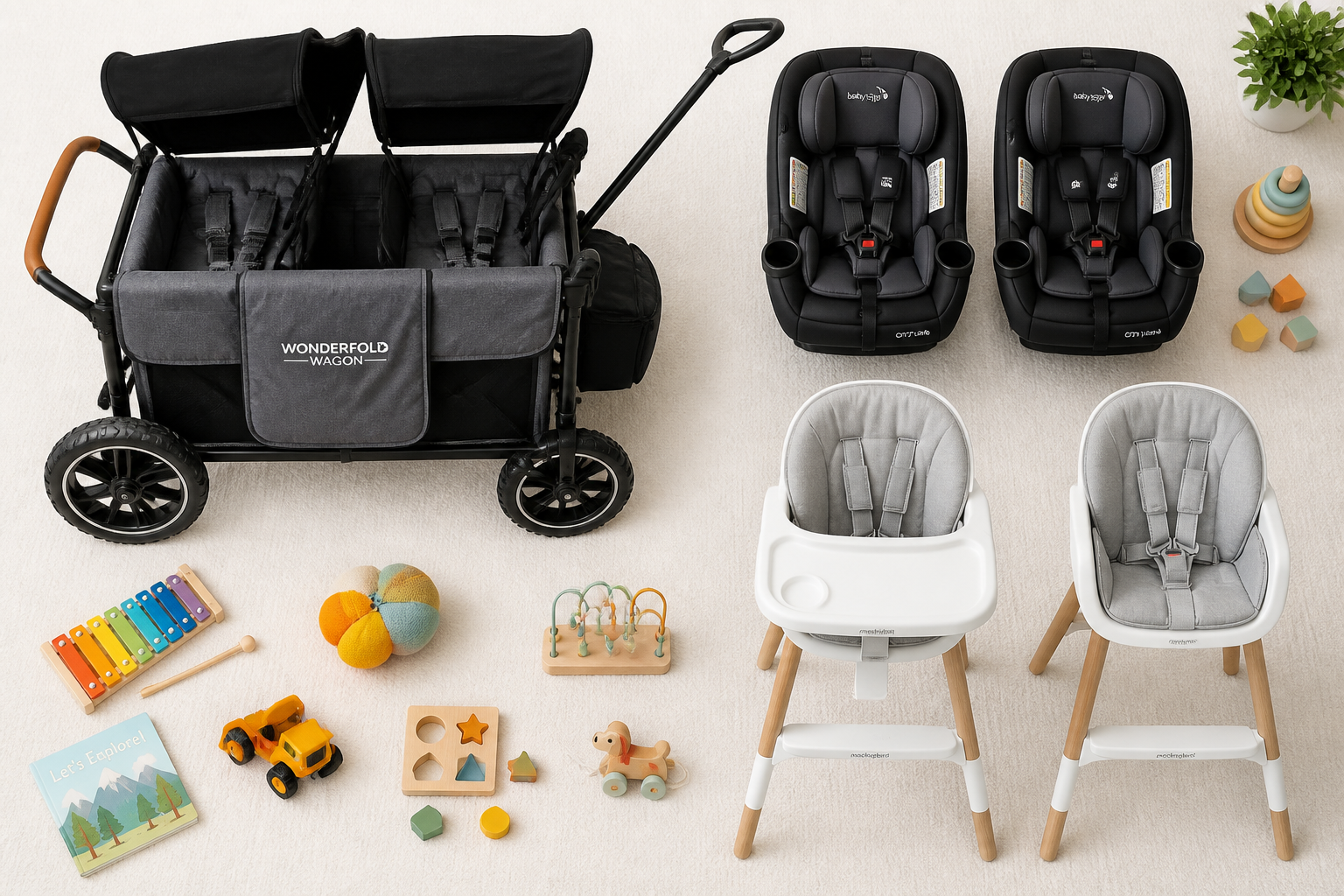
Introduction: Navigating the Twin Toddler Years
If you’ve successfully navigated the newborn phase with twins, congratulations—you’ve conquered one of parenting’s greatest challenges. But as any experienced twin parent knows, the journey is far from over. As your babies transform into curious, mobile toddlers, your gear needs evolve dramatically, and the stakes feel just as high as those early sleepless nights.
The transition from infant to toddler gear isn’t just about buying bigger versions of what you already own. It’s about strategic planning that can make or break your daily routines. A poorly chosen double wagon can turn a family outing into a wrestling match. The wrong high chair setup can transform mealtimes into chaos that ripples through your entire day. I’ve learned this firsthand with my own twins, and through testing hundreds of products, I’ve seen how the right choices create smooth sailing while the wrong ones create unnecessary stress.
What makes twin toddler gear particularly challenging is the simultaneous nature of everything. Unlike parents with children of different ages who can stagger purchases and learn from experience, twin parents need solutions that work for two children hitting the same developmental milestones at exactly the same time. When both toddlers decide they’re done with their current setup, you need alternatives ready immediately—not after weeks of research.
This guide addresses the most critical gear categories that will define your toddler years: wagons that actually maneuver through real-world scenarios, high chair solutions that streamline rather than complicate feeding time, and essential toddler gear that recognizes you’re managing two little ones simultaneously. We’ll cut through marketing hype to focus on what actually works when you’re outnumbered and efficiency isn’t just preferred—it’s survival.
Every recommendation in this guide has been tested not just for quality and safety, but for the unique demands of twin parenting: easy cleanup, quick setup, durability under double the wear, and designs that help rather than hinder your daily logistics. Because when you’re managing twins, every piece of gear needs to earn its place in your home.
Essential Mobility Solutions: Stroller Wagons for Twin Adventures
As your twins grow beyond the infant stage, traditional strollers often become limiting. Between 18-24 months, most twin parents discover the game-changing benefits of stroller wagons—versatile mobility solutions that transform everyday outings from exhausting logistics into genuine adventures.
Why Stroller Wagons Excel for Growing Twins
Unlike traditional double strollers, wagon-style carriers offer superior space, comfort, and adaptability for active toddlers. Your twins can face each other for interaction, stretch their legs, or even nap comfortably during longer excursions. The enhanced storage capacity eliminates the constant juggling act of diaper bags, snacks, and entertainment supplies that plague standard stroller users.
The all-terrain capabilities become particularly valuable as your family ventures beyond smooth sidewalks. Beach trips, park adventures, and festival outings become feasible rather than stressful when you have reliable wheels that handle sand, grass, and gravel with ease.
Key Features That Matter for Twin Families
- Weight capacity: Look for models supporting 100+ pounds total to accommodate growing children and gear
- Individual safety harnesses: Five-point systems ensure secure transportation for active toddlers
- Easy fold mechanisms: One-handed operation is crucial when managing two children
- All-terrain wheels: Pneumatic tires with suspension handle varied surfaces smoothly
- Canopy coverage: Adjustable sun protection for different seating positions
- Storage solutions: Multiple pockets and compartments for organized gear management
Making the Investment Decision
Quality stroller wagons represent a significant investment, typically ranging from $300-800. However, their extended usability—often serving families until children reach 6-7 years—provides excellent long-term value. As we detailed in our comprehensive comparison of leading brands like Veer, WonderFold, and Gladly, the right wagon choice depends heavily on your family’s specific adventure style and storage constraints.
Consider your typical destinations: urban families might prioritize compact folding and smooth maneuverability, while outdoor enthusiasts need robust all-terrain performance and weather protection. The transition timing also matters—introducing wagons too early can be unsafe, while waiting too long means missing months of enhanced mobility freedom.
Safe Transportation: Upgrading to Convertible Car Seats
The transition from infant car seats to convertible models marks a significant milestone for twin families—and a critical safety decision. Unlike singleton parents who can easily accommodate one bulky convertible seat, twin parents must navigate the challenge of fitting two seats safely in most vehicles while maintaining proper installation standards.
When to Make the Switch
Most twins are ready for convertible seats between 12-24 months, depending on their growth rate. The switch becomes necessary when they exceed their infant seat’s height or weight limits (typically 30-35 pounds or when their head reaches within one inch of the seat’s top). Don’t wait until they’ve outgrown their current seats—plan ahead to ensure proper fit testing.
The Space Challenge: Why Slim Designs Matter
Standard convertible seats often measure 18-20 inches wide, making it nearly impossible to install two safely in most vehicles while maintaining the required inch of space between seats. This is where slim-profile convertible seats become essential for twin families.
As we discussed in our Convertible Car Seat Upgrade Guide: Best Slim Models for Twin Toddlers, seats measuring 17 inches or less in width are specifically designed for multi-child families without compromising safety standards.
Key Features for Twin-Friendly Convertible Seats
- Narrow width (17 inches or less) for proper 3-across installation
- Extended rear-facing limits (40+ pounds) to maximize safety duration
- Easy-adjust harness systems for managing two growing toddlers efficiently
- Removable cup holders that can interfere with adjacent seat installation
- Compact base design that doesn’t require excessive vehicle space
Installation Priorities for Twin Safety
Professional installation checks become even more critical with two convertible seats. Schedule appointments with certified technicians who understand multi-seat configurations. Ensure each seat achieves less than one inch of movement at the belt path, and verify that neither seat interferes with the other’s proper positioning.
Remember: never compromise on proper installation to make seats fit. If your current vehicle cannot accommodate two convertible seats safely, it may be time to consider a vehicle upgrade alongside your car seat transition.
Mealtime Management: High Chair Solutions for Twin Feeding
When your twins reach the high chair stage, you’ll quickly realize that mealtime efficiency becomes crucial for your sanity. The choice between space-saving designs and traditional dual high chair setups can significantly impact your daily routine, kitchen space, and feeding success.
Space-Saving Twin Feeding Solutions
Space-saving designs are game-changers for smaller kitchens or dining areas. Double-wide feeding chairs and bench-style seats allow both twins to eat side-by-side in roughly the same footprint as a single traditional high chair. These units typically feature individual trays and safety harnesses while maximizing your floor space.
The main advantage? You can supervise and feed both children simultaneously without the constant back-and-forth movement between separate chairs. However, these designs often limit your flexibility—if one twin finishes early or needs a diaper change, you might disturb the other’s mealtime.
Traditional Dual High Chair Approach
Setting up two individual high chairs offers maximum flexibility and independence. Each twin has their own space, can be moved separately, and you can adjust heights or positions based on individual needs. This approach works particularly well as twins develop different eating paces and preferences.
The downside is obvious: double the floor space, double the cleaning, and potentially more chaotic mealtimes if you’re managing solo feeding sessions.
Practical Considerations for Your Decision
| Factor | Space-Saving Design | Dual High Chairs |
|---|---|---|
| Kitchen Space Required | Minimal (3×4 feet) | Significant (6×4 feet) |
| Individual Flexibility | Limited | Maximum |
| Feeding Efficiency | High for simultaneous feeding | Moderate |
| Storage When Not in Use | Bulky, limited options | Stackable or foldable options |
As we discussed in our comprehensive guide on Twin Feeding Chairs Reviewed: Space-Saving Seats vs. Dual Highchairs, the “right” choice depends heavily on your kitchen layout, feeding style, and twins’ temperaments. Consider your peak mealtime challenges: Are you struggling with space constraints, or do you need maximum flexibility for different eating schedules?
My recommendation? If you’re tight on space and your twins generally eat well together, space-saving designs excel. If you have room and prefer individual control over each twin’s feeding experience, invest in quality individual chairs.
Safe Play Spaces: Containment and Entertainment Solutions
When you have two mobile toddlers, creating secure play environments becomes both a safety necessity and a sanity saver. The key is finding containment solutions that give your twins room to play together safely while allowing you moments to breathe, prep meals, or handle the inevitable diaper blowout from child number three.
Pop-Up Playpen Advantages for Twin Parents
Pop-up playpens have revolutionized safe play for multiples families. Unlike traditional wooden or metal play yards that require assembly and permanent floor space, pop-up designs offer instant setup and portability. As we discussed in our comprehensive guide on Portable Playpens for Two: Pop-Up Play Yards Built for Multiples, these solutions are game-changers for families managing multiple toddlers simultaneously.
The biggest advantage? You can contain both twins in one spacious area rather than managing separate containment systems. This prevents the classic twin scenario where one escapes their bouncer while you’re tending to the other, leading to a toddler tornado in your living room.
Essential Size and Safety Considerations
When selecting playpens for twins, size calculations change dramatically. A standard 36-inch square playpen that works for a singleton becomes cramped with two active toddlers. Look for minimum dimensions of 45×45 inches, though 50×50 inches or larger hexagonal designs provide optimal space for parallel play without constant territorial disputes.
Height matters too. Twin dynamics often include one child helping the other escape—they’re natural co-conspirators. Walls should measure at least 26 inches high, with smooth tops that don’t provide footholds for climbing attempts.
Multi-Zone Setup Strategy
Consider creating designated zones within larger pop-up playpens using soft dividers or toy placement. This prevents resource guarding behaviors common in twins while maintaining the containment benefits. Place duplicate favorite toys in each zone to minimize conflicts.
For families with mixed ages, look for playpens with removable panels. This allows you to expand the play area when older siblings want to join in, then quickly reconfigure for twin-only containment during naptime prep or when you need focused attention on other tasks.
The investment in a quality, spacious pop-up playpen pays dividends in daily management, giving you a reliable tool for safe twin entertainment that travels from room to room as needed.
Active Development: Ride-On Toys and Balance Equipment
As your twins transition from toddlerhood into their preschool years, their need for physical challenges and coordination development becomes increasingly important. This is where ride-on toys and balance equipment become game-changers for twin families – not just for individual development, but for creating shared outdoor experiences that burn energy and build confidence simultaneously.
The Twin Advantage in Balance Development
Having twins actually provides a unique advantage when it comes to balance bike and trike training. The natural competitiveness and mimicry between twins accelerates learning curves dramatically. I’ve watched countless twin pairs where one child’s breakthrough moment immediately motivates their sibling to push harder, creating a positive feedback loop that singleton parents often struggle to replicate.
Balance bikes, in particular, are exceptional tools for twins because they eliminate the complexity of pedaling while focusing purely on steering and balance. This simplified approach means both children can progress at similar rates, reducing the frustration that often comes when developmental milestones hit at different times.
Strategic Equipment Selection
When selecting ride-on equipment for twins, consider these practical factors:
- Size compatibility: Look for adjustable seat heights that can accommodate slight size differences between twins
- Durability expectations: Twin gear gets double the wear – invest in higher-quality frames and components
- Storage solutions: Two bikes require dedicated storage planning, especially in urban environments
- Safety synchronization: Matching helmets and safety gear simplifies your routine and ensures neither child is left behind
As we discussed in our comprehensive guide on Best Double Balance Bikes and Trikes for Active Twin Toddlers, the investment in quality ride-on equipment pays dividends in outdoor time, physical development, and sibling bonding opportunities.
Beyond Basic Balance: Progressive Development
The beauty of starting twins on balance equipment simultaneously is the natural progression it creates. Most twin pairs I’ve observed move from balance bikes to pedal bikes within months of each other, often spurring each other toward independence. This synchronized development makes family bike outings possible much earlier than typical singleton timelines suggest.
Consider ride-on toys as foundational tools that bridge the gap between indoor play and true outdoor adventure – setting the stage for years of active family experiences.
Complete Toddler Transition Checklist
Making the leap from infant gear to toddler essentials feels overwhelming with twins—I know because I’ve been there. This comprehensive checklist breaks down exactly what you need, when you need it, and what you can skip to save both money and sanity.
Essential Gear Categories by Priority
| Priority Level | Gear Category | Age Range | Twin-Specific Notes |
| Must-Have | Double Wagon | 12-18 months | Game-changer for outings and neighborhood walks |
| Must-Have | Convertible High Chairs (2) | 6-12 months | Grows with twins through preschool years |
| High Priority | Toddler Car Seats (2) | 12-24 months | Forward-facing transition varies by twin size |
| High Priority | Safety Gates | 9-15 months | Extra-wide gates needed for double escape attempts |
| Medium Priority | Toddler Beds (2) | 18-36 months | Consider staggered transition if one climbs first |
Monthly Transition Timeline
Months 6-9: Begin high chair research and purchase. Start childproofing essentials like outlet covers and cabinet locks—twins mean double trouble once they’re mobile.
Months 9-12: Invest in your wagon system before walking begins. Trust me, once those little legs get moving, you’ll need reliable transport for longer outings when they inevitably tire out at different times.
Months 12-18: Evaluate car seat transitions based on individual twin growth patterns. Don’t feel pressured to upgrade both simultaneously if one twin isn’t ready.
Months 18-24: Focus on independent play gear and learning toys. This is when having duplicate items becomes crucial for reducing conflicts.
Budget-Smart Shopping Strategy
With twins, timing purchases strategically saves hundreds. Buy seasonal items (wagons, outdoor toys) during off-season sales. Focus your budget on safety-critical items first—car seats, gates, and childproofing supplies—then work down to convenience items.
Consider which items truly need duplicates versus what can be shared. Spoiler alert: you’ll need two of almost everything, but strategic sharing of larger items like slides or ride-on toys can work with proper scheduling.
Moving Forward with Confidence
The transition from infant gear to toddler essentials with twins doesn’t have to be overwhelming. After reviewing dozens of products and testing them with my own twins, I can confidently say that the right gear choices make an enormous difference in your daily sanity and long-term success.
Remember that this stage is temporary, but the habits you build now—prioritizing safety, efficiency, and your own well-being—will serve your family for years to come. The double wagon that feels like a splurge today will become your lifeline for zoo trips, farmers markets, and neighborhood walks. Those convertible high chairs that seemed expensive will earn their keep through years of meals, crafts, and homework sessions.
Your Investment Strategy
Think of quality toddler gear as an investment rather than an expense. When you’re managing two active toddlers, durability matters more than ever. A well-built wagon will survive sibling fights, outdoor adventures, and eventually get passed down or resold. High chairs that convert to booster seats eliminate the need for future purchases.
Don’t feel pressured to upgrade everything at once. Start with your biggest pain points—usually mobility and mealtimes—then gradually add other essentials as your budget and storage space allow.
Trust Your Instincts
As you navigate this gear transition, remember that you know your twins better than any review or recommendation. If one twin is an escape artist while the other is content to stay put, factor that into your safety features. If your family loves outdoor adventures, prioritize all-terrain capabilities over compact storage.
The toddler years with twins are challenging, but they’re also filled with incredible joy and discovery. Having the right gear frees you to focus on what really matters—watching your twins explore the world, develop their unique personalities, and create those precious memories that make all the chaos worthwhile.
You’ve already proven you can handle the infant stage with twins. Trust yourself to make smart gear choices that will support your family’s next adventure.