


Introduction: Building Your Foundation for Two
The moment you discover twins are on the way, your entire perspective shifts—and so should your home’s infrastructure. While the joy of expecting two babies is immeasurable, the reality of accommodating two infants simultaneously requires strategic planning that goes far beyond simply buying duplicate items.
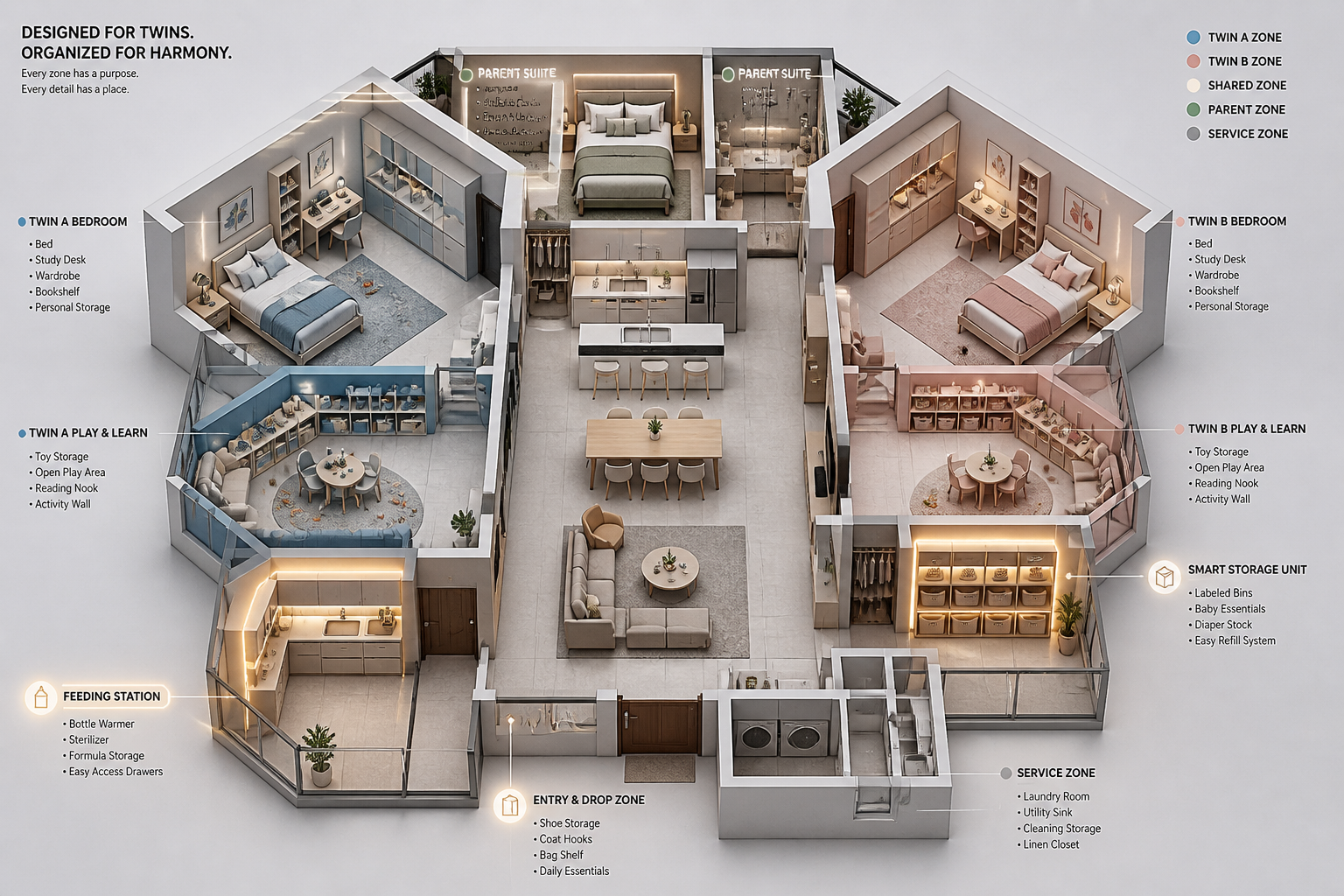
Most parents preparing for their first child focus on creating a beautiful nursery and gathering essential supplies. But when twins enter the equation, your home becomes a complex operational system that needs to function efficiently 24/7. From feeding stations that can handle simultaneous midnight meals to storage solutions that prevent you from drowning in double the gear, every square foot of your living space becomes precious real estate.
The Infrastructure Challenge
Scaling your home for twins isn’t just about having more space—it’s about creating smarter spaces. The challenges are uniquely multifaceted:
- Traffic Flow Optimization: Navigating hallways with a double stroller while carrying supplies requires strategic furniture placement and clear pathways
- Storage Multiplication: Twin gear doesn’t just double your storage needs—it often triples them when you factor in different sizes, seasonal items, and backup supplies
- Operational Efficiency: Creating systems that allow you to manage two feeding schedules, diaper changes, and sleep routines without constant trips between rooms
- Safety Scaling: Childproofing considerations multiply exponentially when two curious toddlers can collaborate on creative destruction
The Opportunity Within the Challenge
Here’s what many families don’t realize: preparing your home for twins forces you to implement organizational systems and efficiency strategies that will benefit your family for years to come. The structured approach required for managing two infants creates habits and home layouts that scale beautifully as your children grow.
Smart infrastructure choices made now—like installing adequate electrical outlets for multiple devices, creating centralized command stations, and designing flexible storage systems—will serve your family through the toddler chaos, school-age activities, and even teenage years.
This guide will walk you through the systematic approach to transforming your home into a twin-optimized environment that works as hard as you do, ensuring that your space supports your family’s success rather than creating additional stress.
Sleep Space Planning: Room Configuration Strategies
The shared versus separate sleeping arrangement decision represents one of your most critical spatial planning choices when preparing for twins. This fundamental choice will ripple through every aspect of your home’s layout, from immediate nursery needs to long-term bedroom allocation strategies.
Evaluating Your Space Realistically
Start by conducting an honest assessment of your current square footage and bedroom count. Many families discover that what initially seems like adequate space requires creative reconfiguration once two cribs, double the storage, and expanded play areas enter the equation. Consider not just the immediate newborn phase, but how your chosen configuration will serve you through the toddler years and beyond.
A shared nursery typically requires a minimum of 120 square feet to comfortably accommodate two cribs, a changing station, and essential storage without creating a cramped environment. If you’re working with a smaller space, consider whether adjoining rooms could be converted or if a temporary shared arrangement might bridge you to a future move or renovation.
The Science Behind Sleep Arrangements
Your configuration choice impacts more than just logistics—it directly affects sleep quality for your entire household. As we discussed in our guide on sleep science for twins, research shows that twins often sleep better together initially due to their prenatal bonding, but individual sleep patterns may diverge significantly as they develop.
Configuration Planning Matrix
| Room Setup | Best For | Space Requirements | Transition Timeline |
|---|---|---|---|
| Single Shared Nursery | Limited bedrooms, synchronized sleepers | 120+ sq ft | 0-3 years typical |
| Separate Rooms | Different sleep patterns, ample space | 80+ sq ft each | Birth through childhood |
| Convertible Setup | Uncertain patterns, flexible families | 140+ sq ft with removable partition | Adaptive as needed |
Future-Proofing Your Decision
Remember that your initial choice isn’t permanent. Design your space with flexibility in mind—removable room dividers, modular furniture systems, and neutral decor allow you to adapt as your twins’ individual personalities and sleep needs emerge. The key is creating a foundation that can evolve rather than require complete overhaul down the road.
Storage Solutions: Doubling Your Organization Systems
When twins arrive, your storage needs don’t simply double—they multiply exponentially. Between duplicate items, rapid clothing rotations, and the sheer volume of baby gear, families quickly discover that their existing organization systems are woefully inadequate. The key to maintaining sanity lies in systematic vertical optimization and creating scalable storage solutions that grow with your family’s evolving needs.
Vertical Space Maximization Strategy
The most underutilized real estate in most homes exists above eye level. As we explored in our comprehensive guide on closet systems for two: maximizing vertical space, implementing floor-to-ceiling storage transforms cramped nurseries into highly functional spaces. Install adjustable shelving systems that extend to the ceiling, dedicating upper shelves for seasonal items and future-size clothing while keeping daily essentials within arm’s reach.
Consider these high-impact vertical solutions:
- Modular cube organizers: Stack units as storage needs expand, creating designated zones for each twin’s belongings
- Over-door storage systems: Maximize every door surface with shoe organizers repurposed for diapers, wipes, and small toys
- Wall-mounted floating shelves: Install at varying heights to create visual interest while maintaining functionality
- Ceiling-hung storage nets: Perfect for lightweight items like stuffed animals and extra blankets
Color-Coded Organization Systems
Implement a foolproof color-coding system from day one. Assign each twin a distinct color for storage bins, hangers, and labels. This prevents the constant “whose is this?” confusion and allows caregivers to quickly sort and store items correctly, even during sleep-deprived moments.
Rotation and Inventory Management
Create a three-tier rotation system: current size, next size up, and storage archive. Use clear, stackable containers labeled with contents and size ranges. Position current-use items at eye level, store upcoming sizes on higher shelves, and archive outgrown items in basement or attic spaces. This systematic approach prevents duplicate purchases and ensures you always know what inventory you have on hand.
Furniture Transitions: Planning for Developmental Changes
Managing furniture transitions for two children simultaneously requires strategic planning and precise timing. Unlike single-child households where you can focus on one transition at a time, twin families must orchestrate multiple changes while maintaining safety, functionality, and your sanity.
The Synchronized Transition Strategy
The most efficient approach involves transitioning both children simultaneously, even if one seems “ready” before the other. This prevents the confusion and potential safety hazards of having mixed furniture setups. As we discussed in our comprehensive guide on transitioning to toddler beds, coordinated timing eliminates the risk of climbing between different bed types and maintains consistent sleep routines.
Key Transition Phases and Timeline
| Age Range | Transition Type | Planning Window | Critical Considerations |
|---|---|---|---|
| 18-24 months | Crib to Toddler Bed | 2-3 months ahead | Sleep safety, room escape-proofing |
| 3-4 years | Toddler to Twin Beds | 3-4 months ahead | Space optimization, individual preferences |
| 5-7 years | Storage & Study Integration | 6 months ahead | Academic needs, privacy development |
Budget-Smart Transition Planning
Invest in convertible furniture systems from the start. Quality convertible cribs that transform into toddler beds, then full-size beds, eliminate multiple purchase cycles. When budgeting, allocate 15-20% more than single-child estimates to account for simultaneous replacements and potential expedited shipping needs.
Space Optimization During Transitions
- Modular systems: Choose furniture that can be reconfigured rather than replaced entirely
- Vertical storage: Implement wall-mounted solutions before bed transitions to maximize floor space
- Multi-functional pieces: Storage ottomans, bed frames with built-in drawers, and convertible desks grow with your children
Create a detailed transition timeline 6-12 months in advance, including delivery schedules, assembly time, and adjustment periods. This proactive approach prevents the chaos of rushed decisions when children outgrow their current setup unexpectedly.
Administrative Infrastructure: Scaling Your Record-Keeping Systems
When twins arrive, your family’s paperwork doesn’t just double—it multiplies exponentially. Between duplicate school forms, separate medical histories, and individual insurance claims, the administrative chaos can quickly overwhelm even the most organized parents. The key is establishing scalable systems before you’re drowning in documentation.
Digital-First Document Management
Create a cloud-based filing system with dedicated folders for each twin, plus shared categories for household documents. As we discussed in our comprehensive guide on digital organization for managing double school and medical records, the foundation starts with consistent naming conventions: “Twin A_Medical_2026” and “Twin B_Medical_2026” ensure you’ll never grab the wrong child’s vaccination record during a frantic school enrollment session.
Set up automated scanning workflows using smartphone apps like Adobe Scan or CamScanner. Every medical visit, school form, or important document gets digitized immediately and stored in both children’s individual folders and relevant shared categories.
Physical Backup Systems That Actually Work
Despite our digital-first approach, physical documents remain essential for emergency situations and legal requirements. Install a two-drawer filing cabinet with the following structure:
- Drawer 1: Current year documents for both twins (medical, school, activities)
- Drawer 2: Historical records and shared family documents (insurance, legal, financial)
Use color-coded hanging folders—one color per twin—to eliminate confusion during high-stress moments like emergency room visits or last-minute school registration deadlines.
Automated Administrative Workflows
Leverage calendar automation to stay ahead of duplicate deadlines. Set up recurring reminders for each child’s annual checkups, school registration periods, and activity enrollment windows. Create shared digital calendars with your partner, ensuring both parents can access critical scheduling information.
Establish monthly “administrative maintenance” sessions where you update both digital and physical files, purge outdated documents, and prepare for upcoming requirements. This proactive approach prevents the overwhelming document scrambles that plague many twin families during peak enrollment seasons.
Long-Term Home Planning: Future-Proofing Your Space
Strategic home planning for twins extends far beyond the nursery years. The decisions you make today will impact your family’s comfort, functionality, and even your home’s resale value for years to come. Let’s map out the evolution of your space needs and create a roadmap for smart, phased modifications.
The Growth Timeline: Space Needs by Age
Understanding how your twins’ spatial requirements will evolve helps you make informed decisions about immediate changes versus future investments. Here’s what to anticipate:
| Age Range | Space Priority | Key Considerations |
|---|---|---|
| 0-2 years | Shared nursery optimization | Efficient storage, dual functionality, easy access |
| 3-6 years | Play space expansion | Designated play zones, toy storage, safety zones |
| 7-12 years | Individual identity spaces | Homework areas, hobby storage, friendship spaces |
| 13+ years | Privacy and independence | Separate bedrooms, study spaces, social areas |
Strategic Investment Planning
Not every modification needs to happen immediately. Prioritize investments that offer both immediate benefits and long-term flexibility:
- Phase 1 (Years 1-2): Focus on storage solutions, safety modifications, and efficient layouts that can adapt as needs change
- Phase 2 (Years 3-7): Consider structural changes like removing walls, adding built-ins, or converting spaces for expanded play areas
- Phase 3 (Years 8+): Plan for privacy-focused modifications such as room divisions, soundproofing, or basement/attic conversions
Future-Flexible Design Elements
When making modifications now, choose solutions that can evolve with your family. Modular storage systems, removable room dividers, and convertible furniture pieces provide maximum adaptability. Consider installing extra electrical outlets and data ports in anticipation of future technology needs, and plan circulation patterns that will accommodate growing bodies and changing mobility requirements.
Remember, the goal isn’t to create the perfect space for every stage simultaneously—it’s to build a foundation that can adapt efficiently as your twins grow and their needs change.
Building Your Twin-Ready Foundation
Transforming your home for twins isn’t just about making space—it’s about creating a systematic foundation that will support your family’s growth and evolution for years to come. The strategic planning and implementation we’ve explored throughout this guide represents an investment in your family’s daily harmony and long-term success.
Remember that successful structural scaling happens in phases, not overnight transformations. Each modification you make, from optimizing your nursery layout to implementing smart storage solutions, builds upon the previous step to create a cohesive system. The families I work with who thrive with twins are those who approach these changes methodically, prioritizing function over perfection and flexibility over fixed solutions.
Your Implementation Success Framework
The key to sustainable home transformation lies in treating each change as part of a larger organizational ecosystem. When you redesign your entryway for double the gear, optimize your laundry systems for increased volume, and create dedicated spaces for twin routines, you’re not just solving immediate problems—you’re building infrastructure that adapts as your children grow.
Your newly scaled home should function like a well-orchestrated machine where every family member knows where things belong and how systems work. This level of organization isn’t about rigid control; it’s about creating predictable structures that free up your mental energy for what matters most—enjoying your growing family.
The Ripple Effect of Strategic Planning
The structural changes you implement now will continue paying dividends as your twins develop their own routines and independence. The dual-height storage you install today becomes the accessible organization system they’ll use as toddlers. The traffic flow patterns you establish now prevent daily collisions and frustrations for years ahead.
Most importantly, remember that this process is iterative. Your home will continue evolving as your family’s needs change, and the systematic thinking you’ve developed through this transition will serve you well in future adjustments. You’ve built more than physical space—you’ve created a framework for thoughtful, intentional family living that scales beautifully with your growing household.