


Toy Rotation Wizardry: How to Manage Twin Toy Clutter Without Losing Your Mind
Stepping over a minefield of plastic animals while trying to find matching socks is not how anyone wants to start their morning. When you have twins, the toy multiplication factor isn’t just double—it feels exponential. I recently worked with parents of 2-year-old twins who had implemented a toy rotation system that reduced their daily cleanup from 45 minutes to just 10. Twin toy rotation isn’t just about decluttering; it’s about creating intentional play environments that foster development while preserving your sanity. The principles of a Montessori twin nursery align perfectly with effective toy rotation strategies, emphasizing quality over quantity.
Why Toy Rotation Works Magic for Multiples
The science behind toy rotation is compelling. Children with fewer toy options engage in longer, more creative play sessions. For twins specifically, rotation solves three critical problems:
1. Overstimulation: Too many choices lead to scattered attention
2. Territoriality: Fewer toys means clearer ownership boundaries
3. Novelty factor: Reintroduced toys feel “new” again without additional purchases
Research from the 2026 Early Childhood Development Consortium shows that children with access to 5-7 toys at a time engage in play sessions averaging 22 minutes longer than those with unlimited toy access.
Setting Up Your Twin Rotation System
The Initial Toy Audit
Before implementing rotation, conduct a comprehensive toy inventory:
1. Remove all toys from play areas and sort into categories
2. Assess each toy for:
– Developmental appropriateness
– Play value (multi-use toys get priority)
– Durability
– Twin-specific dynamics (high conflict items vs. collaborative toys)
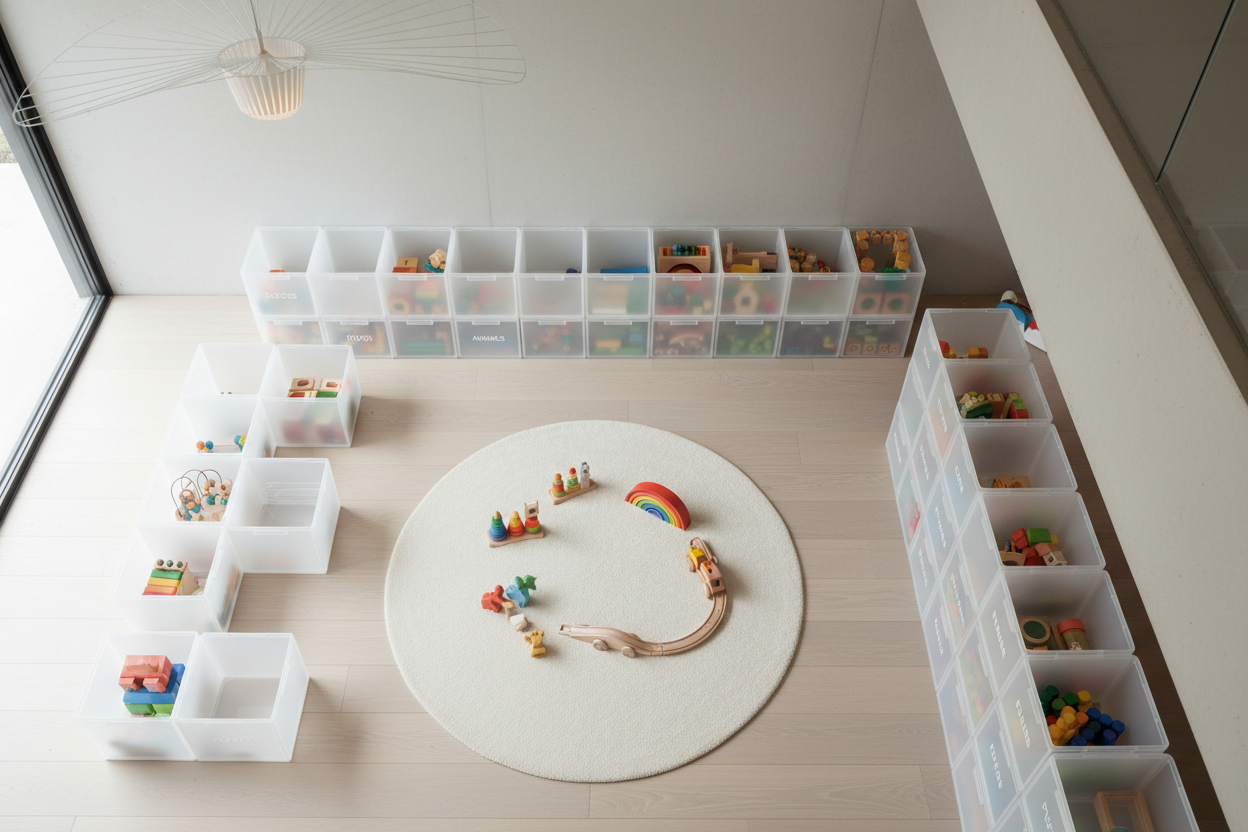
Storage Solutions That Work
| Storage Type | Best For | Cost Range | Twin-Specific Benefits |
|---|---|---|---|
| Clear Stackable Bins | Visual access to contents | $15-45/set | Children can independently select rotation boxes |
| Under-bed Rolling Containers | Space-constrained homes | $25-75 | Out of sight to prevent “I want that” meltdowns |
| Color-Coded Fabric Cubes | Theme-based rotations | $20-60/set | Can color-code by twin preference or toy category |
| Vacuum-sealed Bags | Stuffed animals, soft toys | $12-35 | Reduces bulk by 70% for efficient storage |
The Rotation Schedule: Finding Your Family’s Rhythm
Most successful twin families find a 2-3 week rotation works best, but this depends on several factors:
– Age of twins: Younger children benefit from shorter rotations (1-2 weeks)
– Attention spans: Highly focused children may enjoy longer exposure to specific toys
– Storage capacity: Limited space may require more frequent rotations
Creating Balanced Rotation Sets
The key to successful twin toy rotation lies in creating balanced sets that allow for:
1. Independent parallel play: Each twin needs options for solo exploration
2. Collaborative play: Include toys that encourage interaction
3. Sharing practice: Strategic inclusion of high-value items that require taking turns
Create 3-5 balanced rotation sets, each containing:
– 1-2 construction toys (blocks, magnetic tiles)
– 1 dramatic play element (dolls, kitchen items, dress-up)
– 1-2 fine motor activities (puzzles, stringing beads)
– 1 gross motor option (tunnel, small climber)
– 1-2 books related to the toys included
Twin-Specific Rotation Strategies
The dynamics between twins require special consideration. Some effective approaches:
1. The Split-and-Share Method: Split identical toys between rotations, encouraging twins to share remaining resources
2. The Cooperation Box: One rotation set exclusively featuring toys that require collaboration
3. The Peace-Keeper Approach: Identify high-conflict toys and never include more than one in any rotation
Managing twin feeding stations requires similar organizational principles—creating systems that promote independence while reducing parental workload.
Managing the Transition Between Rotations
The switch between toy sets becomes a special event when managed thoughtfully:
1. Schedule transitions during school/childcare or naptime to create surprise
2. Involve twins in packing away the current set (teaching ownership and care)
3. Create a quick “unboxing” ritual that builds anticipation
4. Document favorites to inform future rotation compositions
Twin Tactics: Pro-Level Shortcuts
- The 80/20 Rule: Keep 20% of “everyday favorites” constant while rotating the other 80%
- The Emergency Stash: Hide one ultra-engaging toy in each rotation set for deployment during high-stress moments (important calls, meal prep)
- The Midweek Refresher: Introduce one new or forgotten toy midway through a rotation to revitalize interest
- The Seasonal Vault: Store seasonal toys (beach toys, snow gear) in harder-to-access locations to free up primary rotation space
- The Evening Reset Timer: Use a 10-minute timer for the whole family to reset the play space each evening—twins included
Digital Tracking Systems
Modern twin parents are leveraging technology to optimize their rotation systems. The TwinTrack app (new for 2026) allows you to:
– Photograph rotation sets for visual reference
– Track which toys get the most play time
– Schedule rotation dates with reminders
– Note twin preferences and conflict patterns
For tech-minimal families, a simple notebook with rotation set inventories works beautifully.
When to Modify Your Rotation System
Your rotation system should evolve as your twins develop:
– Growth spurts: Coincide with cognitive leaps requiring more challenging toys
– Interest shifts: One twin may develop specific interests requiring category expansion
– Seasonal changes: Incorporate outdoor/indoor options based on weather patterns
– Family changes: New siblings, moves, or schedule changes may necessitate adjustments
Communicating with Extended Family
One challenge for twin families is the influx of gifts. Provide relatives with:
1. A wish list focused on rotation-friendly toys
2. Clear guidance on developmentally appropriate options
3. Suggestions for experience gifts instead of physical toys
4. Storage limitations as a gentle boundary-setting tool
The Space-Optimization Strategy
For maximum rotation efficiency, create a “decontamination zone” near your front door—a small basket where incoming toys (gifts, party favors) must spend one week before earning a place in your rotation system. This prevents impulsive additions and gives you time to decide which rotation set they belong in. Most importantly, it teaches twins that not everything instantly enters the play space.
To a more organized home,
Jordan