


Twin-to-Twin Transfusion Syndrome (TTTS): When Your Babies Share Too Much
The ultrasound screen shows two babies. One appears drowning in fluid while the other seems trapped in a shrinking space. As a pediatrician, I’ve witnessed this devastating reality countless times—twin-to-twin transfusion syndrome strikes approximately 15% of monochorionic twin pregnancies, transforming what should be a joyful experience into a medical emergency requiring immediate intervention.
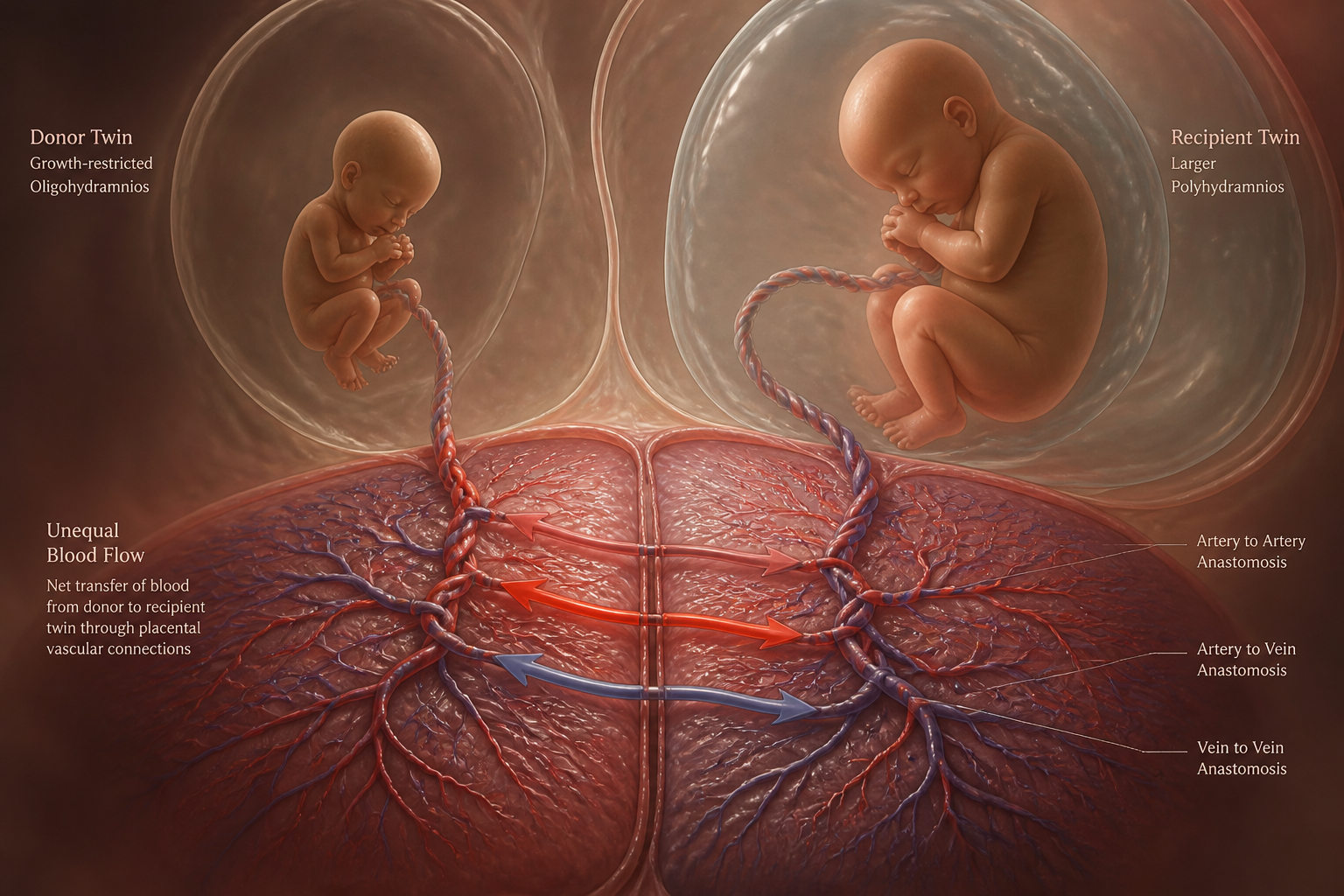
Twin-to-twin transfusion syndrome occurs when identical twins sharing a placenta develop unequal blood flow through connecting vessels. This imbalance creates a donor twin who becomes anemic and growth-restricted, while the recipient twin faces heart strain from excess blood volume. Understanding this condition is crucial for any family facing high-risk twin delivery and recovery scenarios, where early detection can mean the difference between life and death.
Understanding the Vascular Architecture Behind TTTS
Monochorionic twins share more than just a womb—they share a complex network of blood vessels within their common placenta. These arteriovenous anastomoses normally maintain equilibrium between both babies. When this delicate balance fails, twin-to-twin transfusion syndrome develops rapidly.
The donor twin becomes progressively anemic as blood continuously flows to their sibling. Meanwhile, the recipient twin’s cardiovascular system struggles under the increased volume, often leading to congestive heart failure if left untreated.
Staging Systems and Clinical Progression
TTTS severity follows the Quintero staging system, a critical framework that guides treatment decisions:
| Quintero Stage | Clinical Findings | Survival Rate Without Treatment | Recommended Intervention |
| Stage I | Oligohydramnios/polyhydramnios only | 85-90% | Close monitoring |
| Stage II | Donor bladder not visible | 70-75% | Consider laser therapy |
| Stage III | Abnormal Doppler studies | 20-30% | Urgent laser surgery |
| Stage IV | Fetal hydrops present | 5-10% | Emergency intervention |
Fetoscopic Laser Photocoagulation: The Gold Standard Treatment
When conservative management isn’t sufficient, fetoscopic laser surgery becomes the lifesaving intervention of choice. This minimally invasive procedure involves inserting a thin telescope through the mother’s abdomen into the amniotic sac.
The surgeon identifies the connecting blood vessels on the placental surface and uses laser energy to seal them permanently. This essentially creates two separate circulatory systems, allowing each twin to maintain their own blood volume.
Technical Advances in 2026 Laser Protocols
Current laser systems offer unprecedented precision with real-time imaging guidance. The procedure typically takes 45-90 minutes, with most patients experiencing minimal discomfort and same-day discharge.
Success rates have improved significantly, with dual survival rates reaching 75-80% at experienced centers. However, outcomes depend heavily on timing—earlier intervention generally produces better results.
Long-term Outcomes and Neurological Considerations
Survivors of twin-to-twin transfusion syndrome face increased risks for developmental challenges. The donor twin may experience growth delays and anemia-related complications, while the recipient twin could develop heart problems or neurological issues from polycythemia.
Regular pediatric follow-up becomes essential. I typically recommend comprehensive developmental assessments at 6, 12, and 24 months, with ongoing cardiac monitoring for recipient twins who experienced significant volume overload.
Twin Tactics: Pro-Level Shortcuts
– Request weekly ultrasounds after 16 weeks if you’re carrying monochorionic twins—early detection is everything
– Track fetal movement patterns separately by lying on your side and counting kicks for each baby during the same time periods
– Establish care with a maternal-fetal medicine specialist before 18 weeks, even if everything seems normal
– Document symptoms like sudden abdominal growth or decreased movement with timestamps for your medical team
– Research laser surgery centers in advance since emergency referrals may require traveling to specialized facilities
Post-Surgery Recovery and Monitoring Protocols
Following successful laser photocoagulation, intensive monitoring continues throughout pregnancy. Weekly ultrasounds assess growth patterns, amniotic fluid levels, and cardiac function in both twins.
Most mothers can resume normal activities within 48-72 hours post-procedure. However, the pregnancy remains high-risk, often requiring delivery between 32-37 weeks depending on individual circumstances.
The emotional toll shouldn’t be underestimated either. Families benefit from counseling support as they process the stress of diagnosis, treatment, and ongoing uncertainty about long-term outcomes.
The Pediatrician’s Medical Survival Tip
If diagnosed with TTTS, request a detailed surgical plan from your maternal-fetal medicine team within 24 hours. Ask specifically about backup procedures if laser therapy isn’t technically feasible—having contingency options reduces anxiety and ensures optimal outcomes when every hour counts.
Stay healthy, Dr. Sarah


 symptoms, diagnosis, and life-saving laser surgery. Understand risks and outcomes for twin parents.)