


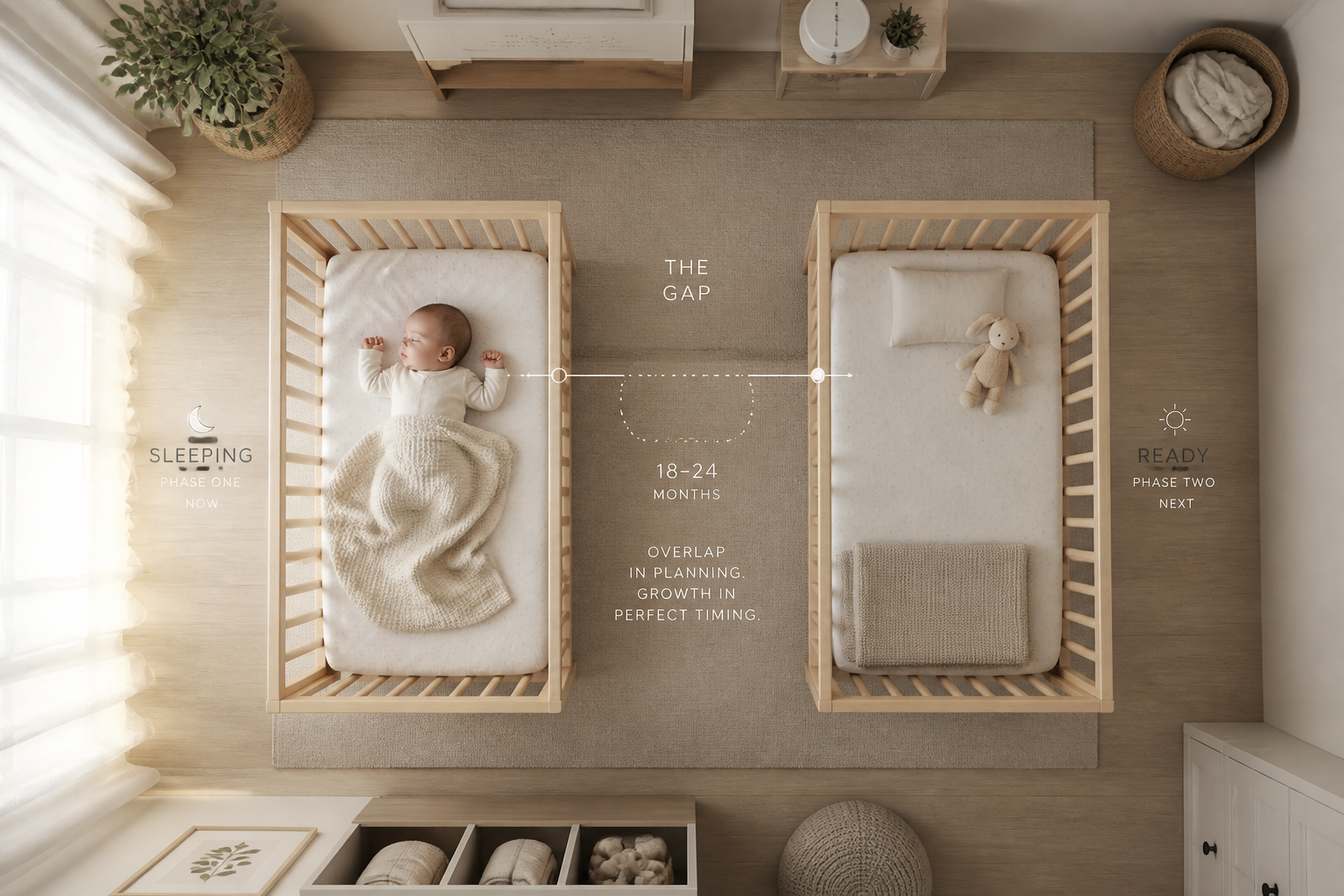
Strategic Scheduling: The “Gap” Method for Twin Naps
At 2:47 PM, while one twin finally drifts off after 20 minutes of back-patting, the other pops up like a jack-in-the-box, fully recharged from their micro-nap. Sound familiar? You’ve just experienced the classic twin nap paradox—when synchronized sleep feels more mythical than magical.
The solution isn’t forcing your twins into identical rhythms. It’s mastering the strategic “Gap Method”—a twin nap schedule approach that creates overlapping rest periods while honoring each child’s natural sleep patterns. This system transforms chaotic afternoons into predictable downtime that actually works for your household’s rhythm.
The Science Behind Staggered Twin Sleep Cycles
Identical genetics don’t guarantee identical circadian rhythms. Research shows that even monozygotic twins can have sleep cycle variations of 30-45 minutes during their first two years. The Gap Method leverages this natural variation instead of fighting it.
Traditional advice pushes parents toward perfectly synchronized schedules. But synchronized chaos isn’t rest—it’s exhaustion with extra steps. The Gap Method creates intentional 30-60 minute overlaps where both twins sleep simultaneously, giving you that crucial recharge window.
Your twins’ individual sleep cues remain the foundation. Twin A might show drowsiness at 12:30 PM, while Twin B hits their wall at 1:15 PM. Rather than forcing alignment, we optimize the overlap.
Implementing the Gap Method: Your 4-Week Blueprint
Week 1: Data Collection Phase
Track both twins’ natural sleep cues for seven consecutive days. Note yawning, eye-rubbing, decreased activity, and fussiness patterns. Don’t adjust anything yet—just observe.
Create a simple log noting:
– First sleepiness signs
– Actual sleep onset
– Wake-up times
– Overall mood upon waking
Most parents discover their twins naturally fall within 45 minutes of each other. This becomes your baseline gap.
Week 2: Gentle Nudging
Begin subtle schedule adjustments. If Twin A naturally sleeps at 12:30 and Twin B at 1:30, gradually shift Twin A’s naptime 10 minutes later each day. Simultaneously, encourage Twin B’s sleep cues 10 minutes earlier.
Use environmental cues like dimming lights, white noise, and pre-nap routines to signal sleep readiness. Consistency in these signals helps bridge the gap between their natural rhythms.
Week 3: Fine-Tuning the Overlap
By week three, you’re aiming for both twins to sleep between 1:00-3:00 PM, with one falling asleep around 12:45 and the other by 1:15. This creates a solid 90-minute overlap—your golden window.
Adjust room temperature, blackout curtains, and sound machines to optimize the sleep environment. Small environmental tweaks can extend overlap periods by 15-20 minutes.
Week 4: Mastering Flexibility
Perfect schedules don’t exist with twins. Week four focuses on building flexibility into your Gap Method. Some days, the overlap might be shorter. Other days, you’ll hit the jackpot with extended simultaneous sleep.
Develop backup strategies for off-days: quiet time activities, audiobooks, or rotating one-on-one attention while the other rests.
Gap Method Timing Variations by Age
| Age Range | Optimal Gap Duration | Expected Overlap | Success Indicators |
|---|---|---|---|
| 6-12 months | 15-30 minutes | 60-90 minutes | Both twins sleep 75% of attempts |
| 12-18 months | 20-45 minutes | 45-75 minutes | Consistent 5+ days per week |
| 18-24 months | 30-60 minutes | 30-60 minutes | Smooth transitions, minimal resistance |
| 2+ years | 45-90 minutes | 60-90 minutes | Independent settling, extended quiet time |
Environmental Optimization for Maximum Overlap
Your nursery setup directly impacts Gap Method success. Position cribs to minimize disturbance during staggered bedtimes. Consider a room divider or strategically placed furniture to create visual separation without complete isolation.
Sound management becomes critical. White noise machines should mask settling sounds from the second twin while supporting continued sleep for the first. The latest 2026 smart sound systems offer zone-specific audio that adjusts volume based on sleep stages.
Temperature control requires precision. The optimal sleep temperature of 68-70°F should remain constant, but consider individual blanket adjustments since metabolic rates can vary between twins.
Lighting transitions help signal sleep readiness. Gradually dim overhead lights 30 minutes before the first twin’s naptime, creating a cave-like environment by the time the second twin settles.
Troubleshooting Common Gap Method Challenges
The Early Waker Problem: When one twin consistently wakes 30 minutes before the other, resist immediately responding unless they’re genuinely distressed. Many twins learn to self-soothe during their sibling’s continued sleep.
Implement a “quiet wake” policy using dim lighting and whispered voices. Sometimes the early waker will resettle, extending your overlap window.
The Naptime Striker: One twin refuses all afternoon sleep despite clear tiredness signals. This typically happens around 15-18 months. Pivot to “quiet time” in their crib with soft books or quiet toys while maintaining the routine structure.
Consistency matters more than perfect execution. Even unsuccessful nap attempts reinforce the rhythm and often lead to better nighttime sleep.
Growth Spurt Disruptions: Developmental leaps temporarily derail established schedules. Expect 3-7 days of chaos during major milestones like crawling, walking, or language explosions.
Maintain your Gap Method framework while allowing flexibility in timing. Most twins return to established patterns once the developmental phase stabilizes.
Advanced Gap Method Strategies
The Rotating Lead System
Alternate which twin initiates naptime throughout the week. This prevents one child from always being the schedule follower and reduces resistance over time.
Monday/Wednesday/Friday: Twin A leads
Tuesday/Thursday/Saturday: Twin B leads
Sunday: Flexible based on morning activities
Pre-Nap Energy Management
Strategic energy depletion in the 90 minutes before naptime enhances Gap Method success. Physical activities like crawling obstacle courses, dance parties, or outdoor play create the ideal tired-but-not-overstimulated state.
Avoid high-stimulation activities 30 minutes before the first twin’s sleep time. Transition activities might include puzzles, reading, or gentle stretching.
The Backup Plan Protocol
Even masterfully executed twin nap schedules need contingency planning. Develop three backup scenarios:
1. Single Sleeper Day: Structured activities for the awake twin that don’t disturb the sleeper
2. Double Skip Day: Adjusted bedtime routine when neither twin naps
3. Split Location Strategy: Utilizing different rooms when environmental factors interfere
Travel Adaptations for the Gap Method
Maintaining your twin nap schedule during travel requires portable consistency cues. Pack familiar sleep associations like specific blankets, small stuffed animals, or travel sound machines.
When visiting family or staying in hotels, recreate your Gap Method environment as closely as possible. Request connecting rooms or suites with separate sleeping areas when feasible. For those planning extended trips, understanding comprehensive traveling with twins guide strategies helps maintain sleep routines across time zones.
Time zone adjustments work best when you maintain the gap duration while shifting both twins’ schedules simultaneously. A 30-minute gap at home remains a 30-minute gap in your destination’s local time.
Twin Tactics: Pro-Level Shortcuts
– The 15-Minute Buffer Rule: Always build 15 minutes of flexibility into your Gap Method timing to accommodate daily variations without stress
– Strategic Snack Timing: Offer filling snacks 45 minutes before naptime to prevent hunger-related wake-ups during the overlap period
– The Decoy Activity: Keep one engaging, quiet activity exclusively for the awake twin during single-sleeper scenarios—novel toys maintain interest longer
– Temperature Gradient Mapping: Test your nursery’s temperature at crib level during different times of day; floor-level temperatures can vary significantly from thermostat readings
– The Progressive Dimmer Strategy: Install smart lighting that automatically dims over 20 minutes, creating biological sleep cues without manual intervention
Long-Term Gap Method Benefits
Successfully implemented Gap Method systems create lasting advantages beyond the nap years. Twins learn individual sleep independence while respecting shared space—skills that transfer to bedroom sharing throughout childhood.
Parents report improved patience and energy levels with consistent overlap periods. That daily recharge window prevents the afternoon meltdowns that plague many twin households.
The organizational skills required for Gap Method success often motivate families to systematize other daily routines. Meal prep, toy rotation, and evening routines become more structured and effective.
Seasonal Adjustments and Consistency
Daylight changes affect twin circadian rhythms differently than singleton sleep patterns. Spring and fall time changes require gradual 10-15 minute daily adjustments over a full week to maintain Gap Method effectiveness.
Summer’s extended daylight necessitates enhanced blackout solutions. Room-darkening films or portable blackout curtains maintain the sleep-promoting environment regardless of outdoor brightness.
Winter’s limited natural light can delay natural sleepiness cues. Consider light therapy lamps during morning routines to reinforce healthy circadian rhythms that support afternoon Gap Method success.
The key lies in maintaining your gap duration while adapting to seasonal lighting changes. Consistency in the relationship between your twins’ sleep times matters more than rigid clock-based scheduling.
The Space-Optimization Strategy
Create a “nap transition station” near your nursery door with everything you need for staggered bedtimes: backup pacifiers, burp cloths, timer set for gap duration, and a water bottle for yourself. This prevents multiple trips that could wake the first twin while settling the second.
To a more organized home,
Jordan