


Crib Mattress Size & Dimensions: A Comprehensive Safety Guide for Twins
That blank nursery wall with two cribs against it represents more than just furniture placement—it’s a safety command center. After setting up dozens of twin nurseries, I’ve learned that proper crib mattress size for twins isn’t just about comfort, it’s about creating a secure sleep environment twice over. The 2026 safety standards have evolved, making proper fit more critical than ever.
When you’re preparing for twins, getting the crib mattress size right eliminates dangerous gaps that could pose suffocation risks. Let’s transform those measurement uncertainties into confidence with precise dimensions that keep both babies secure.
Standard Crib Mattress Dimensions: The Non-Negotiables
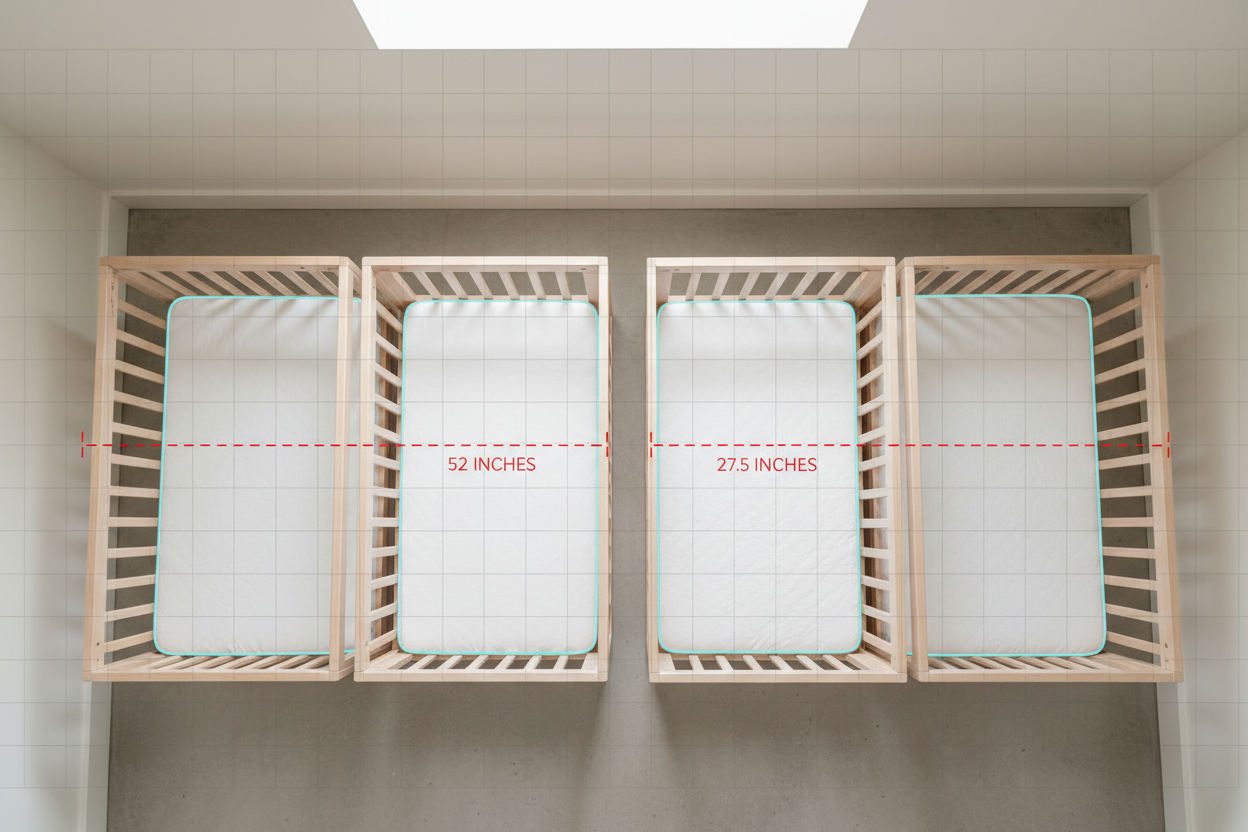
The crib mattress size for twins follows the same safety standards as singletons—but with double the importance. Each mattress needs to fit snugly within its crib frame.
Standard full-size crib mattresses must measure:
– Length: 52 inches (± 5⁄8 inch)
– Width: 27.25 inches (± 5⁄8 inch)
– Thickness: Between 4-6 inches
These dimensions are regulated by the Consumer Product Safety Commission and haven’t changed for good reason. When organizing twin nursery layouts, understanding these fixed dimensions helps you plan your space efficiently.
The Two-Finger Test: Your Safety Checkpoint
Here’s the definitive safety check: When your mattress is placed in the crib, you should not be able to fit more than two fingers between the mattress edge and crib frame. This gap standard applies to all four sides.
Too large a gap? That’s where babies can become trapped. Too tight? You’ll struggle with sheet changes—and with twins, you’ll be doing plenty of those.
Comparison of Crib Mattress Options for Twins
| Mattress Type | Pros for Twin Parents | Cons for Twin Parents | Average Price (2026) | Longevity |
|---|---|---|---|---|
| Innerspring | Durable, maintains shape with frequent use | Heavier to lift during sheet changes | $120-250 each | 5-8 years |
| Foam | Lightweight, easier for frequent sheet changes | May indent faster with regular use | $90-200 each | 3-5 years |
| Dual-Firmness | Extends use through toddlerhood | Higher initial investment | $180-350 each | 6-10 years |
| Organic | Fewer chemicals, better for sensitive twins | Premium price point | $250-500 each | 5-7 years |
Mini Crib Considerations: The Space-Saving Option
For parents working with limited space, mini cribs with their smaller mattresses (typically 38″ x 24″) can be viable. However, twins grow quickly, potentially outgrowing these smaller spaces faster than singletons.
If selecting mini cribs:
– Ensure you’re using manufacturer-approved mini crib mattresses
– Apply the same two-finger test for safety
– Plan for transition to full-size beds earlier than the typical timeframe
Twin-Specific Safety Concerns with Mattress Fit
When you’re managing twin laundry hacks and other double duties, it’s tempting to take shortcuts. But mattress safety isn’t one of them. Twins often reach developmental milestones at different rates, meaning one may start rolling or standing in the crib before the other.
The new 2026 safety standards have reinforced mattress firmness requirements specifically because of rising twin birth rates. A firm mattress reduces suffocation risks, particularly important when you can’t always have eyes on both babies simultaneously.
Twin Tactics: Pro-Level Shortcuts
- Mattress Rotation System: Mark mattress corners with colored dots and rotate them weekly to prevent uneven wear from consistent sleeping positions
- Double-Sheet Strategy: Layer waterproof mattress protectors and sheets for middle-of-night changes—just remove the top layer to reveal a clean set underneath
- Corner Gap Checkers: Create small wooden “gap checkers” cut to exactly 2 fingers width to test mattress fit regularly as cribs settle
- Seasonal Airflow Adjustment: In summer, ensure breathable mattress pads; in winter, check that fitted sheets haven’t shrunk creating dangerous tension
- Synchronized Replacement Schedule: Replace both mattresses simultaneously even if only one shows wear to maintain consistent support levels
Transitioning from Crib to Toddler Bed: Double the Planning
Most convertible cribs use the same mattress when transitioned to toddler beds. This consistency helps with the sleep transition—especially important when managing two toddlers simultaneously.
The standard crib mattress size for twins remains consistent during this transition, but you’ll need to consider:
– Safety rails on both sides or against walls
– Synchronized transition timing (or staggered, depending on development)
– Room arrangement that prevents one twin from disrupting the other’s sleep
Budget Considerations: Two of Everything Doesn’t Mean Twice the Cost
Quality doesn’t have to break the bank. Many twin parents find that mid-range mattresses ($150-200 each) hit the sweet spot of durability and value. The key factors affecting lifespan:
1. Waterproofing quality (essential with doubles the diaper leaks)
2. Edge support (critical as twins start standing)
3. Material density (affects how quickly indentations form)
Remember that uneven wear creates unsafe sleeping surfaces faster, so choose materials that maintain consistent support.
The Space-Optimization Strategy
Create a mattress rotation calendar in your phone that reminds you to not only flip mattresses but also swap them between cribs monthly. This prevents uneven wear patterns from each twin’s individual sleeping habits and extends mattress life by up to 40%—particularly important when you’ve invested in two of everything.
To a more organized home,
Jordan