


Introduction: Navigating the Complex Terrain of High-Risk Twin Delivery
The moment you learn you’re carrying twins, your pregnancy journey transforms from straightforward to intricate. While the joy of expecting two babies is immeasurable, the medical reality requires honest acknowledgment: twin pregnancies carry significantly higher risks for both mother and babies, with complications occurring in approximately 60% of cases compared to 10-15% in singleton pregnancies.
As a pediatrician specializing in fetal medicine for over 15 years, I’ve guided countless families through the complexities of high-risk twin deliveries. The statistics can feel overwhelming—preterm birth affects 75% of twin pregnancies, cesarean delivery rates reach 80%, and maternal complications including preeclampsia, gestational diabetes, and postpartum hemorrhage occur at double the rate of single births. However, understanding these risks empowers you to advocate for optimal care and prepare for the best possible outcomes.
Why This Guide Matters for Your Family
Knowledge becomes your strongest ally when facing a high-risk twin delivery. This comprehensive guide addresses the critical intersection of complications, medical interventions, and recovery strategies that can dramatically impact your experience. From understanding when emergency interventions become necessary to preparing for extended NICU stays, informed parents consistently report feeling more confident and less anxious throughout their journey.
The landscape of twin pregnancy care has evolved substantially. Advanced monitoring techniques, refined surgical approaches, and evidence-based recovery protocols now offer significantly improved outcomes. Yet the complexity remains daunting without proper guidance through timing decisions, intervention options, and postpartum recovery expectations.
What You’ll Gain from This Evidence-Based Approach
This guide synthesizes current medical literature with practical clinical experience to provide actionable insights for expectant twin parents. You’ll learn to recognize warning signs that require immediate attention, understand the decision-making process behind common interventions like emergency cesareans or early delivery, and develop realistic expectations for your recovery timeline.
Most importantly, you’ll gain the confidence to participate actively in your care decisions. When complications arise—and they often do with twin pregnancies—being an informed advocate for yourself and your babies can mean the difference between optimal outcomes and preventable difficulties. Your medical team becomes more effective when working with educated patients who understand both the risks and the available solutions.
Critical Pregnancy Complications in Twin Pregnancies
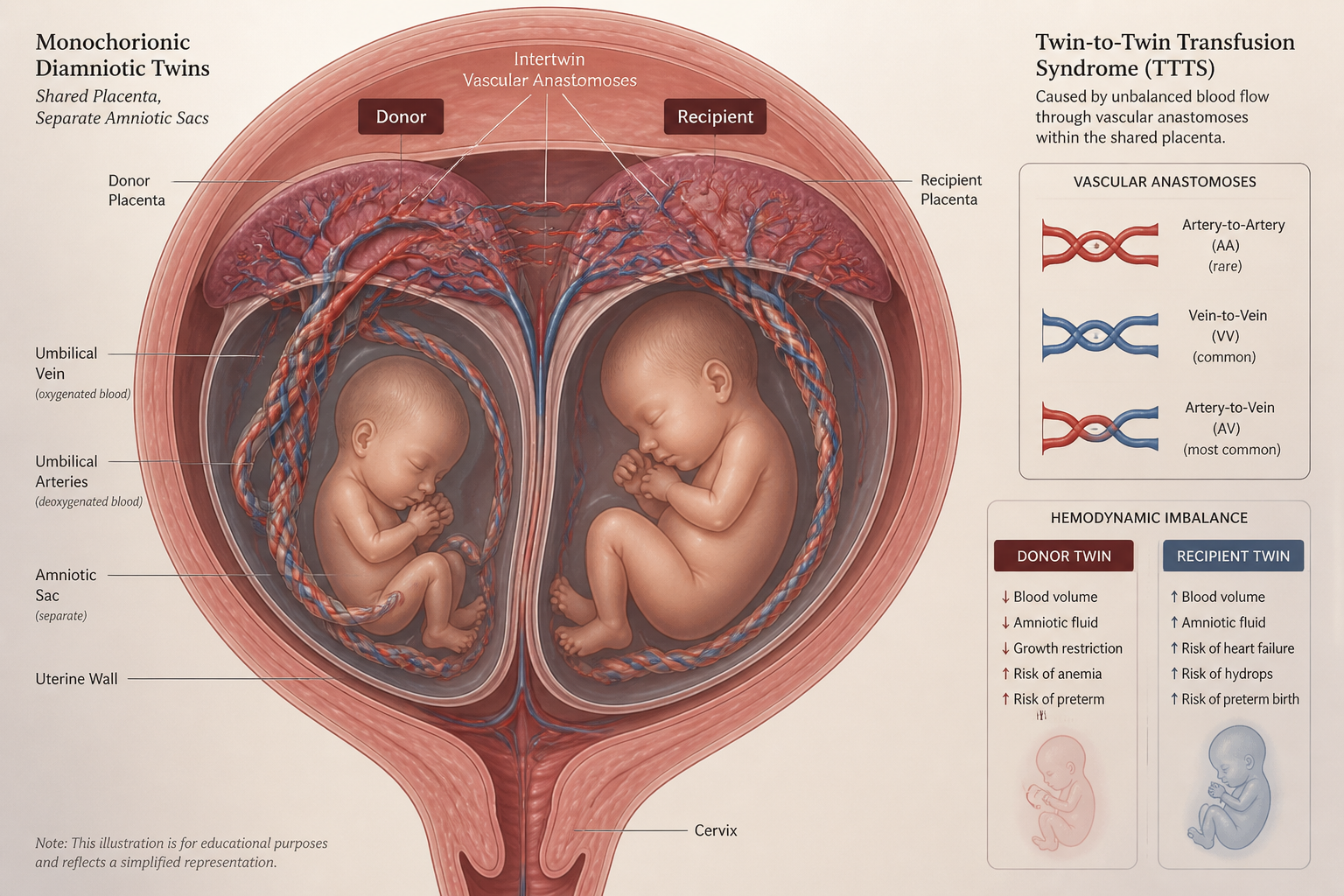
Monochorionic twin pregnancies—where twins share a placenta—carry significantly elevated risks for serious complications that require specialized monitoring and intervention. These conditions can develop rapidly and potentially threaten the lives of one or both babies, making early detection and expert management absolutely critical.
Twin-to-Twin Transfusion Syndrome (TTTS)
TTTS affects approximately 15% of monochorionic pregnancies and occurs when blood vessels within the shared placenta create unbalanced blood flow between the twins. The donor twin becomes anemic and growth-restricted, while the recipient twin receives excess blood, leading to cardiac strain and polyhydramnios (excess amniotic fluid).
Key symptoms include:
- Significant size discrepancy between twins (>20% weight difference)
- Oligohydramnios (decreased fluid) around the donor twin
- Polyhydramnios around the recipient twin
- Abnormal Doppler studies showing compromised blood flow
Treatment options range from serial amnioreduction to remove excess fluid, to fetoscopic laser ablation of connecting blood vessels—the gold standard for severe cases. Without intervention, TTTS carries mortality rates exceeding 90%.
Selective Fetal Growth Restriction (sFGR)
sFGR occurs when one twin’s estimated weight falls below the 10th percentile while the co-twin maintains normal growth. This condition affects 10-15% of monochorionic pregnancies and presents unique challenges due to shared circulation.
| sFGR Type | Umbilical Artery Doppler | Risk Level | Management Approach |
|---|---|---|---|
| Type I | Positive end-diastolic flow | Low | Enhanced monitoring |
| Type II | Absent/reversed flow | High | Consider early delivery |
| Type III | Intermittent flow patterns | Very High | Possible cord occlusion |
Additional Critical Complications
Monoamniotic twins (sharing both placenta and amniotic sac) face additional risks including cord entanglement, which occurs in up to 70% of cases. Twin Anemia Polycythemia Sequence (TAPS) represents another serious condition where twins develop significant hemoglobin differences without the fluid imbalances seen in TTTS.
These complications require management at specialized maternal-fetal medicine centers with expertise in fetal therapy. Regular surveillance through detailed ultrasounds every 2-3 weeks, combined with Doppler studies and fetal echocardiography, enables early detection and intervention to optimize outcomes for both babies.
Managing High-Risk Medical Conditions During Twin Pregnancy
Gestational Diabetes in Twin Pregnancies: Understanding Dual-Placenta Dynamics
Twin pregnancies present a significantly elevated risk for gestational diabetes mellitus (GDM), with incidence rates nearly double that of singleton pregnancies. The presence of two placentas creates a complex hormonal environment that fundamentally alters maternal glucose metabolism and insulin sensitivity throughout gestation.
Pathophysiology and Risk Amplification
In twin pregnancies, dual placental hormone production—particularly human placental lactogen, cortisol, and progesterone—creates enhanced insulin resistance beginning as early as the first trimester. This accelerated metabolic demand occurs approximately 4-6 weeks earlier than in singleton pregnancies, requiring modified screening protocols and earlier intervention strategies.
The dual-placenta system produces increased levels of diabetogenic hormones, creating what I term “metabolic overwhelm.” Maternal pancreatic beta cells face amplified stress to maintain glucose homeostasis, often reaching their compensatory limits by 20-24 weeks gestation rather than the typical 28-30 weeks seen in singleton pregnancies.
Modified Screening and Diagnostic Protocols
Standard GDM screening requires significant modification for twin pregnancies. I recommend advancing the initial glucose challenge test to 16-18 weeks, with mandatory repeat screening at 24-26 weeks regardless of initial results. The traditional 50-gram glucose challenge often yields false negatives in twin pregnancies due to altered absorption and metabolism kinetics.
| Screening Timeline | Singleton Protocol | Twin Protocol | Clinical Rationale |
|---|---|---|---|
| First Screen | 24-28 weeks | 16-18 weeks | Earlier hormonal surge in twin pregnancies |
| Repeat Screen | If indicated | Mandatory at 24-26 weeks | Progressive insulin resistance amplification |
| Diagnostic Threshold | Standard criteria | Lower threshold consideration | Increased sensitivity to glucose intolerance |
Management Complexities and Intervention Strategies
Managing GDM in twin pregnancies requires aggressive nutritional counseling and earlier pharmacological intervention. Dietary modifications alone prove insufficient in approximately 60% of twin GDM cases, compared to 35% in singleton pregnancies. Insulin requirements typically escalate more rapidly, often requiring twice-daily dosing by the second trimester.
Fetal monitoring becomes critically important, as twin pregnancies with GDM face compounded risks including selective intrauterine growth restriction, twin-to-twin transfusion syndrome complications, and discordant growth patterns. Serial growth ultrasounds every 2-3 weeks become essential rather than optional.
Preventing and Managing Preterm Labor in Twin Pregnancies
Preterm labor represents the most significant challenge in twin pregnancies, occurring in approximately 60% of cases compared to 12% in singleton pregnancies. The complex interplay of uterine overdistension, cervical insufficiency, and increased metabolic demands requires a comprehensive, evidence-based approach to prevention and management.
Essential Monitoring Protocols
Effective preterm labor prevention begins with structured surveillance starting at 16 weeks gestation. I recommend implementing a tiered monitoring system that includes:
- Biweekly cervical length assessments via transvaginal ultrasound from 16-24 weeks
- Weekly fetal fibronectin testing beginning at 22 weeks for high-risk patients
- Uterine activity monitoring for patients with symptoms or risk factors
- Serial growth assessments every 3-4 weeks to detect discordant growth patterns
Cervical Length Assessment and Management
Cervical length measurement serves as our primary predictive tool for preterm delivery risk. The clinical thresholds I utilize in practice are:
| Cervical Length | Risk Category | Management Protocol |
|---|---|---|
| >35mm | Low Risk | Standard monitoring protocol |
| 25-35mm | Moderate Risk | Weekly assessments, activity modification |
| 15-25mm | High Risk | Progesterone supplementation, cerclage consideration |
| <15mm | Critical Risk | Hospital evaluation, aggressive intervention |
When cervical shortening is detected (<25mm before 24 weeks), I immediately initiate enhanced surveillance protocols and consider cervical cerclage placement, particularly in patients with prior preterm delivery history.
Progesterone Supplementation Protocols
Progesterone therapy has demonstrated significant efficacy in reducing preterm birth rates in twin pregnancies. My standard protocol involves:
- 17-hydroxyprogesterone caproate (17P): 250mg intramuscularly weekly from 16-36 weeks for patients with prior preterm birth
- Vaginal progesterone: 200mg daily suppositories for patients with cervical length <25mm
- Combination therapy: Both 17P and vaginal progesterone for highest-risk patients
Recent studies indicate that progesterone supplementation can reduce preterm delivery before 34 weeks by approximately 30% in appropriately selected twin pregnancies. I monitor patients closely for side effects including injection site reactions, mood changes, and breakthrough bleeding, adjusting dosages as clinically indicated.
Twin Delivery Complications and Interventions
Twin deliveries present unique challenges that require immediate recognition and swift intervention. As a maternal-fetal medicine specialist, I’ve witnessed how quickly delivery complications can escalate, making preparedness and clinical expertise absolutely critical for optimal outcomes.
High-Risk Delivery Scenarios
Several complications can arise during twin delivery that demand immediate attention. Cord prolapse occurs more frequently in twin pregnancies due to abnormal presentations and polyhydramnios. When the umbilical cord precedes the presenting fetus, emergency cesarean delivery becomes necessary to prevent fetal hypoxia and potential death.
Twin-to-twin transfusion syndrome (TTTS) complications can persist into delivery, requiring continuous monitoring of both fetuses. The recipient twin may experience cardiac complications, while the donor twin faces risks of severe anemia and growth restriction.
Placental abruption presents heightened risks in twin pregnancies, particularly with monoamniotic twins. The shared placental circulation means that abruption affecting one twin can rapidly compromise both babies, necessitating emergency intervention.
Emergency Interventions
When complications arise, our intervention protocols follow established algorithms. For acute fetal distress in either twin, we implement immediate continuous fetal monitoring and prepare for emergency cesarean delivery. The decision-to-incision time must remain under 30 minutes for optimal outcomes.
Breech extraction techniques become crucial when Twin B presents in breech position after vaginal delivery of Twin A. This requires specialized training and experience, as improper technique can result in cord prolapse or entrapment.
| Complication | Immediate Action | Delivery Method | Time Sensitivity |
|---|---|---|---|
| Cord Prolapse | Elevate presenting part | Emergency C-section | <15 minutes |
| Acute TTTS | Maternal positioning | Expedited delivery | <30 minutes |
| Placental Abruption | IV access, blood type | Emergency C-section | <20 minutes |
| Locked Twins | Attempt unlocking maneuvers | Emergency C-section | <10 minutes |
When C-Sections Become Necessary
Cesarean delivery becomes mandatory in specific scenarios. Locked twins, where the chin of the first twin locks with the neck of the second, requires immediate surgical intervention. Monoamniotic twins typically require scheduled cesarean delivery due to increased cord entanglement risks.
The decision for emergency cesarean delivery often depends on fetal heart rate patterns, maternal hemodynamic stability, and the progression of labor complications. Our threshold for intervention remains lower in twin pregnancies due to the increased risks to both maternal and fetal well-being.
Postpartum Recovery After Twin Delivery
Recovery following twin delivery presents unique challenges that require specialized protocols, particularly after cesarean section, which occurs in approximately 75% of twin births. The combination of carrying two babies, extended uterine stretching, and surgical intervention creates a complex recovery landscape that demands careful medical supervision and modified rehabilitation approaches.
Specialized Recovery Protocols for Twin C-Sections
Twin cesarean recoveries typically require extended monitoring periods compared to singleton deliveries. The initial 24-48 hours focus on hemodynamic stability, as mothers face increased risks of postpartum hemorrhage due to uterine overdistension. Early mobilization protocols must be adjusted to account for the more extensive surgical trauma and higher likelihood of complications such as adhesions or infection.
Pain management strategies require individualized approaches, often incorporating multimodal analgesia combining epidural medications, non-steroidal anti-inflammatory drugs, and carefully titrated opioids. The goal is achieving adequate pain control while enabling early mobility and breastfeeding initiation for two infants.
Mobility Restoration and Physical Recovery
Mobility restoration follows a graduated protocol beginning 6-8 hours post-surgery, with initial bed exercises progressing to assisted walking by postoperative day one. However, twin mothers often experience delayed mobility due to:
- Greater abdominal muscle separation (diastasis recti)
- Increased joint laxity from prolonged relaxin exposure
- Higher fatigue levels from caring for multiple newborns
- Potential complications requiring extended bed rest
Physical therapy consultation is recommended within 48 hours, focusing on core stabilization exercises modified for twin pregnancy recovery. Deep breathing exercises and gentle pelvic tilts help restore abdominal muscle function while protecting the healing incision.
Enhanced Incision Care Protocols
Twin cesarean incisions often require extended healing times due to increased tissue stress during pregnancy. Standard care includes:
| Recovery Phase | Timeline | Key Interventions | Monitoring Focus |
|---|---|---|---|
| Immediate (0-72 hours) | Hospital stay | Sterile dressing, infection prophylaxis | Bleeding, signs of infection |
| Early (1-2 weeks) | Home recovery | Gentle cleansing, activity restriction | Healing progression, pain levels |
| Intermediate (2-6 weeks) | Gradual return | Scar massage, progressive mobility | Tissue integrity, functional restoration |
Incision complications occur more frequently in twin deliveries, with infection rates approximately 15% higher than singleton cesareans. Daily assessment for erythema, warmth, discharge, or separation is crucial, with immediate medical attention required for any concerning changes.
Moving Forward: Your Twin Pregnancy Journey
Navigating a high-risk twin pregnancy requires courage, preparation, and an unwavering commitment to comprehensive medical care. Throughout my 15 years in fetal medicine, I’ve witnessed countless families successfully overcome complex twin pregnancy complications through early intervention, meticulous monitoring, and robust support systems.
The key to optimal outcomes lies in recognizing that high-risk twin pregnancies demand specialized attention from the moment of diagnosis. Your maternal-fetal medicine team serves as your primary defense against complications, utilizing advanced monitoring techniques to detect issues before they become critical. Regular growth assessments, cervical length measurements, and fetal well-being evaluations aren’t merely routine appointments—they’re strategic interventions designed to protect both you and your babies.
Building Your Support Network
Recovery and long-term success extend far beyond delivery day. Establishing comprehensive support systems during pregnancy creates the foundation for postpartum healing and newborn care. This network should include:
- Your specialized medical team with 24/7 access protocols
- Lactation consultants experienced with twin feeding challenges
- Mental health professionals familiar with high-risk pregnancy trauma
- Family members trained in twin care logistics
- Community resources for ongoing developmental support
Embracing Proactive Care
Remember that complications in twin pregnancies often develop rapidly and without warning. The interventions we’ve discussed—from cerclage placement to emergency cesarean delivery—represent medical advances that have dramatically improved outcomes for families like yours. Trust in evidence-based protocols, maintain open communication with your care team, and don’t hesitate to advocate for additional monitoring when concerns arise.
Your journey may include unexpected challenges, extended hospital stays, or modified delivery plans. These adjustments aren’t failures—they’re strategic responses designed to optimize your babies’ health and your recovery. The goal remains consistent: bringing home healthy twins while preserving your well-being for the demanding yet rewarding months ahead.
With proper medical oversight, informed decision-making, and comprehensive support, even the most complex twin pregnancies can result in successful outcomes and thriving families.