


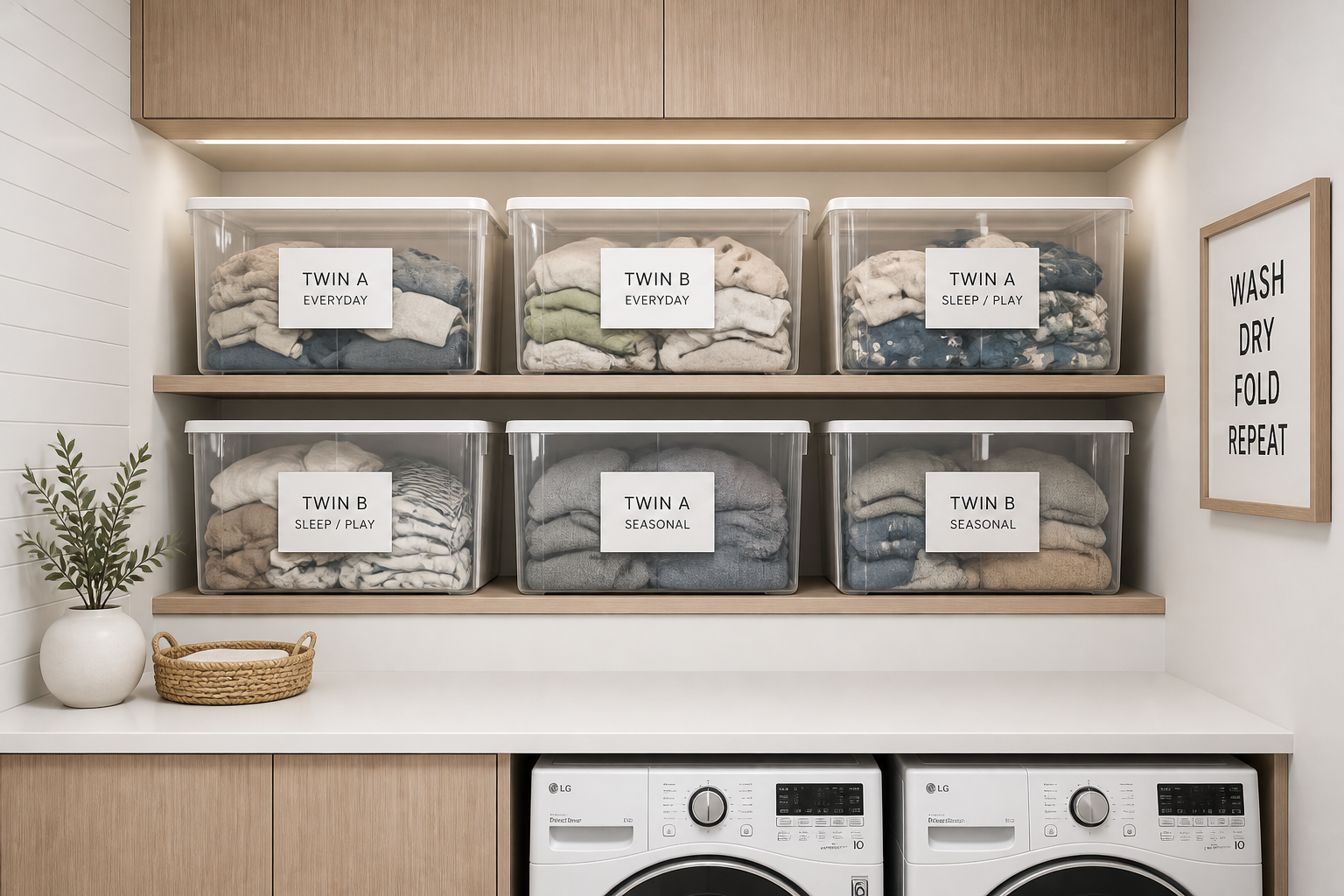
The Sorting Box Twin Laundry System: How to Cut Folding Time by 80%
The mountain of tiny socks never ends. While other parents debate fabric softener brands, you’re staring at four baskets of clean clothes wondering how two small humans generate more laundry than a college dorm. The solution isn’t buying more storage containers—it’s completely reimagining your approach to twin clothing management.
Smart twin households have discovered that traditional “wash-dry-fold-put away” systems collapse under the sheer volume of multiples’ clothing. The sorting box method eliminates the most time-consuming step (folding) while actually improving accessibility and reducing morning chaos. This twin household management strategy transforms your laundry room into a high-efficiency distribution center.
The Psychology Behind Why Folding Fails for Twin Families
Most organizing advice assumes you have time for precision. Twin parents don’t. The sorting box twin laundry system works because it prioritizes speed and function over aesthetic perfection.
Consider this: your twins will outgrow clothes every 3-4 months. Why spend precious minutes creating perfect creases in garments that’ll be too small by Christmas? The sorting method focuses on quick categorization and grab-and-go accessibility.
Traditional folding also creates a bottleneck. One parent manages the entire laundry pipeline while clothes pile up faster than they can be processed. Sorting boxes distribute the workload and allow both parents to participate in the system without coordination.
Core Components of the Sorting Box Twin Laundry System
The Equipment Setup
You’ll need six identical clear storage containers (18-quart capacity works for most families). Label them clearly:
– Twin A – Everyday
– Twin A – Sleep/Play
– Twin B – Everyday
– Twin B – Sleep/Play
– Shared Items (jackets, accessories)
– Next Size Up
The key is transparency. Clear containers let you see contents instantly and gauge when categories need restocking.
The Sorting Process
Fresh from the dryer, clothes get shaken out and immediately sorted into boxes—no folding required. T-shirts, pants, and dresses go in loosely. Only items that wrinkle significantly (dress shirts, special occasion wear) get hung immediately.
This twin laundry system cuts processing time from 45 minutes to under 10 minutes per load.
Comparison: Traditional vs. Sorting Box Methods
| Task Component | Traditional Method | Sorting Box Method | Time Savings |
|---|---|---|---|
| Processing Clean Clothes | 45 minutes (folding + organizing) | 8 minutes (sorting only) | 37 minutes saved |
| Morning Outfit Selection | 12 minutes (searching drawers) | 3 minutes (grab from box) | 9 minutes saved |
| Weekly Maintenance | 90 minutes (refolding, organizing) | 15 minutes (box rotation) | 75 minutes saved |
| Partner Participation | Low (requires folding skills) | High (anyone can sort) | 50% more help |
Strategic Placement and Rotation
Position sorting boxes in your twins’ room, not the laundry area. This eliminates the transport step and creates a mini-closet system they can eventually navigate independently.
Keep boxes elevated on low shelving. Floor placement invites toy mixing and creates back strain during outfit selection. The 2026 Consumer Safety guidelines recommend 18-inch minimum height for child-accessible storage in nurseries.
Weekly rotation keeps the system fresh. Move nearly-empty boxes to laundry staging areas and replace with freshly stocked containers. This prevents the “digging to the bottom” syndrome that recreates folded-clothes chaos.
Advanced Sorting Strategies for Different Twin Types
Identical Twins (Shared Clothing)
Create three main categories instead of six: Everyday Wear*, **Sleep/Play Clothes**, and *Special Occasions. Since sizing matches perfectly, you can batch-buy and eliminate the mental load of “whose is whose.”
Many families find success with meal prepping for twins carries over to clothing prep—the same systematic thinking applies.
Fraternal Twins (Different Sizes)
Maintain separate boxes but add size indicators. Use colored tape or permanent markers to distinguish quickly. As size gaps widen, this prevents accidentally dressing Twin A in Twin B’s clothes during rushed mornings.
Mixed-Age Households
Add overflow boxes for hand-me-downs moving between siblings. The “Next Size Up” category becomes critical for tracking growth transitions across multiple children.
Twin Tactics: Pro-Level Shortcuts
- The Monday Box Swap: Designate Mondays for rotating empty boxes to the laundry area. Fresh boxes arrive filled, creating a seamless weekly refresh cycle.
- Sock Liberation Strategy: Stop matching socks entirely. Buy identical socks in bulk—any two make a pair. Store in a single mesh bag that goes directly from washer to drawer.
- The 30-Piece Rule: Each everyday box holds exactly 30 items maximum. This forces regular turnover and prevents overwhelming choice paralysis during outfit selection.
- Color-Code by Week: Assign each twin a color (red/blue tape strips). Rotate weekly so both children get equal access to favorite items and you avoid subconscious favoritism.
- Emergency Backup Boxes: Keep two sealed boxes with complete outfits in car trunk and diaper bag. Blowouts and spills become 30-second fixes instead of day-ruining emergencies.
Troubleshooting Common Sorting Box Challenges
“The boxes look messy” – Embrace functional over beautiful. Wrinkled play clothes are infinitely better than perfect clothes that cost you two hours weekly to maintain.
“My twins keep mixing the boxes” – This actually indicates success. They’re learning to dress independently. Guide rather than control the process.
“Seasonal transitions are confusing” – Use the “Next Size Up” box for seasonal storage too. Summer clothes for next year go directly there after washing.
The beauty of this twin laundry system lies in its scalability. Start with basic sorting, then add complexity as your household adapts. Most families see dramatic time savings within the first week of implementation.
The Space-Optimization Strategy
Install pull-out drawers underneath your twins’ cribs to house their sorting boxes—this creates a complete dressing station within arm’s reach and transforms dead space into your most functional storage area.
To a more organized home,
Jordan