


Introduction: Mastering the Art of Twin Household Operations
Picture this: It’s 6:47 AM, both twins are crying in stereo, you’re running on three hours of sleep, and you just realized you’re completely out of formula. Meanwhile, there’s a mountain of laundry that seems to reproduce overnight, and you can’t remember the last time you had a hot meal. If this scenario feels all too familiar, you’re not alone—and more importantly, there’s a better way forward.
Welcome to the reality that every twin parent discovers: traditional parenting advice simply doesn’t scale. When you’re managing two babies simultaneously, the cute “sleep when the baby sleeps” mantra becomes laughably impossible. What you need isn’t more generic parenting tips—you need a complete operational overhaul of your household systems.
Why Standard Organization Falls Short for Twin Families
Single-baby households can often survive on improvisation and last-minute solutions. Twin households cannot. The mathematical reality is stark: you’re not just doubling the workload, you’re exponentially increasing the complexity. Two feeding schedules, double diaper changes, synchronized nap disasters, and the logistical nightmare of getting everyone out the door creates a perfect storm that demands military-level precision.
The families who thrive—not just survive—are those who implement comprehensive systems before chaos takes control. They understand that batch preparation isn’t just convenient, it’s essential. They recognize that automated routines aren’t luxuries, they’re lifelines. Most importantly, they know that investing time upfront in robust household logistics pays dividends in preserved sanity and family harmony.
The Strategic Advantage of Systems Thinking
This guide operates on a fundamental principle: your household should work for you, not against you. We’ll transform your home into a well-oiled machine where:
- Meals are prepped in strategic batches that eliminate daily cooking stress
- Chore systems run automatically, distributing workload efficiently across the week
- Technology handles routine tasks, freeing you for what matters most
- Every family member knows their role in maintaining household harmony
The strategies ahead aren’t theoretical—they’re battle-tested systems developed specifically for the unique demands of multi-child households. You’re about to discover how to reclaim your time, reduce daily friction, and create the calm, organized home environment where your family can truly flourish.
Foundation Systems: Building Your Twin Household Management Framework
Managing a household with twins requires more than good intentions—it demands systematic thinking and strategic implementation. The difference between surviving and thriving with multiples lies in establishing rock-solid foundation systems that work automatically, even when you’re running on three hours of sleep.
The Three Pillars of Twin Household Success
Every efficient twin household operates on three core principles that transform chaos into controlled productivity:
- Batch Processing: Group similar tasks together to maximize efficiency and minimize mental switching costs
- Strategic Automation: Implement systems that handle routine decisions and tasks without your constant input
- Proactive Planning: Stay ahead of needs rather than constantly reacting to immediate demands
Building Your Command Center
Your foundation starts with a centralized management hub—both physical and digital. This isn’t about creating another system to maintain; it’s about establishing one reliable source of truth for your household operations.
Choose one primary location for your physical command center: a kitchen counter, hallway nook, or dedicated home office space. This area should house your master calendar, supply inventories, and quick-reference guides. Digital coordination happens through shared calendars and automation apps that sync across devices.
The 3-2-1 Planning Framework
Effective twin household management operates on multiple time horizons. Implement this simple framework:
- 3 Months Out: Major planning (seasonal clothing swaps, childcare arrangements, bulk purchasing)
- 2 Weeks Out: Tactical preparation (meal planning, activity scheduling, supply restocking)
- 1 Day Out: Execution setup (outfit preparation, bag packing, surface clearing)
Automation Priority Matrix
Not everything needs to be automated, but the right systems save hours weekly. Focus your automation efforts on:
- High-frequency, low-decision tasks (grocery ordering, bill payments)
- Time-sensitive processes (nap schedules, feeding reminders)
- Error-prone activities (supply tracking, appointment scheduling)
Start with one system, perfect it over two weeks, then add the next. This methodical approach prevents system overwhelm and ensures each automation actually sticks in your routine.
Command & Control: Centralized Scheduling for Multiple Children
Managing twins or multiples requires military-grade precision in your scheduling approach. The key to success lies in creating a centralized command system that anticipates conflicts, streamlines communication, and keeps every family member synchronized. As we discussed in our comprehensive guide on family command center twins, establishing this central hub becomes your household’s mission control.
Digital Integration Strategy
Your centralized scheduling system should leverage both digital and physical components. Start with a shared digital calendar that syncs across all devices—Google Calendar or Apple’s Family Calendar work exceptionally well for twin families. Color-code each child with distinct colors, and use a third color for shared activities.
The magic happens when you integrate appointment reminders with prep time. Schedule doctor visits? Block the preceding 30 minutes for gathering insurance cards, preparing snacks, and loading the diaper bag. This buffer time prevents the cascade effect where one delayed appointment derails your entire day.
The Master Schedule Framework
Create weekly scheduling blocks that account for the unique rhythm of multiple children:
- Medical Mondays: Batch all routine appointments on the same day when possible
- Prep Sundays: Weekly meal prep and outfit selection for both children
- Buffer Wednesdays: Keep this day lighter for makeup appointments or spontaneous needs
- Activity Alignment: Schedule complementary activities—while one naps, the other has quiet time
Communication Protocol
Establish clear communication channels with caregivers, family members, and schools. Create a shared note system where schedule changes automatically notify all stakeholders. Include pickup/drop-off protocols, emergency contacts, and daily routine specifics.
Your centralized system should also track patterns: which appointment times work best for both children, optimal spacing between activities, and seasonal schedule adjustments. This data becomes invaluable for future planning.
Remember, the goal isn’t perfection—it’s predictable efficiency. When everyone knows the system and trusts the schedule, your household operates with the smooth precision that twin families require to thrive.
High-Efficiency Meal Systems: Feeding Two on Autopilot
When you’re feeding twins, every meal becomes a logistical operation. The key to maintaining your sanity while ensuring proper nutrition lies in creating systems that work even when you’re running on minimal sleep. As we discussed in our comprehensive guide on meal prepping for twins, successful feeding strategies revolve around batch preparation and strategic automation.
The Twin-Sized Batch Cooking Framework
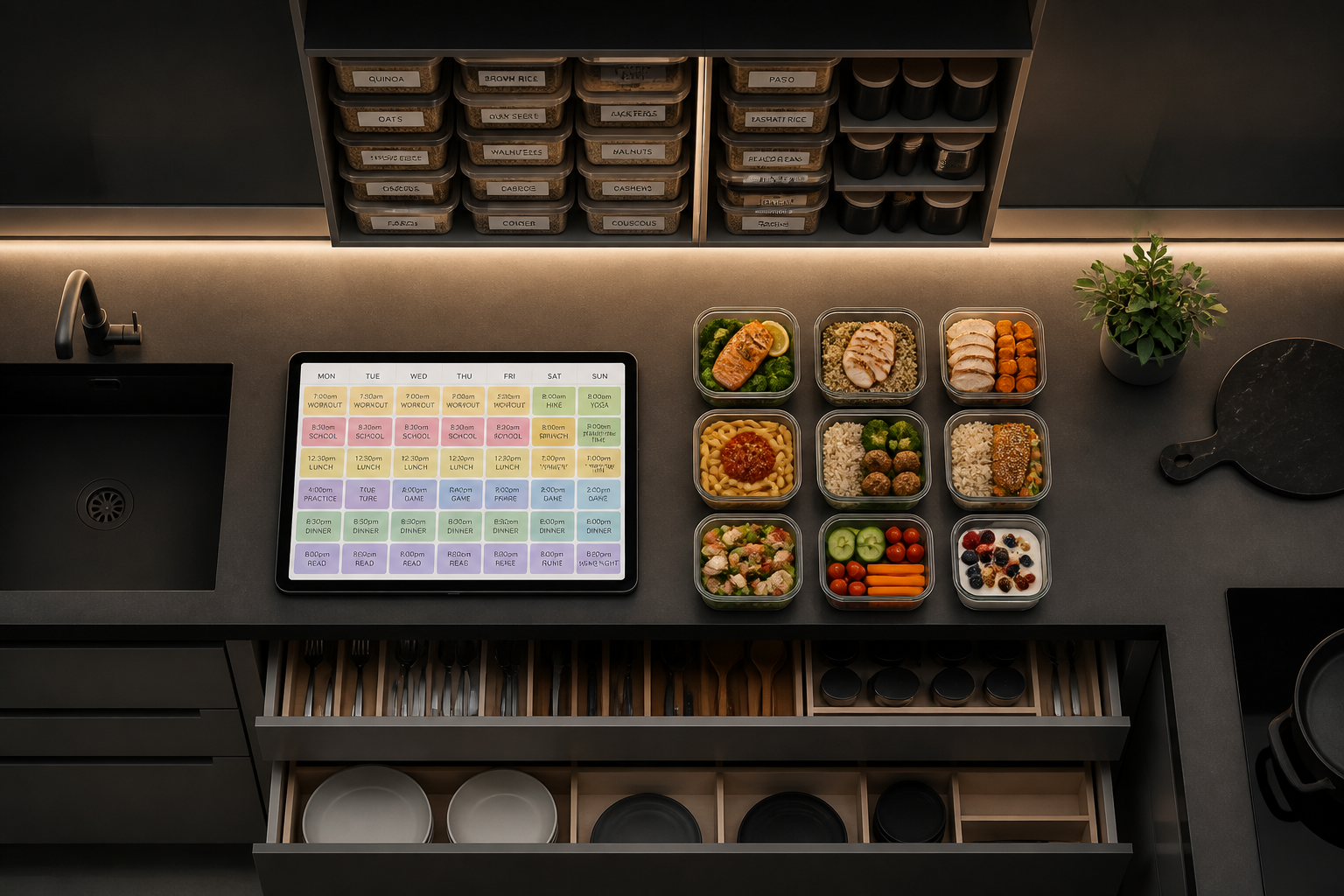
Your batch cooking sessions should follow the “2x2x2” rule: prepare twice the portions, plan for two weeks ahead, and allocate two focused prep sessions per week. This approach ensures you’re always one step ahead of doubled appetites without overwhelming your schedule.
Start with base ingredients that multiply well: grains, proteins, and roasted vegetables. Cook large batches of rice, quinoa, or pasta that can transform into different meals throughout the week. Prepare proteins in versatile forms—shredded chicken, ground turkey meatballs, or baked salmon portions—that work across multiple meal combinations.
Smart Storage and Portioning Systems
Invest in a systematic approach to food storage that eliminates daily decision-making. Use clear, stackable containers with identical portion sizes for easy identification. Label everything with contents and date, creating a visual inventory system that prevents waste and saves time.
| Container Size | Best Use | Quantity Needed |
|---|---|---|
| Small (1-2 cups) | Individual snacks, baby portions | 12-15 containers |
| Medium (2-4 cups) | Single meals, side dishes | 8-10 containers |
| Large (4-6 cups) | Family portions, batch ingredients | 6-8 containers |
Automation Tools That Actually Work
Leverage appliances that cook while you handle other twin-related tasks. Slow cookers, pressure cookers, and rice cookers become invaluable when you can set them and focus on other priorities. Program your coffee maker, use timer-controlled appliances, and consider smart home integrations that notify you when meals are ready.
Create rotating meal templates rather than rigid meal plans. Having five go-to breakfast combinations, seven lunch formulas, and ten dinner frameworks gives you structure without the stress of daily planning. This flexibility accommodates the unpredictable nature of life with twins while ensuring everyone stays fed and satisfied.
Streamlined Daily Routines: Morning Mastery and Time-Saving Protocols
The difference between chaotic mornings and smooth departures lies in systematic preparation and automated workflows. When you’re managing multiples, every minute counts, and establishing bulletproof routines eliminates decision fatigue while ensuring nothing essential gets forgotten.
The Night-Before Foundation System
Your morning success begins the evening prior. Implement these non-negotiable preparation protocols:
- Outfit stations: Lay out complete outfits for each child, including shoes, socks, and any accessories in designated zones
- Pack-and-stack method: Prepare all bags (diaper bags, school backpacks, work materials) and position them by the exit door
- Breakfast prep-ahead: Set out non-perishables, pre-portion snacks, and prepare grab-and-go options
- Morning checklist posting: Display visual reminders of essential items and tasks in high-traffic areas
The 6-Phase Morning Launch Sequence
Structure your morning around these time-blocked phases for maximum efficiency:
| Phase | Duration | Primary Actions | Automation Opportunities |
|---|---|---|---|
| Wake & Prep | 15 minutes | Personal readiness, coffee/breakfast start | Programmable coffee maker, automated lighting |
| Child Wake-Up | 20 minutes | Gentle wake protocols, immediate diaper/bathroom needs | Gradual lighting systems, consistent wake music |
| Dressing Time | 15 minutes | Outfit changes using pre-selected clothes | Organized outfit stations, step stools for independence |
| Breakfast Service | 20 minutes | Fuel everyone with prepared options | Pre-portioned containers, sippy cups filled overnight |
| Final Gathering | 10 minutes | Collect bags, shoes, essential items | Landing zone organization, visual checklists |
| Departure Buffer | 10 minutes | Last-minute needs, unexpected delays | Car seats pre-adjusted, emergency backup supplies |
As we discussed in our guide on twin morning routine fundamentals, consistency in timing creates predictability that even young children can follow independently.
Emergency Protocol Integration
Build resilience into your system with backup plans for common disruptions. Keep emergency outfit changes in your vehicle, maintain duplicate essential items in multiple locations, and establish 15-minute “express mode” procedures for particularly challenging mornings. This preparation transforms potential meltdowns into manageable adjustments.
Smart Storage Solutions: Conquering Clutter and Duplicate Everything
When twins enter your home, everything multiplies—clothes, toys, gear, and the daily chaos that follows. The key to maintaining sanity isn’t buying more storage containers; it’s implementing strategic systems that work with your doubled inventory and increased foot traffic.
Zone-Based Storage Architecture
Create dedicated zones throughout your home that anticipate twin-specific needs. In bedrooms, implement a “his/hers” cubby system at floor level so toddlers can independently access their belongings. Use color-coded bins or labels with photos for pre-readers. Each twin gets their designated space, reducing morning meltdowns over mismatched socks or favorite shirts.
For shared spaces, establish “landing zones” near high-traffic areas. As we discussed in our guide on entryway storage for twins, these transition spaces prevent the avalanche effect when four shoes, two backpacks, and assorted outdoor gear hit your front door simultaneously.
Vertical Solutions for Horizontal Problems
Twins create horizontal sprawl—toys scattered across floors, clothes piled on surfaces, books everywhere. Combat this with aggressive vertical storage:
- Wall-mounted cubbies in playrooms with clear, removable bins for quick toy rotation
- Over-door organizers for frequently used items like diapers, wipes, and daily medications
- Ceiling-mounted nets in bedrooms for stuffed animals and soft toys that accumulate rapidly
The Batch Storage System
Store duplicate items in strategic batches rather than keeping everything accessible. Maintain a “current rotation” of clothes, toys, and supplies while storing extras in clearly labeled bins by size and season. This prevents overwhelming choice paralysis while ensuring you’re prepared for growth spurts and inevitable spills.
Install pull-out drawers in lower cabinets for easy access to bulk supplies. When you’re managing two children simultaneously, wrestling with deep, dark cabinets isn’t an option. Everything should be visible and reachable within seconds.
Remember: effective twin storage isn’t about perfection—it’s about creating systems so intuitive that even exhausted parents can maintain them during the most chaotic phases of child-rearing.
Laundry Liberation: Conquering the Mountain of Twin Clothing
Twin parents face a laundry reality that can quickly spiral out of control—double the spit-up, double the outfit changes, and exponentially more sorting confusion. The key to conquering this textile mountain lies in implementing systematic approaches that eliminate decision fatigue and streamline your entire clothing workflow.
The Color-Coding Foundation System
Start by establishing a twin laundry system built around color-coded organization. Assign each twin a specific color family for their clothing storage and laundry containers. Twin A gets blues and greens, while Twin B gets reds and oranges. This visual sorting system extends from their bedroom storage bins to laundry baskets, making it impossible to mix up belongings even when you’re running on minimal sleep.
Invest in mesh laundry bags in each twin’s designated colors. Dirty clothes go directly into their assigned bag, eliminating the sorting step entirely. When wash day arrives, simply toss the entire bag into the machine—the mesh allows for proper cleaning while keeping items separated.
Strategic Wardrobe Simplification
Reduce your laundry burden by implementing a capsule wardrobe approach for each twin. Stick to 2-3 color palettes per child, ensuring everything mixes and matches. This strategy cuts folding time in half since you’re not managing dozens of different clothing combinations.
Create designated “quick change stations” throughout your home—upstairs, downstairs, and in your diaper bag. Stock each with identical backup outfits in both twins’ sizes. When accidents happen, you’re not scrambling through entire closets.
Automation and Batch Processing
Schedule specific laundry days for different clothing categories: Monday for everyday wear, Wednesday for sleepwear and undergarments, Friday for special items. This batch approach prevents the endless cycle of “always doing laundry” while ensuring you never run out of essentials.
Implement a “one-touch rule” for clean clothes. As items come out of the dryer, they immediately go to their final destination—no staging areas or temporary piles. Install pull-out drawers at kid height in closets, making it easy for growing twins to eventually participate in the put-away process.
Consider investing in a second washer or upgrading to a high-capacity machine. The time savings from processing larger loads often justifies the expense when managing twin households.
Toy Management Mastery: Rotation Systems for Sanity and Space
When you’re managing toys for multiples, the sheer volume can quickly transform your home into a chaotic playground. The key isn’t buying fewer toys—it’s implementing strategic rotation systems that keep children engaged while maintaining your sanity and space. As we explored in our comprehensive toy rotation for twins framework, the secret lies in creating structured systems that work with your family’s natural rhythms.
The Four-Bin Rotation Framework
Start with four clearly labeled storage bins: Active Play, Week 2, Week 3, and Reset/Cleaning. This system ensures each child always has access to fresh, engaging toys while keeping 75% of your toy collection out of sight. Rotate bins every Sunday evening as part of your weekly prep routine—this timing allows you to assess what worked well and what needs attention before the new week begins.
Managing Duplicate Toys Strategically
With multiples, duplicate toys are often necessary but can create storage nightmares. Implement the “One Out, One Stored” rule: when Child A has the red fire truck in active rotation, Child B’s identical truck goes into next week’s bin. This prevents territorial disputes while teaching patience and anticipation.
For toys that generate frequent conflicts, create “Twin Sets” that rotate together. Both children get their identical items simultaneously, eliminating the stress of sharing certain beloved objects while maintaining the benefits of rotation for other toys.
Space-Efficient Storage Solutions
Maximize vertical space with clear, stackable bins labeled with both words and pictures. Install a simple shelving unit in a closet or basement area for your rotation storage—keeping non-active toys completely out of living spaces prevents the “but I want THAT toy” meltdowns.
Use the “15-Minute Reset” rule: if the current toy rotation takes longer than 15 minutes to clean up, you have too many items in active circulation. Streamline immediately by moving excess items to storage bins.
Automation Tips for Busy Parents
Set phone reminders for rotation days and keep a simple checklist: rotate bins, quick toy inspection for damage, and reset play areas. This systematic approach transforms toy management from a overwhelming chore into a manageable weekly task that actually creates more peaceful, organized play experiences for everyone.
Building Your Family’s Success System
Managing a household with multiples doesn’t have to feel like running a 24/7 crisis management center. The systematic approaches we’ve outlined throughout this guide—from batch prep strategies to daily automation systems—are designed with one clear goal in mind: giving you back precious time with your family while dramatically reducing daily stress.
The transformation happens gradually, but the results are profound. Families who implement these organizational systems consistently report feeling more in control, having more quality time together, and experiencing significantly less daily chaos. The key is understanding that you don’t need to overhaul everything at once.
Start Small, Build Momentum
Choose one system that resonates most with your current pain points. If mornings feel impossible, begin with automated breakfast prep and clothing organization. If evenings spiral out of control, focus on implementing batch cooking and streamlined bedtime routines. Each system you master creates a foundation that makes the next implementation easier.
Remember that consistency trumps perfection every time. A simple meal prep routine executed weekly will serve your family far better than an elaborate system that gets abandoned after two weeks. Start with 70% implementation of any system, then refine as it becomes second nature.
The Compound Effect of Organization
What makes these strategies particularly powerful for families with multiples is their compound effect. When you batch prep meals, organize supplies efficiently, and automate routine decisions, you’re not just saving minutes—you’re reclaiming hours each week. Those hours accumulate into meaningful family moments: reading extra bedtime stories, taking spontaneous park trips, or simply enjoying a calm evening together.
Your investment in these systems pays dividends in reduced mental load, improved family harmony, and the confidence that comes from knowing your household runs smoothly even when life throws curveballs. The organized, systematic approach to twin household management isn’t about creating rigid schedules—it’s about building flexible frameworks that support your family’s unique rhythm and priorities.
Start with one system this week. Your future self will thank you, and your family will benefit from the calmer, more intentional household environment you’re creating.