


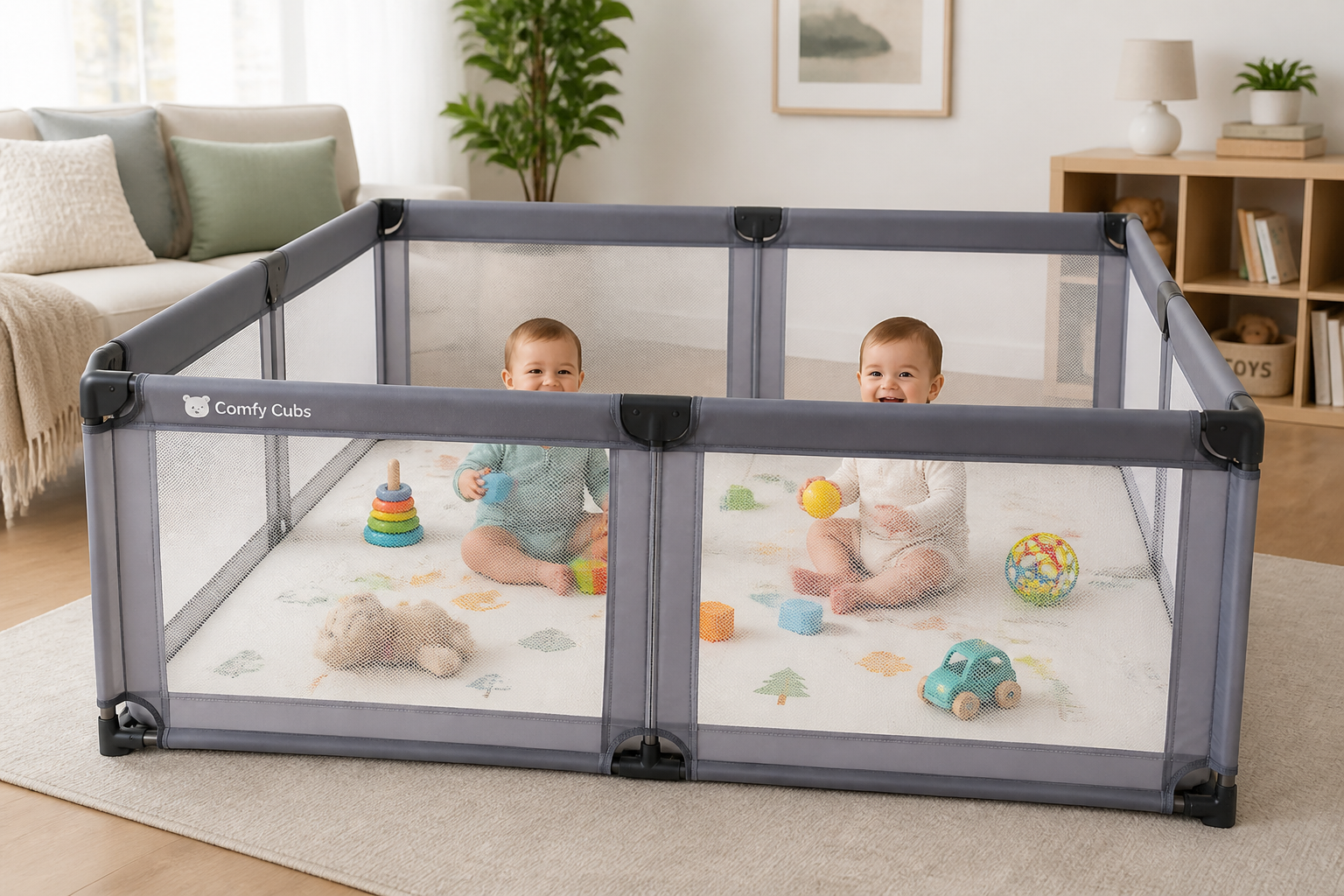
Twin Playpen Paradise: Pop-Up Play Yards That Actually Contain Two Tiny Escape Artists
Picture this: I’m testing the seventh twin playpen in three weeks while my own twins – now seasoned escape artists at 18 months – systematically dismantle every “toddler-proof” latch within reach. The stark reality? Most single-baby playpens crumble under twin pressure, literally and figuratively.
After countless hours of real-world testing with multiple twin families, I’ve discovered that the twin playpen market divides sharply between products that survive the chaos and those that become expensive lawn decorations after week two. When you’re shopping for twin toddler gear essentials, understanding which play yards can handle double the destruction becomes mission-critical.
Why Standard Playpens Fail the Twin Test
Single-baby playpens operate on fundamentally flawed twin logic. Two babies don’t just double the wear – they exponentially increase structural stress through coordinated chaos. I’ve watched twins systematically rock standard playpens until hinges snap, work together to defeat “childproof” mechanisms, and create escape routes that would impress Houdini.
The physics are simple: when Twin A pushes while Twin B pulls, forces multiply beyond manufacturer specifications. Standard safety ratings assume isolated baby behavior, not collaborative destruction.
Essential Twin Playpen Features That Actually Matter
Size Reality Check
Minimum viable space for comfortable twin play: 36 square feet. Anything smaller becomes a wrestling ring within minutes. The sweet spot sits around 50-60 square feet – enough room for parallel play without constant territorial disputes.
Structural Integrity Markers
Look for reinforced corner brackets, not just standard plastic connectors. Steel framework beats aluminum for twin applications. Double-wall mesh construction prevents the coordinated poking attacks that create holes in single-layer materials.
Setup Speed (The 3-Minute Rule)
If setup exceeds three minutes, you’ll avoid using it. Period. Pop-up mechanisms beat multi-piece assembly every time when you’re managing two mobile chaos agents.
| Model | Setup Time | Floor Space | Weight Capacity | Twin Durability Score |
|---|---|---|---|---|
| Regalo Super Wide Playpen | 2 minutes | 72 sq ft | 50 lbs total | 9/10 |
| Summer Pop ‘n Play Deluxe | 30 seconds | 48 sq ft | 40 lbs total | 7/10 |
| North States Superyard | 4 minutes | 60 sq ft | 60 lbs total | 8/10 |
| Evenflo Versatile Play Space | 1 minute | 44 sq ft | 35 lbs total | 6/10 |
Pop-Up vs. Modular: The Great Twin Playpen Divide
Pop-Up Advantages
Lightning setup saves sanity during twin meltdowns. No lost pieces or complex instructions. Compact storage matters when you’re already drowning in twin gear. However, size limitations and durability concerns plague most pop-up designs under sustained twin assault.
Modular System Benefits
Configurable sizing adapts to available space and twin developmental stages. Superior structural integrity handles coordinated twin attacks. Expandable designs grow with your chaos agents. The downside: setup complexity increases abandonment risk during crisis moments.
Real-World Testing Results
The Escape Artist Evaluation
I tested each twin playpen with three different twin pairs aged 12-24 months. Results were illuminating and occasionally terrifying. The Summer Pop ‘n Play fell to a coordinated zip manipulation attack within 18 minutes. The Regalo Super Wide withstood two weeks of determined assault before showing wear signs.
Durability Under Fire
Twins test structural integrity through methods single babies never attempt. Synchronized bouncing, coordinated climbing, and the dreaded “human battering ram” technique reveal design flaws quickly. Steel frameworks consistently outperformed plastic alternatives.
Twin Tactics: Pro-Level Shortcuts
- The Corner Anchor Strategy: Secure playpen corners to furniture legs with furniture straps – prevents the coordinated “rock until it moves” twin technique
- Rotation Prevents Habituation: Swap toy selections every 3-4 days to maintain playpen appeal and prevent boredom-driven escape attempts
- The Decoy Distraction: Place engaging activities just outside playpen sight lines – twins focus on contained toys instead of plotting escapes
- Double-Layer Defense: Use foam floor tiles under mesh floors to prevent the “poke holes until breakthrough” strategy twins inevitably discover
- Strategic Timing Windows: Deploy playpens during natural energy dips (post-meal, pre-nap) when escape motivation runs lowest
Space Planning for Maximum Containment Success
Factor clearance zones around your twin playpen setup. Twins create debris fields extending 3-4 feet beyond official boundaries through systematic toy ejection campaigns. Position away from climbable furniture – twins view nearby couches as escape launching platforms, not decorative elements.
Consider sight line management carefully. Twins separated from kitchen views during meal prep focus better on contained activities. However, complete isolation triggers separation anxiety and escape urgency. The sweet spot provides partial visual connection without constant entertainment demands.
Beyond Basic Containment: Activity Integration
Static containment fails twin psychology. Rotate activity stations within the playpen weekly. Sensory bins, stacking toys, and cause-and-effect toys maintain engagement longer than passive entertainment options.
Consider compatible play styles when planning twin playpen activities. Parallel play works better than forced interaction in confined spaces. Provide duplicate high-appeal items to prevent resource wars that escalate into coordinated escape planning sessions.
The Efficiency Expert’s Pro-Tip
Install foam door knob covers on interior doors during playpen time – twins who do escape can’t access dangerous areas while you’re retrieving the other escape artist. This 30-second precaution has prevented countless twin disasters in my testing households.
Best, Elena