


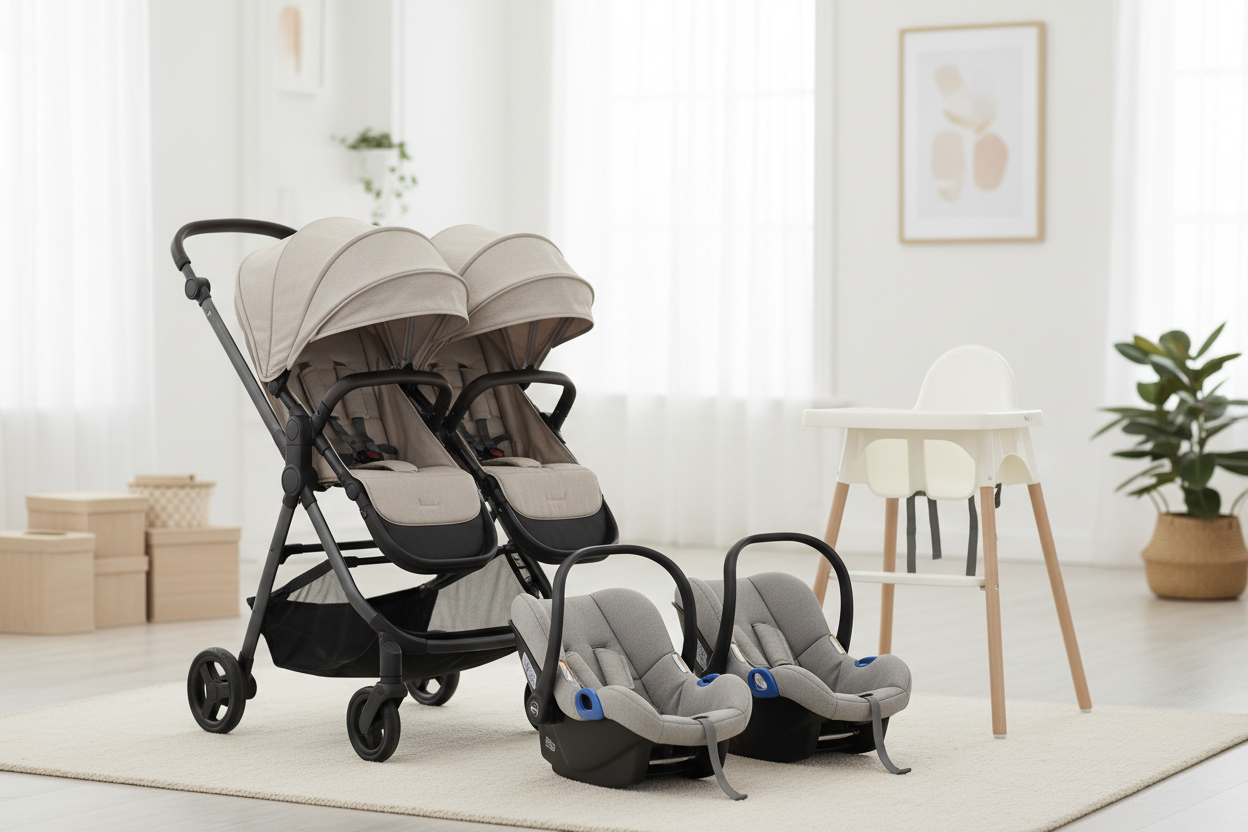
Twin Essentials: Your Complete Gear Guide
Let’s address the elephant—or should I say elephants—in the room: preparing for twins is nothing like gearing up for a singleton. As a mom of three (including my own set of twins), I’ve watched countless parents fall into the same trap—doubling everything on their registry only to discover that twin parenting requires a completely different strategy.
When you’re expecting twins, the gear considerations multiply faster than your grocery bill. It’s not just about having two of everything—it’s about understanding which items genuinely need duplication, which specialized twin products are worth the investment, and which single items can efficiently serve both babies.
Why This Guide Is Different
In 2026, twin parents face unique challenges: limited living space, budget constraints, and an overwhelming marketplace of twin-specific products—some brilliant, others completely unnecessary. This tactical gear audit goes beyond the standard nursery must-haves to help you navigate what you’ll actually need across all categories:
- Sleep solutions that maximize space while ensuring safety
- Feeding equipment that streamlines the 12+ daily feedings
- Transportation systems that don’t require Olympic-level strength
- Organization tools that will preserve your sanity during the first year
- Time-saving devices that let you occasionally sit down
Each recommendation comes from real-world testing—not just by me, but by our community of 500+ twin parents who provide ongoing feedback on durability, functionality, and actual usefulness beyond the first few months.
Making Practical, Evidence-Based Choices
Instead of presenting an exhaustive list of every possible twin product, this guide focuses on tactical efficiency. We evaluate each item against three critical criteria:
- Space efficiency: Will this work in your actual living situation?
- Value proposition: Does the benefit justify the cost?
- Long-term utility: Will you still need this after six months?
Throughout this guide, you’ll find honest assessments that acknowledge budget realities. Because while preparing for twins is certainly more expensive than preparing for a singleton, smart planning can prevent thousands in wasted purchases.
Let’s start by breaking down your essential gear by category, with specialized recommendations for different living situations, parenting philosophies, and budgets—because twin parenting may be doubly challenging, but finding the right equipment shouldn’t be.
Car Travel Solutions for Twins
The logistics of transporting twins by car presents unique challenges that go beyond simply doubling what you’d need for a single child. As a mother who’s navigated countless road trips with my own twins plus an older child, I can attest that vehicle configuration becomes a critical component of your twin-parenting strategy.
The Vehicle Dilemma: SUV vs. Minivan
Many parents find themselves contemplating a vehicle upgrade when expecting twins. While SUVs offer versatility, minivans remain the gold standard for multiple car seats with their sliding doors, lower entry height, and superior third-row accessibility. If you’re hesitant about the “minivan lifestyle,” modern options like the Kia Carnival and Toyota Sienna offer surprisingly sleek profiles with SUV-inspired styling.
Car Seat Configuration Challenges
The most immediate challenge is fitting two (or more) car seats safely. Your options typically include:
- Side-by-side installation – Practical but often requires slim-profile car seats
- Captain’s chairs configuration – Offers easier access but reduces total seating
- Three-across setup – Maximizes passenger capacity but requires careful seat selection
For families needing to fit three car seats in one row (twins plus an older child), our comprehensive guide to slim-profile car seats breaks down the measurements and compatibility factors that make this challenging configuration possible.
2026 Innovations in Twin-Friendly Car Seats
The latest car seat models feature several advancements particularly beneficial for twin parents:
- Rotating car seats – The Cybex Sirona S and Evenflo Revolve360 allow seats to swivel sideways, making getting twins in and out significantly easier
- Modular systems – Convertible options that grow from infant to toddler stages reduce the need for multiple purchases
- Anti-rebound bars – Enhanced safety features that stabilize the seat during collisions, particularly important when multiple seats are installed adjacent to each other
Practical Tips for Twin Car Travel
Beyond equipment selection, these strategies will streamline your on-road experience:
- Create a car loading/unloading sequence to manage twin transfers efficiently
- Install diaper caddies between seats for mid-journey changes
- Consider window shades that attach directly to the window rather than the door for better coverage
- Use color-coding for bottles, pacifiers, and other essentials to avoid mix-ups
- Keep a dedicated twin emergency kit with duplicate essentials to avoid needing to unpack your main diaper bag
Remember that car seat installation is notoriously challenging—approximately 46% of all car seats are installed incorrectly, and this percentage rises with multiple installations. Consider scheduling an appointment with a certified Child Passenger Safety Technician to ensure your configuration is optimized for both safety and practicality.
Sleep Solutions for Twins
Creating effective sleep arrangements for twins is perhaps the most critical tactical challenge parents face. After three children (yes, including my own twins), I’ve learned that sleep solutions need to be practical, space-efficient, and adaptable for both home and travel scenarios.
Home Base: Establishing Your Twin Sleep Command Center
When setting up your twins’ primary sleep space, you have several strategic options:
- Side-by-side cribs: The traditional approach provides each baby their own dedicated space while keeping them close to each other.
- Twin-specific cribs: These specialized units feature a removable divider, allowing babies to see each other while preventing middle-of-the-night interference.
- Twin bassinets: For the first few months, these space-saving units keep both babies within arm’s reach while taking up minimal floor space.
The key consideration for home setups is sustainability—invest in solutions that can adapt as your twins grow. Convertible cribs that transform into toddler beds offer exceptional value over time.
Tactical Travel Setups
Mobility becomes essential when traveling with twins. As we explored in our comparison between travel bassinets and pack-n-plays, each option has distinct advantages depending on your twins’ ages and your specific travel scenario.
For maximum deployment efficiency, consider these field-tested options:
- Dual-sleeper travel bassinets: Lightweight and portable, these provide safe sleep spaces for infants under 15-20 pounds.
- Twin-specific pack-n-plays: More substantial but offering greater longevity, these units accommodate twins up to 30+ pounds and can double as playpens.
- Travel sleep sacks: For older infants and toddlers, these create familiar sleep environments regardless of location.
Space Optimization Strategies
Whether at home or on the move, maximizing available space is critical when managing two babies simultaneously. Consider these tactical approaches:
- Room-sharing efficiency: Position cribs in an L-shape in corners to maximize floor space.
- Vertical storage: Install shelving above changing stations to keep supplies accessible without consuming precious floor space.
- Multi-function furniture: Prioritize items that serve dual purposes, such as dresser-topped changing tables or storage-equipped cribs.
Remember that twins often sleep better when positioned as they were in the womb—either side by side or head to head. This familiar arrangement can improve sleep quality and duration for both babies.
For parents working with limited square footage, mini-cribs offer full safety features while occupying approximately 40% less floor space than standard models—a significant tactical advantage in smaller homes or apartments.
Feeding Equipment for Twins: Space-Saving Solutions for Double the Hungry Mouths
Feeding twins simultaneously can feel like coordinating a small restaurant operation in your home. As both a twin mom and gear tester, I’ve learned that strategic equipment choices make all the difference between chaotic mealtimes and manageable feeding sessions.
The High Chair Dilemma
Standard high chairs typically consume 4-6 square feet of floor space—each. With twins, that quickly becomes unmanageable, especially in average urban kitchens (which average just 160 square feet nationwide). Our comprehensive guide to double high chairs for small kitchens explores this challenge in depth, but here are the essentials:
- Space-efficient designs: Look for tandem models, clip-on table chairs, or convertible booster seats that attach directly to dining chairs
- Cleanability factor: Twins create twice the mess, so seamless surfaces and dishwasher-safe trays are non-negotiable
- Growth accommodation: Invest in systems that transform from infant seats to toddler boosters
Double Feeding Efficiency Tools
Beyond seating, several specialized tools have saved my sanity during the twin feeding journey:
- Twin-specific bottle props: When you need an extra hand during formula feeds
- Double nursing pillows: Essential for breastfeeding mothers managing tandem feeds
- Batch prep containers: Sectioned containers with leak-proof dividers for preparing multiple meals at once
- Synchronized feeding timers: Apps designed specifically for tracking multiple babies’ feeding schedules
Strategic Organization Systems
Managing twice the bottles, sippy cups, and feeding accessories requires military-grade organization:
- Wall-mounted drying racks: Free up precious counter space while keeping bottles accessible
- Color-coded systems: Assign each twin their own color for all feeding equipment to quickly identify whose is whose
- Vertical storage solutions: Utilize vertical space with stacking systems for bottle parts and food containers
The key to successful twin feeding setups isn’t just buying double of everything—it’s about thoughtfully selecting gear that acknowledges the unique challenges of feeding two same-age children simultaneously. The right equipment transforms feeding time from a logistical nightmare into a manageable (and sometimes even enjoyable) part of your twin parenting journey.
Monitoring and Safety Systems for Twins
When you’re managing double the baby load, effective monitoring becomes twice as important. The technology for twin monitoring has evolved significantly for 2026, offering parents of multiples specialized solutions that go beyond standard single-baby systems.
Split-Screen Monitoring: The Twin Parent Essential
For parents of twins, the ability to simultaneously monitor both babies is non-negotiable. As we discussed in our dedicated guide comparing split-screen versus pan technology for twins, the dual-view functionality has become increasingly sophisticated.
The latest models now offer:
- Independent camera controls – Adjust angle, zoom, and night vision settings for each twin separately
- Twin-specific sound monitoring – AI systems that can distinguish between babies and prioritize alerts
- Split-screen HD resolution – No more sacrificing image quality when viewing both babies
Advanced Vitals Tracking for Multiples
The 2026 monitoring systems have revolutionized how parents track health metrics for twins:
- Dual-sync breathing monitors – Wearable patches that communicate with a central hub, giving parents comprehensive data on both babies
- Comparative analytics – Systems that track developmental patterns between twins, highlighting significant differences that might warrant attention
- Multi-room temperature and humidity monitoring – Especially useful when twins eventually sleep in separate rooms
Movement Detection Tailored for Two
Twin parents face unique challenges with movement monitoring, particularly when both babies share a crib in the early months.
The newest safety systems feature:
- Individual movement zones – Technology that can distinguish between two babies in close proximity
- Twin-specific boundary alerts – Notifications when babies move too close together during sleep
- Dual-baby sleep pattern analysis – Identifies when one twin’s movements are disrupting the other’s sleep
Mobile Integration for Twin Management
Managing twins requires hands-free solutions more than ever. The 2026 monitoring systems excel in smartphone integration:
- Twin-toggle apps – Switch between babies with voice commands while holding one (or both!)
- Synchronized alerts across multiple devices – Ensuring both parents can monitor effectively during tag-team nights
- Historical comparison data – Track how each twin’s sleep patterns evolve over time compared to their sibling
When selecting a monitoring system for your twins, prioritize solutions specifically designed for multiples rather than trying to adapt single-baby systems. The investment in twin-specific technology pays dividends in peace of mind and sleep quality—for everyone involved.
Beyond the Nursery: Additional Essential Twin Gear
While setting up the perfect nursery is often our initial focus, the reality of raising twins means preparing for life beyond those four walls. As a mother of twins plus one, I’ve learned that mobility and developmental support require strategic gear investments as your dynamic duo grows.
Out-and-About Essentials
The ability to transport twins safely and efficiently becomes critical once you’re ready to venture into the world. As we discussed in our comprehensive guide on twin-friendly travel systems, investing in mobility solutions that grow with your children pays dividends.
- Double Stroller with Versatility: Look for models that transition from infant car seat carriers to toddler seating. Side-by-side designs offer equal viewing experiences, while tandem options navigate narrow spaces better.
- Wagon Strollers: These increasingly popular alternatives provide pull/push flexibility and often convert to seating for older children.
- Car Organization System: With twins, your vehicle quickly becomes cluttered. Multi-pocket organizers that attach to seat backs can store essentials for two.
Developmental Stage Solutions
As twins reach mobility milestones, your gear needs evolve dramatically. Consider these essentials for the 6-24 month period:
- Double Activity Center: Two exersaucers or a specially designed twin activity center provides independent play while keeping both babies contained.
- Play Yard Extensions: Standard play yards become cramped quickly. Look for expandable options or connectable systems that grow with your twins.
- Dual Monitoring Solutions: As twins begin sleeping in separate rooms or exploring different areas, split-screen video monitors become invaluable.
Mealtime Logistics
Feeding twins outside the home presents unique challenges that the right gear can address:
- Portable High Chair Alternatives: Fabric seat harnesses that convert restaurant chairs into high chairs take up minimal space in your diaper bag.
- Insulated Dual Compartment Bags: These allow you to transport pre-prepared meals at proper temperatures.
- Silicone Placemats: Rollable, portable eating surfaces that suction to tables provide clean eating spaces anywhere.
Identity Development Support
As twins grow, supporting their individual identities while managing logistics becomes increasingly important:
- Color-Coded Systems: From water bottles to backpacks, consistent color assignments help children, caregivers, and teachers identify ownership.
- Personalized Labels: Waterproof, durable name labels for clothing and gear prevent mix-ups at childcare and activities.
Remember that quality trumps quantity. Twins don’t need two of everything, but they do need gear specifically designed to address the logistics of raising two same-age children simultaneously.
Creating a Twin-Friendly Home: Space-Saving Strategies
When you’re welcoming twins, your home’s organization becomes as tactical as a military operation. As a mother of twins plus one, I’ve learned that maximizing space isn’t just helpful—it’s essential for maintaining sanity. Let’s explore how to transform your living space into a twin-efficient headquarters.
Multi-Purpose Furniture: The Twin Parent’s Secret Weapon
The golden rule: every item should serve at least two purposes. This isn’t just about saving space—it’s about maximizing functionality.
- Convertible cribs: Models that transform from cribs to toddler beds to full-size beds provide long-term value. Look for designs with integrated storage drawers underneath.
- Feeding stations: Rather than dedicated high chairs that consume floor space, consider clip-on chairs that attach to countertops or tables and can be stored when not in use.
- Changing solutions: Wall-mounted changing stations that fold away or changing trays that convert standard dressers eliminate the need for dedicated changing tables.
Vertical Storage: The Untapped Frontier
When floor space is limited, look up. Vertical storage solutions can triple your storage capacity without expanding your footprint.
- Wall-mounted shelving: Install shelves above changing areas, cribs (safely out of reach), and in hallways for supplies, books, and decor.
- Over-door organizers: Perfect for diapers, creams, small clothing items, and accessories.
- Ceiling-mounted storage: In garages or basements, consider pulley systems for seasonal gear like double strollers during winter months.
Room-Sharing Strategies That Preserve Sanity
Whether twins share a room by necessity or choice, thoughtful organization prevents chaos.
- Color-coding: Assign each twin their color for easier identification of personal items.
- Divided dressers: Use drawer dividers to separate each child’s clothing within shared furniture.
- Privacy solutions: As they grow, consider room dividers that can be easily moved or folded away to create personal space when needed.
The “One In, One Out” Rule for Twin Gear
Twin parents must become ruthless editors of their possessions. For every new item that enters your home, commit to removing something else. This prevents the gradual accumulation that leads to clutter.
When purchasing new gear, ask yourself three critical questions:
- Does this serve multiple functions?
- Can this be easily stored when not in use?
- Is this absolutely necessary for both children?
Digital Organization: The Overlooked Space-Saver
Physical space isn’t the only concern for twin parents. Mental space matters too.
- Twin-tracking apps: Specialized apps help track feeding schedules, diaper changes, and medication for both babies simultaneously.
- Cloud storage: Rather than physical photo albums that consume shelf space, use digital solutions for the thousands of photos you’ll inevitably take.
- Voice assistants: Hands-free technology for setting reminders, making lists, and controlling home systems becomes invaluable when your hands are perpetually full.
Remember that space-saving isn’t just about cramming more into less space—it’s about creating a home where movement flows freely and where finding what you need takes seconds, not minutes. When you’re juggling twins, those saved seconds accumulate into hours of reclaimed sanity.
Budget Planning for Twin Gear: Strategic Investment Roadmap
When I discovered I was having twins, my carefully crafted baby budget nearly doubled overnight. Let’s be honest—preparing for twins requires financial strategy beyond what most single-baby guides suggest. After guiding hundreds of twin families through this process, I’ve developed a systematic approach to twin-specific budget planning that prevents both overspending and underpreparing.
The 40-40-20 Twin Gear Investment Strategy
Rather than spreading your budget evenly, I recommend the 40-40-20 approach:
- 40% on sleep solutions – Invest heavily in quality cribs, mattresses, and sleep aids
- 40% on feeding equipment – Whether breast or formula feeding, this category demands quality
- 20% on everything else – Clothing, diapering, toys, and accessories can be acquired more economically
Strategic Purchase Timeline
Spacing out purchases not only helps manage cash flow but ensures you’re ready at each developmental stage:
| Timeframe | Priority Purchases | Estimated Budget % |
|---|---|---|
| Weeks 12-20 | Research phase, registry setup | 5% |
| Weeks 20-28 | Nursery furniture, car seats, stroller | 50% |
| Weeks 29-35 | Feeding equipment, diapering, newborn essentials | 30% |
| After arrival | Adaptive purchases based on specific needs | 15% |
Where to Invest vs. Where to Save
Not everything needs to be top-tier. Here’s my practical breakdown:
Worth Every Penny:
- Twin-specific stroller – Daily use demands durability and maneuverability
- Bottle system – Matched components reduce frustration during late-night feedings
- Car seats – Never compromise on safety equipment
- Nursing pillow designed for twins – Saves your back during countless feeding sessions
Save Your Money On:
- Matching outfits – Cute but impractical as twins often wear different sizes
- Duplicate toys – Contrary to popular belief, one is often sufficient
- Baby monitors with excessive features – Basic audio/video functionality is adequate
- Brand-name everyday clothing – They’ll outgrow everything remarkably fast
Leveraging Twin-Specific Resources
Don’t overlook specialized cost-saving opportunities:
- Twin clubs often maintain equipment exchange programs
- Many retailers offer twin discounts (10-15% on second items)
- Twin-specific registries that allow group gifting for larger items
- Subscription services offering twin-quantity discounts on consumables
Remember, while the initial investment may seem overwhelming, strategic planning prevents panic purchases that truly strain your budget. Your twins don’t need everything immediately—staged acquisition aligns perfectly with their developmental needs.
Conclusion: Creating Your Twin Gear Strategy
Navigating the world of twin gear can feel overwhelming, but with intentional planning and prioritization, you can create a system that works for your unique family. The key is developing a personalized strategy that aligns with your lifestyle, space constraints, and parenting philosophy.
Balancing Essentials and Nice-to-Haves
Throughout this guide, we’ve examined numerous gear categories—from feeding solutions to mobility systems to sleep arrangements. As you craft your approach, remember that not every twin-specific item is necessary for every family. Consider your daily routine and living situation when deciding where to invest and where to simplify.
For apartment dwellers, space-saving options like convertible cribs and foldable strollers might be non-negotiable, while those in larger homes might prioritize dual nursing stations on different floors. Urban parents may place higher value on nimble transit solutions, while suburban families might invest more in home-based systems.
Core Strategy Principles
- Anticipate growth stages – Purchase with the 6-12 month horizon in mind, not just the newborn phase
- Prioritize caregiver ergonomics – Your physical wellbeing directly impacts your ability to care for your twins
- Invest where it matters – Allocate budget to high-use, high-impact categories first
- Test before committing – Borrow items when possible to determine what works for your specific twins
- Create systems, not just collect items – How gear works together is often more important than individual pieces
The Path Forward
Remember that twin parenting is a marathon, not a sprint. The gear that serves you in the early months may need adjustment as your twins develop their own preferences and personalities. Stay flexible and be willing to adapt your strategy as needed.
Most importantly, while thoughtful gear selection can absolutely make twin parenting more manageable, the greatest resource you’ll have is your community. Connect with other twin parents, join support groups, and don’t hesitate to ask for help when needed.
This journey of raising twins will be challenging and beautiful in equal measure. With intention, organization, and the right support systems—both human and gear-based—you’ll not just survive the twin parenting adventure, but truly thrive in it.