


Preemie Weight Gain in Twins: Monitoring Growth Milestones in the First Year
Watching two premature twins’ weight charts climb can feel like monitoring a pair of delicate stock portfolios with far more at stake. As a neonatologist, I’ve tracked thousands of preemie growth trajectories, and twins present unique monitoring challenges that single-birth parents never face. When born early, these tiny bodies must accomplish extraordinary developmental feats outside the womb, often starting at weights under 1500 grams.
Premature twins often follow different growth patterns than their full-term counterparts, and understanding these differences is crucial for their health outcomes. If you’re concerned about safe sleep arrangements for your newborn twins, remember that proper growth monitoring directly affects how you’ll handle their sleeping arrangements too.
Understanding Preemie Growth Expectations
Premature infants don’t follow standard growth charts. Their development timeline requires specialized tracking tools that account for their gestational age rather than chronological age. For twins, this becomes even more complex as they may have experienced different levels of intrauterine growth restriction.
Corrected age calculation becomes your new math skill. A baby born at 32 weeks who is now 12 weeks old has a corrected age of 4 weeks (40-32+12-40=4). This corrected age serves as the proper benchmark for all developmental assessments.
Typical Weight Gain Patterns for Preemie Twins
Most premature twins experience:
– Initial weight loss of 5-15% in the first week of life
– Return to birth weight by 2-3 weeks of life
– Gain of 15-30 grams per day once stable
– Catch-up growth that may continue for 2-3 years
The 2026 growth monitoring standards now include specialized twin-specific preemie charts that account for the unique growth patterns of multiples, which your pediatrician should be using.
The Critical First 90 Days
| Time Period | Expected Daily Gain | Warning Signs | Intervention Threshold |
|---|---|---|---|
| NICU Phase | 15-20g/day | Less than 10g/day for 3+ days | Nutritional consultation if below 10g/day |
| 1-3 Months Corrected | 20-30g/day | Weight plateau for 5+ days | Medical evaluation if no gain for 1 week |
| 4-6 Months Corrected | 15-20g/day | Falling across percentile lines | Feeding assessment if crossing 2+ percentiles downward |
The first three months post-discharge represent the most intensive monitoring period. During this time, you’ll likely be weighing your twins frequently—sometimes daily in the beginning, then weekly as they stabilize.
Twin-Specific Growth Complications
Premature twins face unique growth challenges:
1. Twin-to-twin discordance (size differences between twins)
2. Feeding coordination difficulties affecting nutrition
3. Increased caloric needs for catch-up growth
4. Higher risk of reflux and feeding intolerance
5. Competitive dynamics during tandem feeding sessions
One twin consistently outpacing the other deserves medical attention, especially if the difference exceeds 20% of body weight.
Nutrition: The Foundation of Preemie Weight Gain
For preemie twins, nutrition becomes a precise science. The 2026 nutritional guidelines for premature infants now recommend:
– Higher protein formulas (2.5-3.5 g/kg/day)
– Caloric density of 22-24 calories per ounce for slow-gaining preemies
– Fortification of breast milk for extremely premature infants
– Micronutrient supplementation, especially iron, zinc, and vitamin D
– Carefully timed introduction of solids based on corrected age, not calendar age
Most twins born before 34 weeks will require specialized feeding plans. Human milk remains gold standard, but often requires fortification to meet the enhanced nutritional demands of preemie twins.
Tracking Tools and Technology
Modern preemie weight monitoring has evolved significantly. Today’s parents have access to:
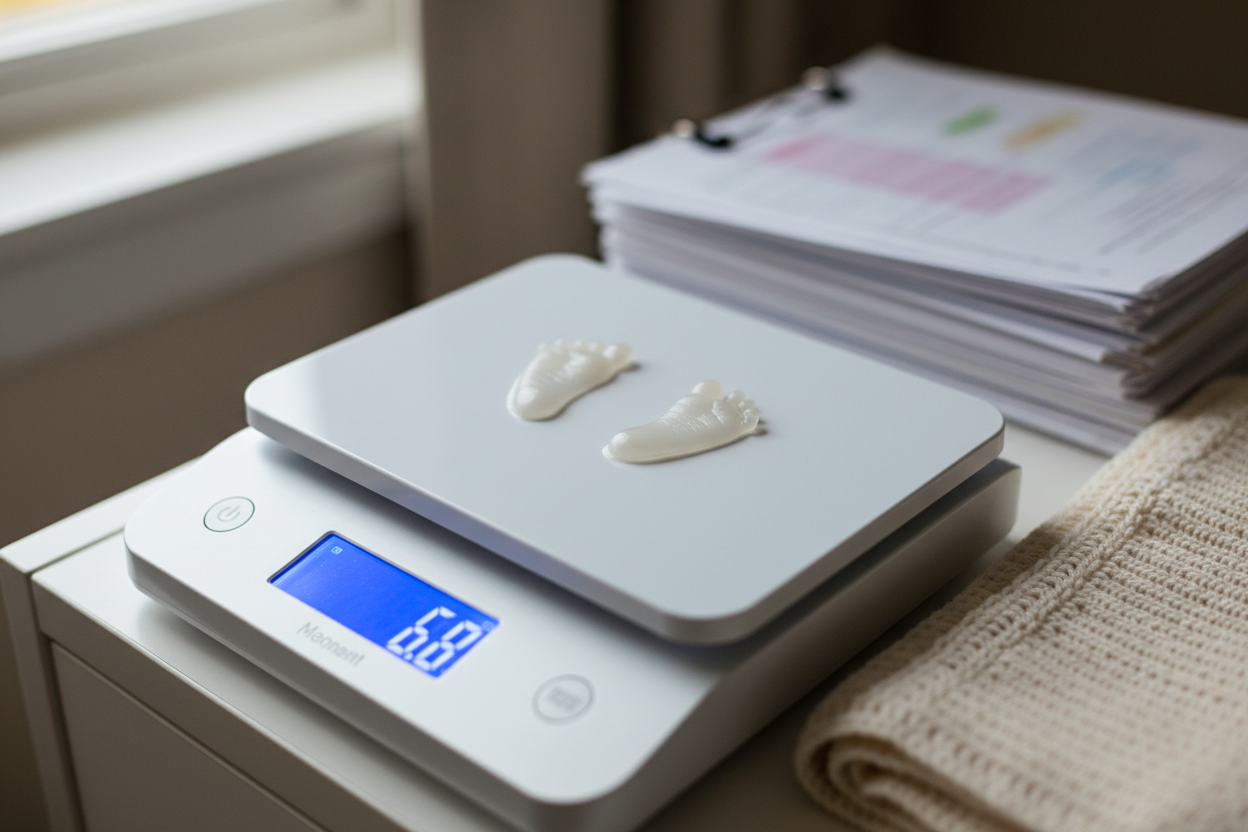
– Bluetooth-enabled baby scales with automatic data logging
– Growth tracking apps with preemie-specific algorithms
– Telehealth monitoring services that flag concerning patterns
– AI-powered nutrition calculators that adjust formula recommendations based on growth velocity
These tools help create the detailed growth records that become invaluable during pediatrician visits. The new TwinTrack system launched in 2026 specifically integrates dual monitoring for twins, allowing side-by-side comparison while accounting for individual patterns.
Warning Signs Requiring Medical Attention
Some growth patterns warrant immediate medical consultation:
– Weight gain less than 10g/day for a week
– One twin gaining significantly more than the other
– Failure to gain weight for 3+ consecutive days after establishing positive growth
– Sudden increase in weight (could indicate fluid retention)
– Crossing downward across two major percentile lines
Early intervention in growth faltering can prevent cascading developmental issues, especially in preemie twin development.
Twin Tactics: Pro-Level Shortcuts
- Staggered weighing schedule: Weigh one twin on even days and one on odd days to reduce the workload while maintaining data consistency
- Calibration consistency: Always weigh at the same time of day, ideally before feeding but after diaper changes
- Photo documentation: Weekly photos against the same background object provide visual confirmation of growth that numbers alone can’t capture
- Feed volume tracking: Use a specialized app to track exactly how much each twin is consuming to quickly identify intake discrepancies
- Growth velocity calculation: Calculate g/kg/day (grams gained per kilogram of body weight per day) to compare twins of different sizes more accurately
Beyond the First Year: The Catch-Up Timeline
Many parents worry when their preemie twins don’t reach the standard growth charts by their first birthday. However, most preemies—especially those born before 32 weeks—continue catch-up growth for 2-3 years.
The pattern typically involves:
1. Rapid catch-up in weight (first 6-12 months)
2. Height catch-up (may take 2+ years)
3. Head circumference catch-up (critical for brain development)
Some preemie twins may remain somewhat smaller than their term peers throughout childhood, but functional development often normalizes completely.
Parents should also monitor head shape development in their twins, as premature infants have softer skulls and are at higher risk for plagiocephaly, which can sometimes require helmet therapy.
When Special Interventions May Be Needed
Occasionally, preemie twins require additional support to achieve optimal growth:
Fortification and Supplementation
For extremely premature infants (less than 28 weeks), breast milk alone may not provide sufficient nutrition for catch-up growth. Human milk fortifiers and specialized preemie formulas may be recommended.
Feeding Therapy
Some preemies develop oral aversions or coordination issues that require specialized feeding therapy. When both twins have feeding challenges, coordinating therapy becomes even more complex but critical.
Metabolic and Endocrine Evaluation
Persistent growth failure despite adequate caloric intake may warrant metabolic or endocrine assessment, particularly if other developmental parameters are also affected.
The Pediatrician’s Medical Survival Tip
Create a weekly side-by-side growth photo journal of your preemie twins against a consistent background object (like a specific stuffed animal). This visual record often catches subtle growth changes that even weight measurements miss and becomes invaluable for medical consultations when growth concerns arise.
Stay healthy,
Dr. Sarah