


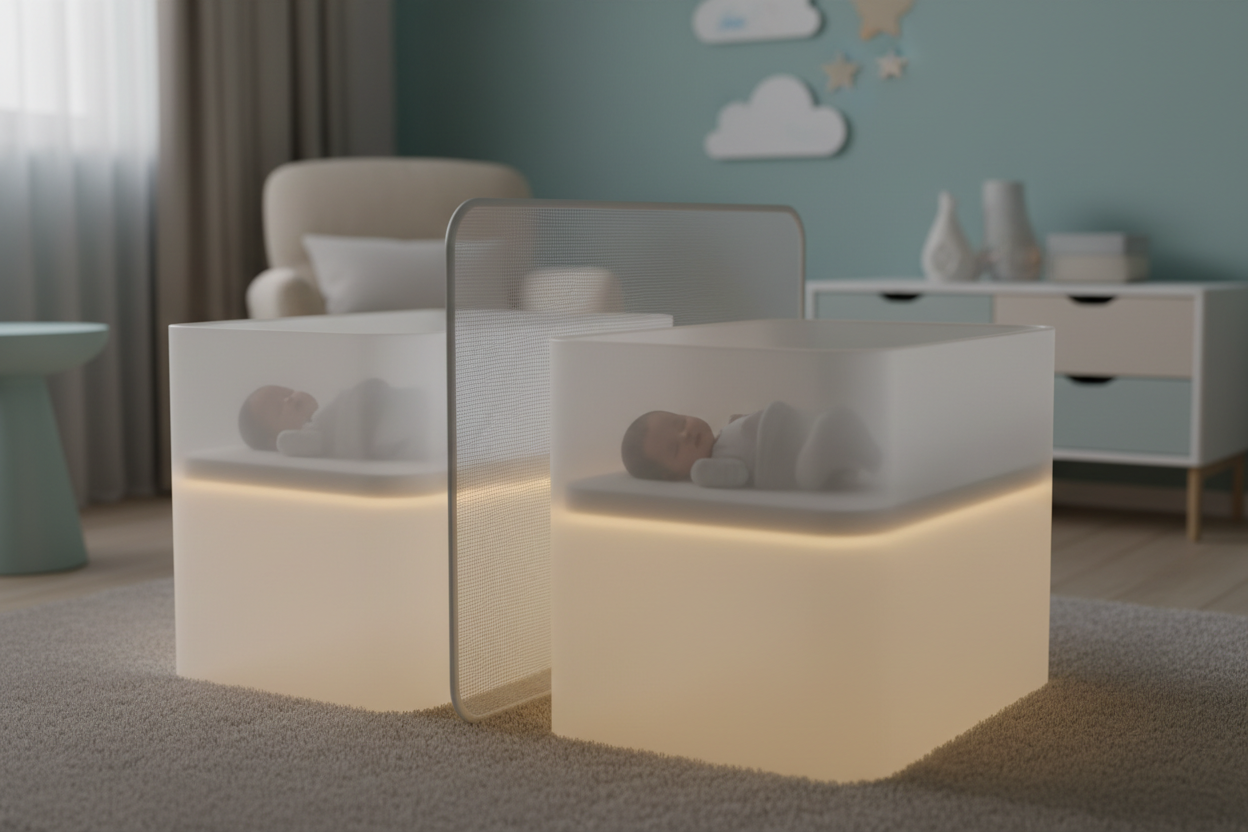
Safe Sleep 2026: Should Newborn Twins Share a Bassinet?
The midnight feed has just ended. You’re exhausted, your twins are finally asleep, and the question haunts you: can your newborn twins safely share the same bassinet? As the 2026 sleep safety guidelines emphasize individual sleep spaces, many twin parents find themselves navigating conflicting advice about this common question.
The short answer? Current medical consensus advises against having newborn twins share a bassinet, even though many parents of multiples have historically done so out of necessity or convenience. Let’s examine why separate sleep spaces remain the gold standard for twin safety in 2026, and what practical solutions exist for families with limited space.
The Medical Consensus on Twin Bassinet Sharing
The American Academy of Pediatrics’ 2026 safe sleep guidelines maintain that each infant should have their own separate sleep surface with a firm, flat mattress and fitted sheet. This recommendation applies to all babies, including multiples.
Why separate sleep spaces? Research consistently shows that:
1. Individual sleep spaces reduce overheating risks
2. Separate bassinets eliminate the possibility of one twin obstructing the other’s airway
3. Each baby has adequate room to move safely
Dr. Rachel Miller, neonatologist at Boston Children’s Hospital, notes: “While twins often comfort each other, the safety risks of bassinet sharing outweigh potential benefits. Even identical twins need their own breathing space.”
Twin Sleep Safety Comparison: 2026 Standards
| Sleep Arrangement | Safety Rating | Space Requirements | Cost Considerations |
|---|---|---|---|
| Individual Bassinets | Highest – AAP Recommended | Minimum 4 sq ft each | $$$ (Two complete units) |
| Twin-Specific Bassinet | High – With solid divider | Minimum 6 sq ft total | $$ (Specialized unit) |
| Shared Standard Bassinet | Not Recommended | Inadequate space | $ (Single unit) |
| Crib with Mesh Divider | Moderate – Transitional option | Minimum 8 sq ft total | $$ (Crib + divider) |
The Womb Mate Factor: Why Twins Want To Sleep Together
Many parents observe their twins naturally gravitating toward each other during sleep, which makes logical sense. For nine months, these babies developed side-by-side, hearing each other’s heartbeats and feeling each other’s movements. This phenomenon, sometimes called the “womb mate effect,” can make separation during sleep seem counterintuitive.
Research from the University of California’s 2025 twin sleep study found that twins placed in separate but adjacent bassinets often oriented themselves toward each other, even as newborns with limited mobility. This suggests an innate comfort in proximity without requiring actual physical contact.
Safe Alternatives to Bassinet Sharing
If having twins share a bassinet isn’t recommended, what are the alternatives that honor their connection while maintaining safety?
1. Twin-specific bassinets with dividers – The 2026 TwinRest Pro and similar models feature a solid divider that creates two completely separate sleep spaces while keeping twins close.
2. Side-by-side individual bassinets – Position two standard bassinets with sides touching (but no gaps) so twins can sense each other’s presence.
3. Crib dividers for slightly older twins – Once twins outgrow bassinets (typically around 3-4 months), a properly installed crib divider in a full-size crib creates separate sleeping areas.
4. Room-sharing without bed-sharing – The AAP continues to recommend room-sharing for at least the first six months, which allows twins to maintain their connection while sleeping separately.
Twin Tactics: Pro-Level Shortcuts
- Staggered transitions: Move one twin to their crib first (usually the more independent sleeper), then the second twin 5-7 days later to avoid simultaneous sleep disruptions.
- Synchronized white noise: Use identical white noise machines at exactly the same volume to maintain sleep cues when twins are in separate bassinets.
- The pillowcase hack: Sleep with two small cotton pillowcases, then place one in each bassinet so both babies can smell you nearby.
- Temperature monitoring: Use a twin-capable temperature monitor like the 2026 RoomTemp Twin that tracks microclimate differences between two sleep spaces.
- Strategic midnight feeds: For formula-feeding families, prepare a double bottle station with insulated holders to minimize movement between feedings.
Special Considerations for Premature Twins
For premature twins who spent time in the NICU, the transition to home sleep requires special attention. These infants often benefit from the continued monitoring they received in hospital settings.
“Premature twins who co-regulated in the NICU may initially struggle with separation at home,” explains neonatal sleep specialist Dr. James Chen. “However, their safety must remain the priority, which means separate sleep surfaces with appropriate monitoring.”
Some NICU graduates might be recommended for specialized preemie weight gain monitoring during the first year, which can affect sleep arrangements and feeding schedules.
When Cultural Practices Meet Modern Safety Guidelines
Many cultures traditionally have twins share sleep spaces, creating potential conflicts between cultural practices and current medical guidance. This dilemma requires sensitive navigation.
“The goal isn’t to dismiss cultural practices but to find ways to honor them while maximizing safety,” notes cultural birth specialist Maria Gonzalez. “For example, some families may practice daytime co-napping under direct supervision while maintaining separate sleep spaces at night.”
Special Concerns: Twin-to-Twin Transfer Syndrome During Sleep
While exceedingly rare, some research has documented a phenomenon where twins can experience breathing synchronization during sleep. In some cases, this can result in apnea episodes affecting both babies simultaneously.
This is one more reason why separate sleep spaces are recommended, as it prevents potential breathing issues from affecting both twins at once.
Future Trends in Twin Sleep Safety
The landscape of twin sleep recommendations continues to evolve. Current research is investigating potential benefits of specially designed twin sleep surfaces that maintain a physical barrier while allowing sensory connection.
Dr. Amelia Thompson, lead researcher on the 2025 Twin Sleep Cohort Study, suggests: “We’re exploring whether specialized sleep surfaces with transparent, breathable dividers might offer the safety benefits of separation while preserving the psychological benefits of proximity.”
The Pediatrician’s Medical Survival Tip
For twins who seem distressed in separate bassinets, try synchronizing their sleep environment instead of letting them share a sleep surface. Place identical swaddles, white noise machines set to the exact same sound and volume, and identical mobiles at the same height to create mirrored sleep experiences that comfort without compromising safety.
Stay healthy,
Dr. Sarah