


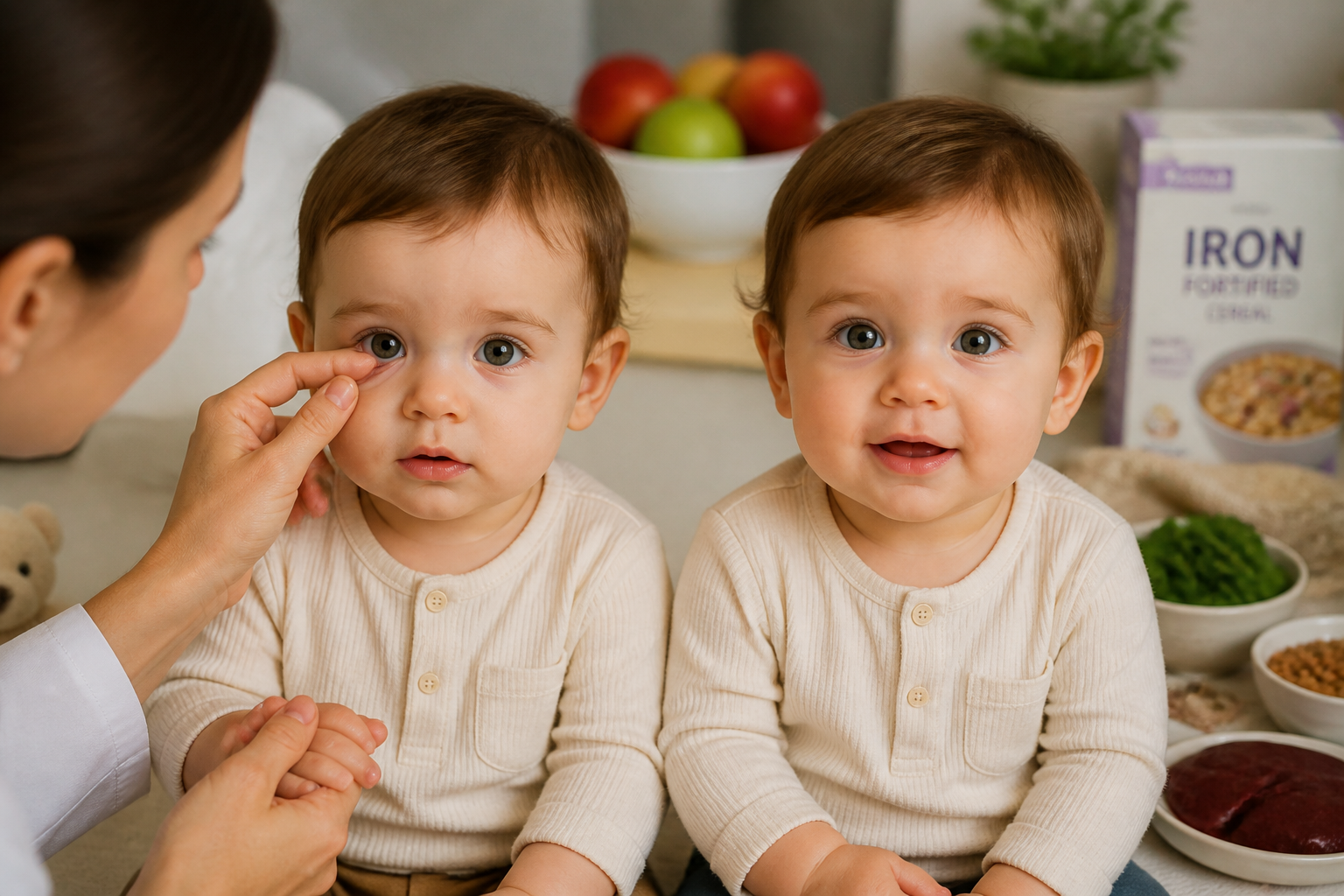
Iron Deficiency in Twins: The Hidden Energy Thief Every Parent Must Recognize
The 18-month-old twins sat listlessly in their highchairs, barely touching their morning eggs. Mom attributed it to typical toddler pickiness, but the telltale signs were already there: pale nail beds, irritability that seemed beyond normal twin chaos, and an exhaustion that no amount of sleep could cure. What she was witnessing wasn’t defiance—it was twins iron deficiency silently stealing her children’s vitality.
Multiple birth children face a dramatically higher risk of iron deficiency anemia compared to singletons. The statistics are sobering: twins are 2.4 times more likely to develop iron deficiency by age two, with the risk climbing even higher for higher-order multiples. As parents juggle double (or triple) the feeding schedules, this critical nutritional gap often flies under the radar until symptoms become severe.
Understanding Iron Deficiency in Multiple Birth Children
Iron deficiency anemia develops when your body lacks adequate healthy red blood cells to carry oxygen effectively. For twins and multiples, this condition carries unique complexities that extend far beyond simple dietary inadequacy.
Why Multiples Face Higher Risk:
– Shared placental resources: Many twins compete for iron stores in utero
– Premature birth patterns: 60% of twins arrive before 37 weeks, with underdeveloped iron reserves
– Lower birth weights: Smaller babies have proportionally smaller iron stores at birth
– Rapid growth spurts: Twins often experience accelerated catch-up growth, depleting iron faster
The window of vulnerability typically peaks between 9-24 months, when birth iron stores become exhausted and dietary iron intake may not meet demands.
Red Flag Symptoms: What Every Twin Parent Should Monitor
Physical Manifestations
– Pallor: Check inside the lower eyelids, nail beds, and palms
– Unusual fatigue: Excessive sleepiness or inability to sustain normal play
– Restless leg syndrome: Particularly noticeable during sleep attempts
– Pica behaviors: Craving non-food items like ice, starch, or dirt
– Cold hands and feet: Poor circulation despite adequate clothing
Behavioral Changes
– Increased irritability: Beyond typical twin testing behaviors
– Shortened attention spans: Difficulty focusing on age-appropriate activities
– Delayed developmental milestones: Particularly gross motor skills
– Food aversions: Rejecting previously accepted foods
When traveling with twins, these symptoms can become more pronounced due to disrupted routines. Parents planning extended trips should consider consulting their pediatrician about iron supplementation strategies, especially when visiting destinations where familiar iron-rich foods may not be readily available.
Diagnostic Approaches and Laboratory Values
| Age Range | Hemoglobin Level (Normal) | Iron Deficiency Threshold | Recommended Action |
|---|---|---|---|
| 6-23 months | 11.0 g/dL or higher | Below 11.0 g/dL | Immediate iron supplementation |
| 2-5 years | 11.5 g/dL or higher | Below 11.5 g/dL | Comprehensive iron panel |
| 5-12 years | 12.0 g/dL or higher | Below 12.0 g/dL | Dietary counseling + monitoring |
| Adolescents (F) | 12.0 g/dL or higher | Below 12.0 g/dL | Menstrual history assessment |
Additional Laboratory Markers:
– Ferritin levels: Most sensitive early indicator (normal: 15-150 ng/mL)
– Total iron-binding capacity (TIBC): Elevated in iron deficiency
– Mean corpuscular volume (MCV): Decreased in established deficiency
Treatment Strategies for Multiples
Supplementation Protocols
The 2026 pediatric guidelines emphasize individualized dosing based on severity and tolerance. For twins iron deficiency, elemental iron dosing typically ranges from 3-6 mg/kg/day, divided into 2-3 doses.
Optimal Timing:
– Give on empty stomach when possible (enhances absorption by 300%)
– Separate from calcium-rich foods by at least 2 hours
– Pair with vitamin C sources (citrus fruits, strawberries, bell peppers)
Dietary Interventions
High-Absorption Heme Iron Sources:
– Lean beef and lamb
– Sardines and salmon
– Chicken liver (in age-appropriate preparations)
– Turkey and chicken (dark meat preferred)
Plant-Based Options with Enhancement:
– Iron-fortified cereals with orange juice
– Lentils cooked with tomatoes
– Spinach paired with lemon
– Pumpkin seeds with citrus fruits
When packing for twins on extended trips, include iron-rich snacks and supplements to prevent deficiency progression during travel disruptions.
Monitoring Response and Long-term Management
Expected Treatment Timeline
– Week 1-2: Behavioral improvements often appear first
– Week 4-6: Hemoglobin levels begin rising (expect 1-2 g/dL increase)
– Month 2-3: Complete normalization of laboratory values
– Month 4-6: Iron stores replenishment phase
Prevention Strategies for Twin Families
Feeding Schedule Coordination:
– Stagger iron-rich meals to reduce competition for absorption
– Monitor both twins’ intake individually—never assume equal consumption
– Consider separate supplement timing to ensure adequate dosing
Regular Screening Intervals:
– 9-12 months: Initial screening for early walkers
– 15-18 months: Peak risk period assessment
– 24 months: Transition to regular dietary iron evaluation
– Annual screening thereafter until adolescence
Twin Tactics: Pro-Level Shortcuts
- The “Cast Iron Hack”: Cook acidic foods (tomato sauce, chili) in cast iron cookware to naturally increase iron content by up to 16x
- Frozen Fruit Enhancement: Blend iron-fortified cereal with frozen berries—the vitamin C is concentrated, and twins often prefer the smoothie format
- The Dual-Syringe Method: For liquid iron supplements, use two separate syringes to ensure each twin receives the exact prescribed dose without sharing
- Stool Color Communication: Warn caregivers that iron supplements cause dark, sometimes black stools—prevents unnecessary panic calls
- The Alternating Schedule: Give supplements to Twin A in the morning, Twin B in the evening to reduce household chaos and improve compliance tracking
Iron deficiency in twins isn’t just a nutritional concern—it’s a developmental imperative that requires vigilant monitoring and prompt intervention. The consequences of untreated deficiency extend far beyond fatigue, potentially impacting cognitive development, immune function, and behavioral regulation well into childhood.
Early recognition saves more than energy levels. It protects the precious developmental windows that determine your twins’ long-term health trajectory.
The Pediatrician’s Medical Survival Tip
Keep a weekly photo log of your twins’ lower eyelids and nail beds on your phone. Iron deficiency pallor is often gradual and easily missed day-to-day, but photographic comparison over 2-3 weeks reveals changes that warrant immediate evaluation.
Stay healthy,
Dr. Sarah