


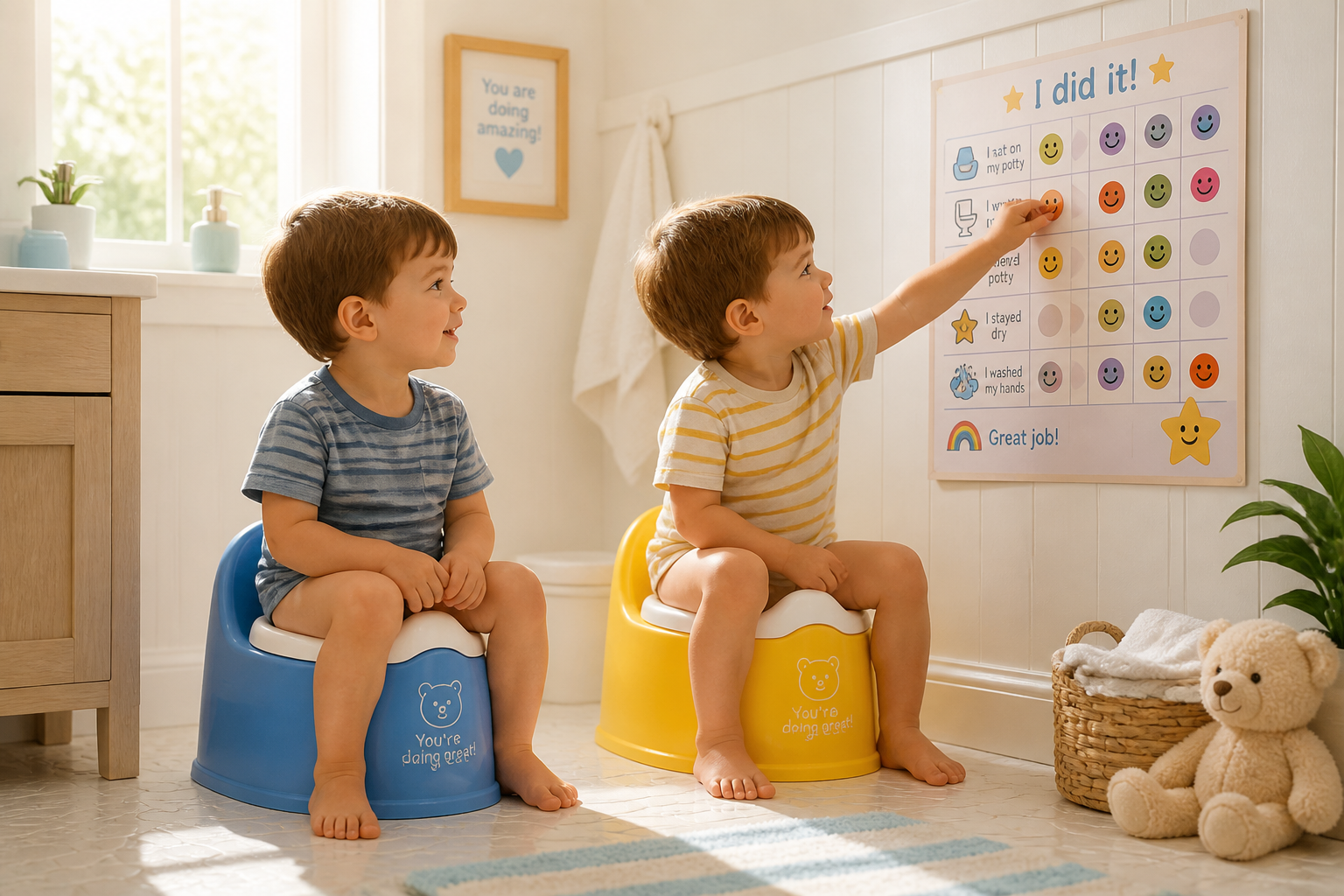
Weekend Blitz Potty Training for Twins: The 72-Hour Success Protocol
The toddler stands defiantly in wet underwear while his twin brother celebrates his third successful potty trip of the morning. Sound familiar? After fifteen years of guiding families through twin development milestones, I’ve witnessed this exact scenario countless times. The challenge isn’t just double the accidents—it’s managing two completely different personalities, developmental timelines, and the inevitable sibling dynamics that can either accelerate or derail your potty training efforts.
Most parents approach potty training twins tips with the assumption that identical genetics equals identical readiness. This misconception leads to frustration, regression, and extended training periods that exhaust everyone involved. The Weekend Blitz Method I’ve developed specifically addresses the unique challenges of training multiples simultaneously while honoring their individual developmental patterns.
Why Traditional Potty Training Fails With Twins
Traditional potty training methods assume you’re working with one child’s attention span, one set of accidents, and one personality. Twins introduce variables that standard approaches simply don’t account for:
Competitive dynamics can work for or against you. One twin’s success might motivate the other, or it might create performance anxiety and deliberate resistance.
Asynchronous readiness means one twin shows all the classic signs—staying dry for longer periods, expressing interest in the bathroom, communicating needs clearly—while the other seems content in diapers indefinitely.
Attention splitting becomes your biggest obstacle. The moment you’re celebrating Child A’s breakthrough, Child B is having a meltdown or accident that requires immediate intervention.
The Weekend Blitz Method acknowledges these realities and turns them into advantages through strategic timing, environmental control, and twin-specific motivation techniques.
The 72-Hour Weekend Blitz Protocol
Pre-Blitz Preparation (Two Weeks Before)
Success begins long before your chosen weekend. Both twins must demonstrate at least three readiness indicators: staying dry for 2+ hour stretches, showing interest in bathroom activities, and communicating basic needs verbally or through consistent gestures.
Stock your supplies strategically. You’ll need twice the usual number of training pants, but more importantly, you need duplicate potty chairs positioned in different areas of your home. This prevents competition and reduces accidents during transition time.
Create individual reward systems that account for each twin’s personality. While sticker charts work for some children, others respond better to immediate sensory rewards or social recognition. One of my recent families discovered that their daughter was motivated by getting to pick the next book for story time, while her brother preferred collecting small toys in a special “big boy” box.
Day One: Establishing the New Normal
Begin Friday evening with a ceremonial “goodbye to diapers” ritual. Let each twin choose which diapers to throw away and put on their first pair of training underwear together. This shared experience creates buy-in while marking a clear transition point.
Saturday morning starts with intensive scheduling. Set timers for every 30 minutes initially, taking both twins to their respective potty chairs simultaneously. Yes, this means you’ll need to coordinate bathroom breaks even when only one child shows signs of needing to go.
The key insight most parents miss: accidents aren’t failures during the blitz weekend—they’re data points. Track each child’s natural patterns separately. You might discover one twin consistently needs to go within 20 minutes of drinking fluids, while the other shows no predictable correlation between intake and output.
Day Two: Reinforcement and Adjustment
Sunday focuses on extending intervals based on Saturday’s data. If Twin A successfully stayed dry during 45-minute intervals, stretch to 50 minutes. If Twin B had accidents every 30 minutes, drop back to 25-minute intervals.
This is where twin-specific strategies become crucial. Consider alternating which child goes first to the bathroom, preventing the same twin from always being the “leader” or “follower.” Some children perform better with an audience (their twin watching), while others need privacy and individual attention.
Introduce peer teaching opportunities. Often, the twin who masters a step first becomes an enthusiastic teacher for their sibling. I’ve seen remarkable breakthroughs when we harness this natural dynamic instead of worrying about one child being “behind.”
Managing the Inevitable Challenges
The Regression Trap
When one twin regresses after initial success, resist the urge to put both back in diapers. Regression often stems from the attention they observe their sibling receiving during accidents. Instead, matter-of-factly clean up accidents while giving enthusiastic attention for successful potty use.
Sometimes regression indicates that your timing was slightly off for one twin. During feeding twins toddlers different foods or managing different sleep schedules, we accept that development isn’t always synchronized. The same principle applies to potty training.
Sibling Sabotage
Yes, this is a real phenomenon. Some twins will actively encourage their sibling to have accidents, hide underwear, or create distractions during potty time. Address this directly but calmly: “I see you’re worried about your brother learning something new. You both get to learn at your own speed.”
Create opportunities for positive sibling support. Let the successfully trained twin help pick out special underwear for their sibling or ring a celebration bell after successful potty trips.
Twin Tactics: Pro-Level Shortcuts
- The Double-Chair Strategy: Position potty chairs in different rooms during the blitz weekend. This prevents territorial disputes and allows you to manage two children with different needs simultaneously.
- Staggered Start Times: If one twin shows significantly more readiness signs, begin their intensive training on Thursday, then add the second twin on Saturday. This prevents the advanced child from losing momentum while you focus on their sibling.
- The Buddy System Flip: Assign each twin responsibility for reminding their sibling about potty breaks. This transforms potential competition into collaboration while building both children’s awareness of timing cues.
- Individual Success Metrics: Track each child’s progress separately using different colored charts or apps. Comparing twins creates unnecessary pressure and ignores their unique developmental patterns.
- The Attention Redirect: When accidents happen (and they will), give minimal attention to cleanup while providing enthusiastic praise for the twin who stayed dry. This natural consequence teaches without punishment.
Tracking Progress: What Success Really Looks Like
| Success Metric | Week 1 Goal | Week 2 Goal | Week 3+ Goal |
|---|---|---|---|
| Successful Potty Use | 50% of scheduled attempts | 70% of scheduled attempts | Independent initiation 60% of time |
| Dry Periods | 45-60 minutes consistently | 90+ minutes during active play | 2+ hours including nap time |
| Communication | Responds to potty prompts | Signals need with words/gestures | Consistently communicates urgency |
| Nighttime Dryness | Still in night diapers | Dry diapers 2-3 mornings/week | Ready for nighttime training trial |
Remember that these metrics apply to each twin individually. One child might excel at communication while struggling with longer dry periods, while their sibling shows the opposite pattern. Both paths lead to success—just on different timelines.
When to Pause and Regroup
The Weekend Blitz Method works for approximately 70% of twin families who attempt it. The remaining 30% aren’t failures—they’re families whose children need a different approach or timing.
Signs to pause include: both twins having more accidents on day two than day one, extreme behavioral changes like aggression or withdrawal, or illness in either child during the training weekend.
If you need to regroup, wait 2-4 weeks before attempting intensive training again. Use this time to reinforce readiness skills and address any underlying issues that emerged during your first attempt.
Beyond the Blitz: Maintaining Momentum
Week two requires vigilance without intensity. Continue scheduled potty breaks but begin watching for signs that each child is ready to initiate independently. Some twins will generalize their new skills immediately, while others need continued structure for several weeks.
The most common mistake I see families make is relaxing too quickly after a successful weekend. Maintain your tracking system and scheduled breaks for at least two weeks post-blitz. This prevents regression and builds lasting habits.
Consider that your twins’ different personalities might require different maintenance strategies long-term. The child who trained quickly might also forget quickly without consistent reminders, while the twin who struggled initially might be more reliable once they master the skill.
The Pediatrician’s Medical Survival Tip
Keep a simple log of each twin’s fluid intake during training weekends. Dehydration from reduced drinking (fear of accidents) or overhydration from excessive encouragement can both sabotage your efforts and create unnecessary medical concerns.
Stay healthy,
Dr. Sarah