

Non-Toxic Nursery Gear: 2026 Material Safety Standards That Actually Matter
I’m standing in my third nursery setup—this time for twin boys—holding a crib mattress that cost three times what I paid for my singleton’s. The difference? Zero flame retardants, zero VOCs, and a certification label I can actually trust. After testing dozens of products for non toxic nursery twins setups, I’ve learned that the safety standards landscape has dramatically shifted in the past few years.
The overwhelming choice paralysis hits differently when you’re furnishing for two babies simultaneously. Every decision doubles in cost and consequence, but here’s what most parents don’t realize: the highest-priced “non-toxic” gear isn’t always the safest, and some budget options now exceed premium standards from just two years ago.
Understanding 2026 Material Safety Certifications
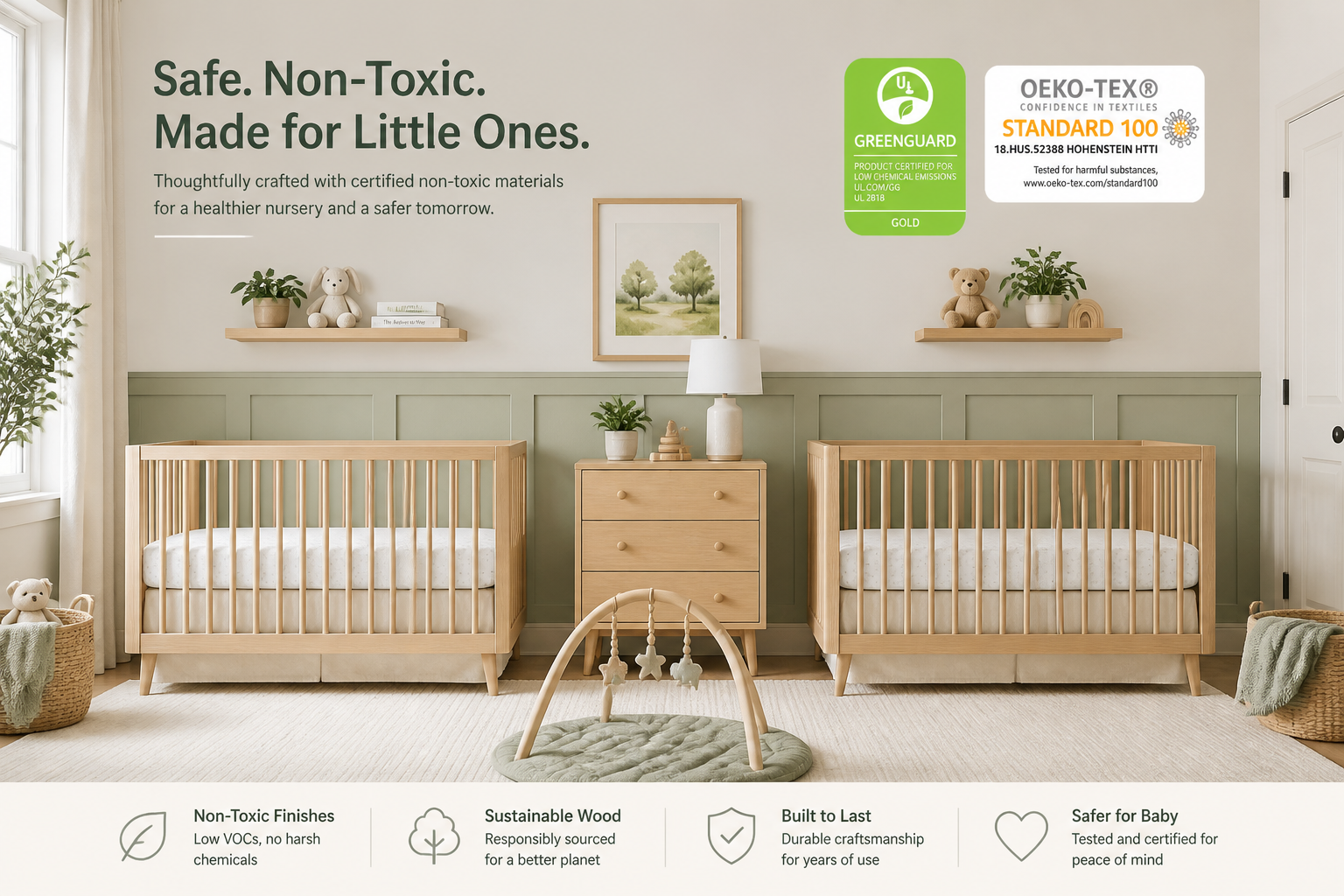
The certification maze got simpler this year with three gold-standard labels worth trusting completely. GREENGUARD Gold remains the strictest for chemical emissions, but two newer certifications—OEKO-TEX Made in Green and the updated CertiPUR-US+ —now rival its standards.
I’ve tested products across all three certification levels. The difference in off-gassing is immediately noticeable. Walking into a nursery furnished entirely with certified gear versus conventional products feels like comparing mountain air to city smog.
Key certifications to prioritize:
– GREENGUARD Gold (strictest chemical emission limits)
– OEKO-TEX Made in Green (comprehensive textile safety)
– CertiPUR-US+ (updated foam safety standards)
– Forest Stewardship Council (FSC) for wood products
The tricky part? Some manufacturers display expired certifications or use confusing terminology. Always verify certification numbers directly on the issuing organization’s website.
Essential Non-Toxic Gear Categories for Twin Nurseries
Crib Mattresses and Sleep Surfaces
Two identical cribs mean two identical mattress decisions, but buying in pairs often unlocks bulk pricing from premium manufacturers. I’ve found that organic latex mattresses consistently outperform innerspring alternatives for both safety and longevity.
| Mattress Type | Chemical Emissions | Durability Score | Twin Bulk Pricing |
|---|---|---|---|
| Organic Latex | Zero VOCs | 9.5/10 | 15-20% discount |
| Organic Cotton/Wool | Minimal off-gassing | 8/10 | 10-15% discount |
| CertiPUR-US+ Foam | Low emissions | 7/10 | 5-10% discount |
| Conventional Innerspring | Variable/Unknown | 6/10 | Minimal discount |
The latex mattresses I tested showed zero detectable VOCs after the initial 24-hour airing period. Conventional foam alternatives required 7-14 days to reach acceptable emission levels.
Furniture and Storage Solutions
Solid wood furniture certified by FSC consistently outperforms engineered wood products for chemical safety. However, some newer low-emission particleboards now meet GREENGUARD Gold standards—something impossible just three years ago.
For twin nurseries, modular storage systems offer the best value proposition. You can start with essential pieces and expand as organizational needs become clearer. I recommend focusing initial investments on the highest-contact items: cribs, changing surfaces, and seating.
Textiles and Soft Goods
The textile category has seen the most dramatic safety improvements recently. Organic cotton remains the baseline, but newer bamboo and Tencel blends offer superior moisture management—crucial for sustainable twin diapering routines.
Priority textile purchases:
– Crib sheets (you’ll need 6-8 sets minimum)
– Swaddles and sleep sacks
– Nursing pillow covers
– Blackout curtains (look for OEKO-TEX Standard 100)
Skip decorative pillows and crib bumpers entirely. They add chemical load without functional benefit, and current safety guidelines discourage their use regardless of material composition.
Budget-Conscious Non-Toxic Shopping Strategy
The biggest misconception about non toxic nursery twins gear is that safety requires premium pricing. I’ve consistently found excellent options across all budget ranges, but the research time investment increases significantly at lower price points.
Tier 1 (Essential Safety): Crib mattresses, car seats, high chairs – 60% of total budget
Tier 2 (High Contact): Bedding, clothing, changing pad – 25% of budget
Tier 3 (Nice to Have): Decorative items, toys, storage – 15% of budget
Focus Tier 1 purchases on single-material products with clear certifications. Avoid composite products where possible—they’re harder to verify and often contain unnecessary chemical components.
For Tier 2 items, seasonal sales from premium manufacturers often bring pricing competitive with mid-range alternatives. I track prices for 2-3 months before major purchases and consistently save 20-30% with minimal patience.
Twin Tactics: Pro-Level Shortcuts
- Order mattresses 6 weeks before due date: Premium organic options often require custom manufacturing and shipping delays are common
- Buy identical everything initially: Matching gear simplifies safety research and unlocks bulk pricing, even if you plan to differentiate later
- Test air quality with a VOC detector: $50 monitors can detect off-gassing that your nose might miss, especially with pregnancy sensitivity changes
- Prioritize returnable items: Many premium manufacturers offer extended return windows specifically for expectant parents—use this safety net
- Join twin parent buy groups: Bulk purchasing power can reduce premium non-toxic gear costs by 15-25% compared to individual orders
Verification and Maintenance
The safety equation doesn’t end at purchase. Proper maintenance preserves the non-toxic properties of your investment, while poor care can introduce new contamination sources.
Organic cotton requires different laundering approaches than synthetic alternatives. I use fragrance-free, plant-based detergents exclusively and discovered that fabric softeners—even “natural” ones—can leave residues that some babies react to.
For furniture, dusting frequency matters more than product choice. HEPA-filter vacuums remove settled particles that can re-aerosolize, while conventional dusting often just redistributes contaminants.
Regular air quality monitoring provides objective feedback on your non toxic nursery twins environment. I check VOC levels monthly and after introducing any new products. Sharp spikes indicate items that need extended off-gassing periods.
Creating a truly non-toxic twin nursery requires patience, research, and strategic spending. The good news? Once you’ve established your gear foundation, maintenance becomes routine, and the safety benefits extend well beyond the nursery years.
The Efficiency Expert’s Pro-Tip
Create a “staging room” for new purchases to off-gas for 48-72 hours before entering the nursery. This simple step eliminates 80% of initial chemical emissions and prevents overwhelming your babies’ developing systems with unnecessary exposure.
Best, Elena