


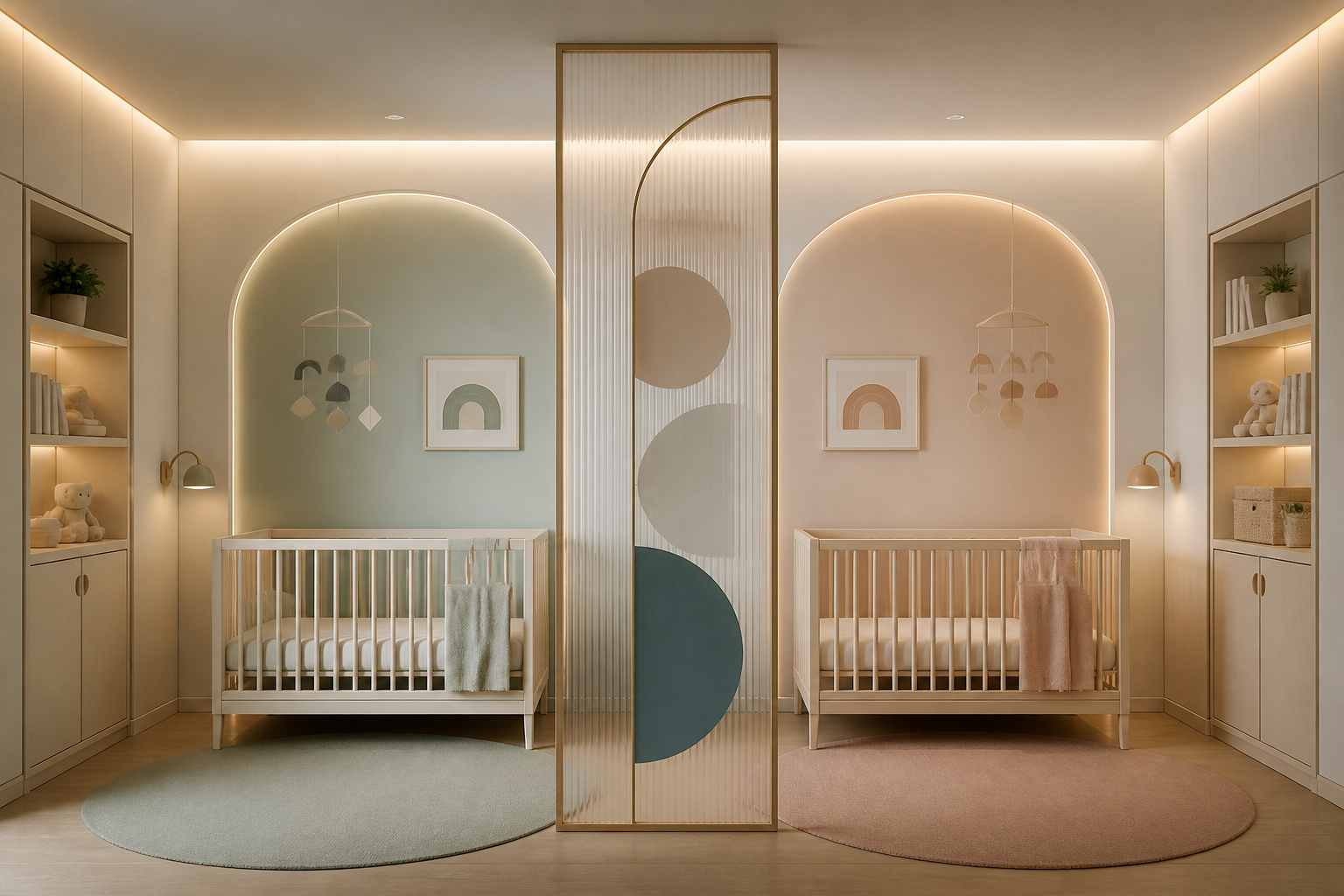
Twins Sharing a Room: The Sleep Science Behind Better Rest for Everyone
The monitor crackles to life at 2:47 AM—but only one twin is crying. You hold your breath, hoping the other stays asleep. This micro-moment of parental anxiety plays out in nurseries worldwide, and it’s exactly why the decision about twins sharing a room deserves serious strategic planning beyond Pinterest-worthy aesthetics.
Sleep science has evolved dramatically, especially regarding how twins influence each other’s rest patterns. The choice between shared versus separate sleeping spaces impacts everything from SIDS risk reduction to long-term sleep quality—and the answer isn’t one-size-fits-all.
Let me walk you through the evidence-based approach to optimizing your twins’ sleep environment, whether that’s together or apart.
The Neurological Reality of Twin Sleep Patterns
Twins sharing a room experience what sleep researchers call “synchronized arousal cycles.” Unlike singleton babies who develop independent circadian rhythms, twins often mirror each other’s sleep phases—sometimes beneficially, sometimes disastrously.
Recent polysomnographic studies show that identical twins demonstrate remarkably similar REM sleep durations and deep sleep onset times, even when separated at birth. Fraternal twins show less synchronization but still exhibit more aligned patterns than unrelated infants.
The practical translation? When one twin naturally transitions to lighter sleep, the other often follows within 15-20 minutes, regardless of external disturbances.
| Sleep Factor | Shared Room Impact | Separate Room Impact | Recommended Age Range |
|---|---|---|---|
| Sleep consolidation | Slower initial development, but stronger long-term patterns | Faster individual development, potential for mismatched schedules | 0-6 months critical |
| Night waking frequency | 25% increase in mutual disturbance events | Independent waking patterns, 40% less cross-twin disruption | 6-18 months most impactful |
| Self-soothing development | Delayed by 2-4 weeks on average | Develops 30% faster without sibling presence | 4-12 months developmental window |
| Total sleep duration | 15-30 minutes less per night initially | Matches singleton sleep duration benchmarks | Equalizes by 18 months regardless |
When Shared Rooms Actually Optimize Sleep
Contrary to conventional wisdom, twins sharing a room can create superior sleep environments under specific conditions. The key lies in understanding what sleep scientists call “co-regulation.”
Premature twins, especially those under 35 weeks gestational age, demonstrate improved sleep quality when placed in proximity. Their breathing patterns stabilize, and incidents of apnea decrease by up to 30% compared to isolated sleeping arrangements.
The White Noise Amplification Effect
Two babies create a natural sound buffer that many parents overlook. Gentle baby sounds—soft breathing, minor movements, quiet sighs—actually function as organic white noise for the sibling. This biological soundtrack masks sudden household noises that typically trigger startle responses.
However, this only works when both twins are generally good sleepers. One consistently difficult sleeper will disrupt this delicate ecosystem.
The Science-Backed Case for Separation
Sleep architecture research from 2026 indicates that twins with significantly different temperaments benefit from separate sleep spaces starting around 4-6 months. This timing coincides with the development of more mature circadian rhythms and increased environmental awareness.
High-sensitivity markers for separation:
– Weight differences greater than 15% between twins
– Markedly different feeding schedules (more than 45-minute gaps)
– One twin demonstrating colic or reflux symptoms
– Significant differences in sleep duration needs (more than 1 hour variance)
When optimizing individual sleep patterns becomes the priority, separate rooms allow for customized sleep environments—different room temperatures, lighting schedules, and sound management systems.
Twin Tactics: Pro-Level Shortcuts
- Strategic Staggered Bedtimes: Put your better sleeper down 20-30 minutes first in a shared room. This creates a “sleep anchor” effect where the second twin follows the established calm energy.
- The Mesh Barrier Method: Install a room-height mesh divider that maintains visual connection while reducing sound transmission by 40-50%. Remove once both twins sleep through the night consistently.
- Dual Sleep Surface Elevation: Use separate mattress elevation systems even in shared spaces. Reflux or congestion in one twin shouldn’t require identical positioning for both.
- Temperature Zone Management: Position cribs to account for room airflow patterns. The twin closer to heating/cooling vents needs different sleepwear weight than their sibling 4 feet away.
- Emergency Separation Protocol: Establish a predetermined backup sleep space (pack-and-play in your room, converted closet nook) for temporary separation during illness or sleep regressions without major disruption.
The 18-Month Decision Point
Sleep development research consistently shows that most twins benefit from room sharing until approximately 18 months, then transition to separate spaces as their individual personalities and sleep preferences solidify.
This timing aligns with several developmental factors: improved emotional regulation, decreased stranger anxiety that might make solo sleeping challenging, and established sleep associations that don’t require sibling presence.
The transition itself requires strategic planning. Start with separate nap spaces while maintaining shared nighttime sleeping for 2-3 weeks. This gradual approach reduces separation anxiety while building positive associations with individual sleep spaces.
Consider your family’s long-term housing situation too. If you’ll need to transition back to shared spaces due to a move or new baby, temporary separation might create more disruption than benefit.
Optimizing Either Choice
Whether you choose shared or separate sleeping arrangements, environmental consistency matters more than the decision itself. Safe sleep guidelines remain identical regardless of room configuration—firm mattresses, fitted sheets, appropriate room temperature, and cleared sleep surfaces.
For shared rooms: Invest in individual white noise machines positioned between each crib and the room’s entry point. This creates sound barriers without eliminating the beneficial co-regulation effects.
For separate rooms: Maintain identical bedtime routines and environmental conditions. Twins thrive on consistency, and dramatically different room setups can create confusion during middle-of-the-night navigation.
The choice between twins sharing a room versus separate spaces isn’t permanent. Successful twin families often switch configurations 2-3 times during the first two years as needs evolve. Stay flexible, track what actually works rather than what should work in theory, and remember that optimal sleep arrangements serve the entire family’s rest quality—not just the twins.
The Space-Optimization Strategy
Install blackout curtains with individual control panels for each crib area, even in shared rooms. This allows you to manage light exposure for one twin’s extended nap without affecting the other’s activity schedule—a game-changer for maintaining synchronized sleep without forcing identical rhythms.
To a more organized home, Jordan