


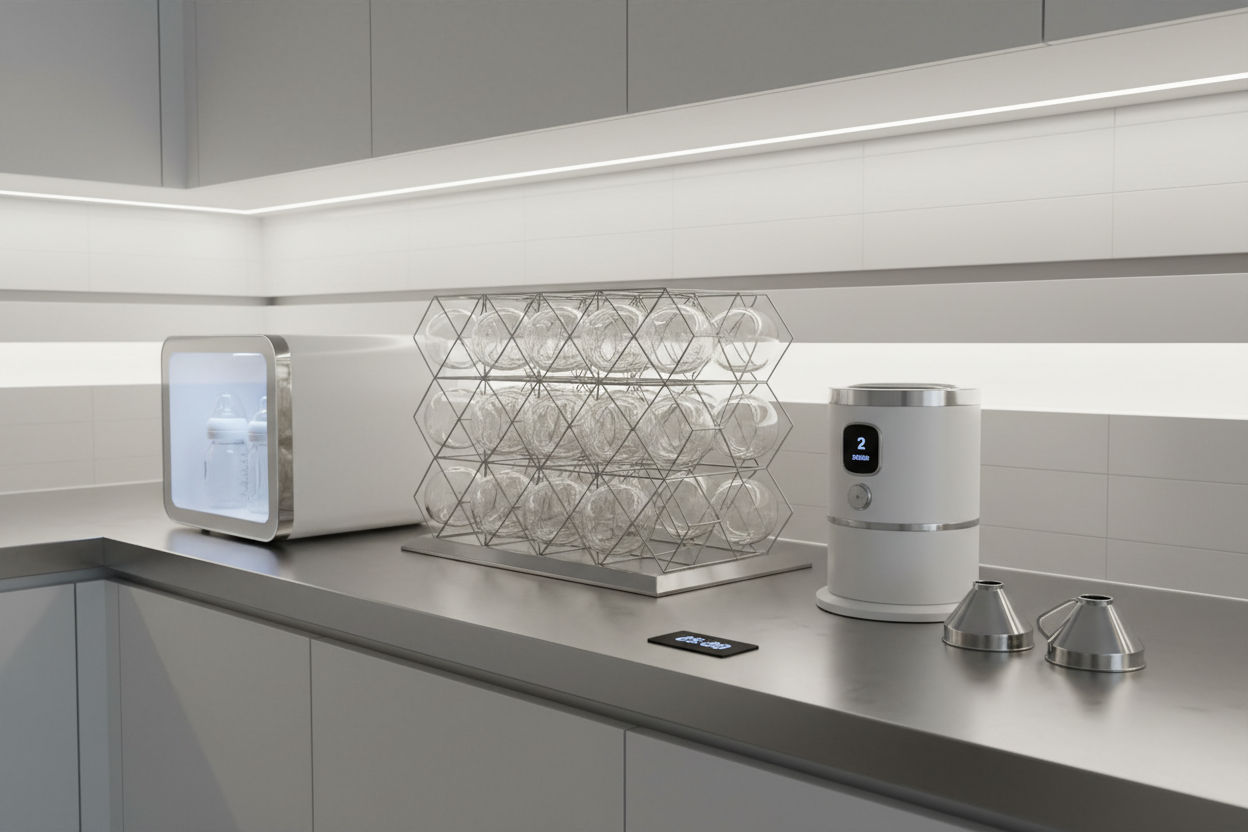
The Twin Bottle Station: Mastering the 16+ Daily Bottle Marathon
16 bottles. 3 pump sessions. 8 feedings. That’s the baseline reality of a twin parent’s day. I just walked out of a client’s home where the kitchen counter resembled a chemistry lab with bottles in various states of assembly, cleaning, and drying. The mother hadn’t sat down for a proper meal in weeks because there simply wasn’t any counter space left.
When you’re managing double the feeding equipment, what you need isn’t just organization—you need a system that works even when you’re operating on 3 hours of sleep. While ensuring your twins have safe sleep spaces is crucial, creating an efficient bottle station might be the daily sanity-saver you didn’t know you needed.
The Bottle Math: Understanding Your Daily Formula Flow
Before designing your twin bottle station, let’s understand exactly what we’re organizing:
| Age of Twins | Average Bottles Per Day | Formula Needed (oz) | Total Bottles Required |
|---|---|---|---|
| 0-2 months | 8-12 per twin | 40-60 oz combined | 12-16 bottles |
| 2-4 months | 6-8 per twin | 50-70 oz combined | 12-16 bottles |
| 4-6 months | 5-6 per twin | 55-75 oz combined | 10-12 bottles |
| 6-9 months | 4-5 per twin | 50-70 oz combined | 8-10 bottles |
The 2026 safety standards strongly recommend not reusing bottles without proper sanitization between uses, making bottle inventory management crucial for twin parents.
The Three-Zone Bottle Station System
Zone 1: Clean & Ready Station
This is your preparation headquarters where freshly sanitized bottles stand ready for the next feeding.
- Components needed:
* Dedicated counter space (minimum 24″ wide)
* UV sanitizing box (the new 2026 models sanitize and dry simultaneously)
* Formula dispenser with pre-measured compartments
* Ready-to-feed formula storage rack if using liquid
* Water filtering system with temperature control
* Two-tier bottle rack with clear labeling
Pro tip: Install under-cabinet lighting above this zone so middle-of-the-night preparation doesn’t require turning on harsh overhead lights.
Zone 2: Used Bottle Collection
A designated area for bottles awaiting cleaning that prevents them from taking over your entire kitchen.
- Components needed:
* Large plastic bin with lid
* Mesh bag inserts for separating parts
* Bottle brush stand
* Sink-side quick rinse station
* Whiteboard for tracking (which twin ate how much)
Pro tip: Line the collection bin with a washable mat to absorb excess moisture and prevent mildew growth between washes.
Zone 3: Cleaning & Sanitizing
The processing center where dirty becomes clean.
- Components needed:
* Designated dishwasher basket or section
* Steam sanitizer
* Drying rack with specific sections for nipples, rings, and bottles
* Bottle brush organizer
* Microfiber mat for drainage
The efficiency comes from the flow between zones—bottles move through the system like an assembly line, never piling up in one place.
Twin Tactics: Pro-Level Shortcuts
- Color coding system: Assign each twin their bottle color for tracking which baby has consumed what amount
- Pre-measure formula for the entire day: Use a weekly pill organizer to pre-portion formula powder for each feeding
- The 5-minute evening reset: Schedule a quick daily organization session where you reset all zones before bed
- 2-in-1 bottle preparation: Use the Dr. Brown’s 2026 Twin Mixer to prepare two bottles simultaneously with perfect temperature
- Sanitization scheduling: Program your smart home to remind you when sanitization cycles need to run
Creating Your Bottle Command Center
When organizing twin bottles, location is everything. Your bottle station should be:
1. Centrally located but not in the main cooking area
2. Near a water source
3. Away from high-traffic areas where bottles could be knocked over
4. Accessible with one hand (you’ll often be holding a baby)
5. Well-lit at all hours
Most successful twin parents I’ve worked with dedicate a specific counter section or repurpose a bar cart exclusively for bottle management.
The Midnight Preparation System
Nothing is worse than fumbling with bottle parts at 2 AM while two babies are screaming. Your night feeding station needs special consideration:
- Pre-assemble bottles with everything but the water
- Use insulated containers to keep filtered water at room temperature overnight
- Position a dim night light above the station
- Keep a feeding log nearby for recording times and amounts
This system reduces night feeding prep to under 90 seconds per bottle—critical when you’re sleep-deprived.
The Washing Schedule That Works
Many twin parents make the mistake of washing bottles “when they have time,” which usually means never. Instead, implement one of these three proven schedules:
1. The Three-Batch System: Wash all bottles three times daily (morning, afternoon, evening)
2. The Continuous Flow: Clean bottles immediately after each feeding (works best for stay-at-home parents)
3. The Once-Daily Deep Clean: Use enough bottles to get through the entire day, then sanitize everything in one evening session
Choose the system that aligns with your family’s rhythm. What matters is consistency.
The Space-Optimization Strategy
Mount a tension rod under your cabinet with S-hooks to hang freshly sanitized bottles upside down. This dries them faster, prevents dust accumulation, and keeps your counter space free for other tasks—three problems solved with one $8 solution.
To a more organized home,
Jordan