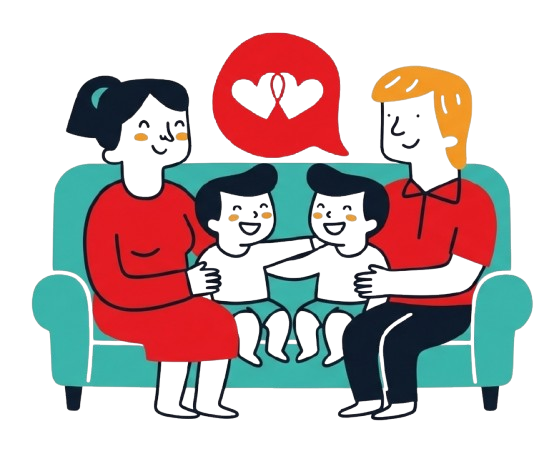



Twin Mom Burnout: Recognizing the Signs and Finding Your Way Back
A parent recently shared a struggle with this on Reddit, and it highlights a common twin challenge we see all too often in our community. The post started innocently enough: “I love my twins more than anything, but some days I feel like I’m drowning…” What followed was a heart-wrenching description of exhaustion so complete that this mom couldn’t remember when she last showered, ate a warm meal, or had a conversation that didn’t involve diapers or feeding schedules.
As fellow twin parents, we (Mark & Jen) immediately recognized what she was experiencing: twin mom burnout. It’s that special level of exhaustion that comes from caring for two babies of the exact same age with the exact same needs at the exact same time. And honestly? It’s brutal.
What is Depleted Mother Syndrome?
Depleted Mother Syndrome describes a state of physical, emotional, and mental exhaustion that occurs when the demands of motherhood consistently exceed a mother’s resources and ability to cope. For twin moms, this condition is particularly prevalent due to the doubled workload, decreased recovery time, and often reduced support compared to singleton mothers. The syndrome typically manifests as chronic fatigue, irritability, feelings of inadequacy, reduced joy in parenting, and sometimes even physical symptoms like headaches or digestive issues.
We didn’t know this syndrome had a name until our twins were about 18 months old. By then, Jen was experiencing most of the classic symptoms. She’d burst into tears over spilled milk (literally), couldn’t remember simple words during conversations, and felt permanently glued to the couch between feedings.
The reality is that twin motherhood can push you to physical and emotional limits you didn’t know existed. One night, after our twins had tag-teamed us with alternating wake-ups every 45 minutes, we found ourselves eating cold SpaghettiOs straight from the can at 3 AM, wondering if we’d ever feel human again.
Why is Being a Twin Mom So Hard?
Being a twin mom is exceptionally challenging because it eliminates the one thing most parents of singletons can count on: the ability to give one baby your complete attention. Twin motherhood demands constant splitting of resources—your arms, your attention, your energy—between two equally needy babies. This creates a perpetual state of compromise where you’re always aware that neither child is getting 100% of what they need from you at any given moment.
When our twins were newborns, the logistics alone nearly broke us. The simple act of getting two babies fed, changed, and back to sleep could take two hours—just in time to start the cycle all over again. There’s no “sleep when the baby sleeps” when you have twins, because they rarely sleep simultaneously in those early days.
And let’s talk about the physical toll. Twin pregnancies are typically more uncomfortable, twins are often born earlier (hello, NICU stays!), and postpartum recovery happens while caring for two newborns instead of one. It’s like running a marathon while carrying weights in both hands.
The mental load is just as crushing. Every decision is doubled and complicated: Do we wake the sleeping twin when the other one is hungry? How do we handle different temperaments and needs? What happens when both babies are crying and there’s only one of you?
What Do Mothers of Twins Need Most?
Mothers of twins need practical support, not just encouragement. While hearing “you’re doing great” is nice, what twin moms truly need is someone to hold a baby, wash a bottle, or watch the twins so they can shower or nap. The most valuable gift for a twin mom is time—time to recover, time to bond with each baby individually, and time to remember who they are beyond being “the twin mom.”
Here’s what actually helped us survive:
- Meal trains that lasted beyond the first two weeks – When people asked how to help, we requested frozen meals that could be prepared weeks or even months later when support typically dwindles
- Regular relief shifts – Having family members or friends commit to consistent weekly help rather than sporadic visits
- Permission to use shortcuts – Formula when breastfeeding became too demanding, paper plates when dishes piled up, and accepting that “good enough” parenting is perfectly fine
- Connection with other twin parents – Nobody understands twin challenges like another twin parent
We found that the most supportive people in our lives were those who didn’t ask “What can I do?” but instead said, “I’m coming over Tuesday to hold babies while you nap—what time works?”
Are Twin Pregnancies More Tiring?
Twin pregnancies are significantly more physically demanding and exhausting than singleton pregnancies. The increased blood volume, additional hormonal changes, extra weight, and pressure on internal organs all contribute to profound fatigue. Many twin moms experience extreme exhaustion starting in the first trimester—far earlier than singleton pregnancies—due to the doubled hormonal surge.
Jen started feeling the twin pregnancy fatigue around week 8, which was our first clue we might be having multiples. By the third trimester, simple activities like walking up stairs or loading the dishwasher required recovery time. Sleep becomes nearly impossible when you’re trying to accommodate two active babies and a bladder with the capacity of a shot glass.
The medical community recognizes these increased demands. Twin pregnancies require more monitoring, more nutrients, more rest—and often result in more complications and earlier deliveries, adding emotional stress to the physical exhaustion.
Twin Mom Recovery Plan: Getting Back to Yourself
If you’re currently in the trenches of twin mom burnout, here’s our reality-tested recovery plan:
Recognize the Warning Signs
| Warning Sign | What It Might Look Like | Action Step |
|————-|————————-|————|
| Physical Depletion | Constant exhaustion that sleep doesn’t fix, getting sick frequently | Prioritize one full sleep cycle (4 hours minimum) uninterrupted |
| Emotional Fragility | Crying easily, snapping at partner/other children, feeling overwhelmed by small tasks | Schedule 30 minutes daily of absolute alone time |
| Loss of Identity | Can’t remember hobbies or interests beyond baby care, feeling invisible | Reconnect with one pre-twin activity weekly, even for 15 minutes |
| Resentment | Feeling angry when seeing singleton parents, comparing hardships with partner | Acknowledge these feelings without judgment and share them with a safe person |
Twin Tactics for Recovery
- The 2-2-2 Rule: Every 2 days, do something for yourself. Every 2 weeks, have a date night or friend outing. Every 2 months, take an overnight break if possible.
- Lower the Bar: Decide which 3 things matter most each day. Everything else is bonus.
- Outsource Ruthlessly: Identify what drains you most and find a way to get help—delivery services, mother’s helper, trading childcare with another twin family.
- Schedule Self-Care: Put it on the calendar like any other appointment. Even 10 minutes of something that fills your cup is better than nothing.
- Find Your Twin Tribe: Connect with other parents of multiples who genuinely understand your daily reality.
Remember that twin motherhood is a marathon, not a sprint. The intensity of the early years eventually gives way to the joy of watching your twins develop their relationship with each other—truly one of parenting’s greatest rewards.
The Parent-to-Parent Sanity Saver:
When all else fails, remember our emergency reset button: put everyone in the car and drive. We can’t count how many times we’ve loaded our overtired, overstimulated twins into the car and just driven aimlessly while they slept and we enjoyed blessed silence. We kept protein bars and bottled water in the glove compartment, played our own music at a reasonable volume, and remembered what it felt like to be adults. Sometimes survival means finding creative solutions to impossible situations. You’re doing better than you think you are. —Mark & Jen