

The Ultimate Guide to Infant Noise Reduction Headphones for 2026
I bought my twins’ first noise headphones after a restaurant meltdown that left me sweating and apologizing to twelve nearby tables. Three years and countless models later, I’ve learned what actually works when you need to protect little ears while maintaining your sanity during outings.
When you’re managing multiple children in noisy environments, infant noise reduction headphones become less of a “nice to have” and more of a necessity. Whether you’re navigating crowded airports, attending older siblings’ sporting events, or simply trying to maintain some peace during family gatherings, the right headphones can make all the difference for sensitive little ears – especially when you’re juggling twins or siblings of different ages.
The 2026 safety standards have raised the bar for infant hearing protection, making this the perfect time to invest in quality options that truly work. Let me walk you through everything you need to know.
Why Noise Reduction Headphones Matter for Infants
Babies have delicate hearing mechanisms that are still developing. Sounds we find merely annoying can be harmful or distressing to them. The American Academy of Pediatrics recommends protecting infant hearing from sounds above 80 decibels – that’s about the noise level of a busy restaurant or a vacuum cleaner.
Protection isn’t just about preventing hearing damage. Noise reduction headphones can:
– Reduce overstimulation in busy environments
– Help maintain sleep schedules during outings
– Prevent startling from sudden loud noises
– Keep babies calmer during potentially overwhelming situations
For parents of multiples, these benefits multiply exponentially. When you’re juggling two car seats and trying to keep both babies happy, the last thing you need is environmental noise triggering a dual meltdown.
Top Infant Noise Reduction Headphones for 2026
| Model | Weight | NRR Rating | Age Range | Price | Best For |
|---|---|---|---|---|---|
| SilentBaby Pro 5 | 3.2 oz | 25 dB | 0-24 months | $49.99 | Everyday use, adjustable as baby grows |
| BabyMuffs Elite | 2.8 oz | 31 dB | 0-36 months | $69.99 | Maximum protection, air travel |
| QuietWear Mini | 2.4 oz | 22 dB | 0-18 months | $34.99 | Budget pick, lightweight for newborns |
| HushTots Smart | 3.5 oz | 28 dB | 0-48 months | $79.99 | Smart monitoring, app connectivity |
| SleepSound Infant | 3.0 oz | 24 dB | 0-24 months | $44.99 | Sleep-focused, extra padding |
SilentBaby Pro 5: The All-Around Performer
The SilentBaby Pro 5 has become my go-to recommendation for most parents. With its 25dB noise reduction rating, it strikes the perfect balance between protection and practical use. The adjustable headband grows with your baby from newborn to 2 years, saving you from buying multiple pairs.
What makes it stand out is the pressure-distribution technology that prevents uncomfortable hotspots on tiny heads. After testing it during a three-hour flight with my twins, I was impressed by how they barely seemed to notice the headphones were on.
The breathable fabric prevents overheating—crucial when you’re already dealing with the challenge of managing infant car seats on a Graco DuoGlider or Joovy Twinroo+ frame during summer outings.
BabyMuffs Elite: Maximum Protection
For extremely loud environments (think concerts, sporting events, or fireworks displays), the BabyMuffs Elite provides superior protection with its industry-leading 31dB noise reduction rating. The 2026 model has improved significantly with its ultra-lightweight design.
The magnetic quick-release feature is genius for quick adjustments or emergency removal. However, at $69.99, it’s definitely an investment, though one that pays off if you frequently find yourself in high-noise situations.
QuietWear Mini: Budget-Friendly Option
Not looking to spend a fortune but still want reliable protection? The QuietWear Mini offers solid 22dB noise reduction at an accessible price point. I’ve found these particularly useful as “backup pairs” to keep in the car or diaper bag.
The lightweight design makes these ideal for newborns, though the trade-off is they may be outgrown faster than some premium options.
How to Choose the Right Infant Noise Reduction Headphones
Age-Appropriate Fit
The most effective headphones are the ones your baby will actually keep on. Look for:
– Adjustable headbands that grow with your baby
– Lightweight design (under 4 oz is ideal)
– Soft, non-irritating materials
– Wide ear cups that fully cover tiny ears
If you’re buying for twins, remember that even identical twins can have different head sizes and sensitivity levels. What works for one might not work for both.
Noise Reduction Rating (NRR)
The NRR indicates how many decibels the headphones reduce noise by. For most family outings, a rating of 22-25dB is sufficient. For air travel or extremely loud events, aim for 28dB or higher.
The newest safety standards in 2026 require all infant headphones to provide at least 20dB reduction, but the best performers exceed this significantly.
Comfort Features
An uncomfortable baby won’t keep headphones on, rendering even the most expensive pair useless. Key comfort features include:
– Pressure-distribution padding
– Breathable materials
– Lightweight construction
– No pinch points or hard plastic against skin
I learned this lesson the hard way after buying an expensive pair that my twins constantly pulled off because the ear cups pressed too hard against their heads.
Portability and Storage
When you’re already carrying enough gear to supply a small expedition, headphones that pack down small make a big difference. Look for:
– Foldable designs
– Included carrying cases
– Durable materials that withstand being stuffed in diaper bags
For parents using Cosco Scenera car seats with twins, space-saving gear becomes even more critical since you’re already managing bulky essentials.
Twin Tactics: Pro-Level Shortcuts
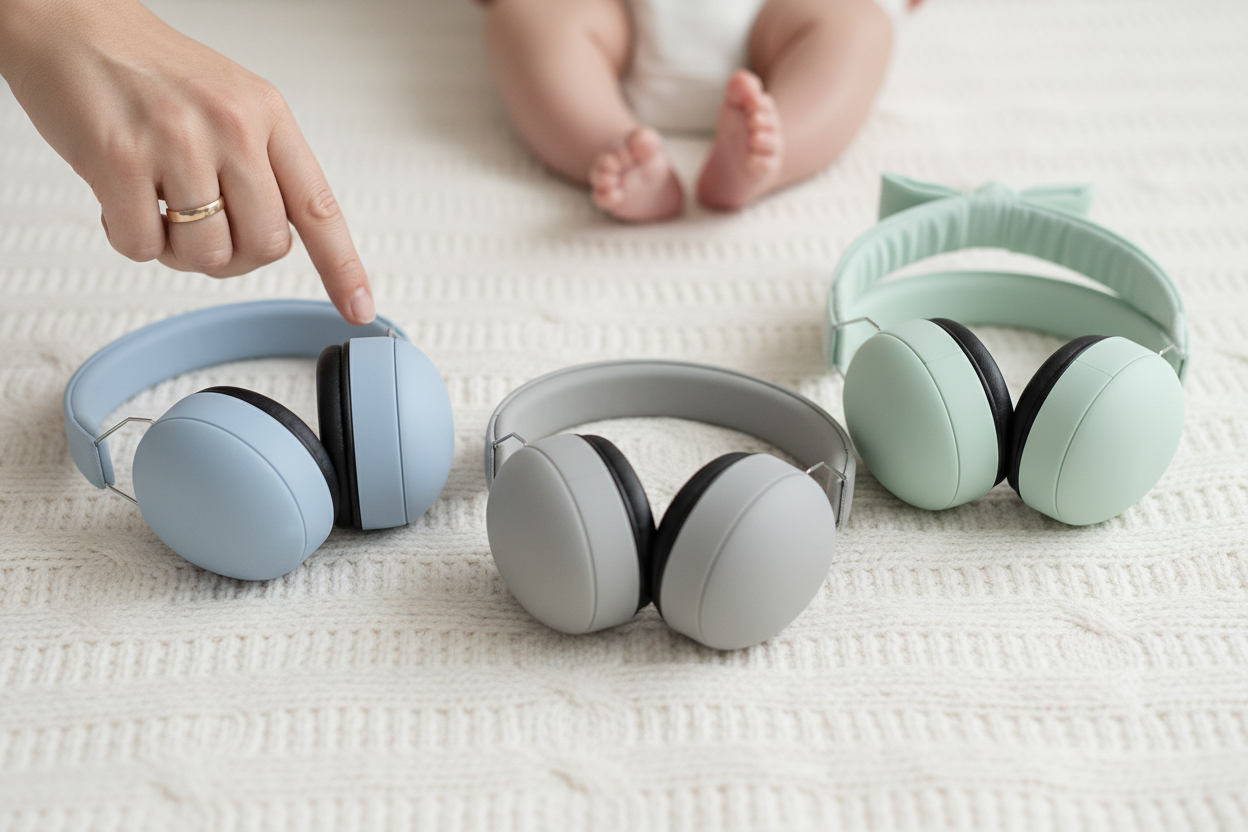
- Color-code for twins: Buy different colored headphones for each twin to quickly identify which belongs to whom when one inevitably gets tossed across the room.
- Pre-fit test: Before an important outing, do a 30-minute “practice run” at home to ensure the headphones stay on and are comfortable.
- Headband stretching: Gently stretch new headphone bands overnight before first use to reduce pressure on sensitive heads.
- Decibel monitoring: Use your smartphone’s decibel meter app to check if an environment actually requires headphones—sometimes we overprotect!
- Start young: Begin using headphones before 3 months when babies are less likely to develop the “pull everything off my head” reflex.
Using Noise Reduction Headphones Effectively
When to Use Them
Headphones shouldn’t be an all-day solution but rather targeted protection for specific scenarios:
– Air travel, especially during takeoff and landing
– Sporting events or concerts
– Fireworks displays
– Public transportation
– Large family gatherings
– When using vacuum cleaners or loud appliances
– Construction zones or home renovation areas
When Not to Use Them
Avoid using noise reduction headphones in these situations:
– During normal daily activities in quiet environments
– When babies need to hear important auditory cues for development
– During speech-heavy interactions where language learning happens
– When sleeping unobserved (potential suffocation hazard if they shift position)
Helping Babies Adjust
Some babies resist headphones initially. Try these approaches:
1. Introduce them during calm, happy times rather than already-stressful situations
2. Let baby see you wearing headphones too (monkey see, monkey do!)
3. Associate putting them on with a specific song or game
4. Start with short periods and gradually increase duration
Maintenance and Cleaning
Anything that sits on a baby’s head for extended periods needs regular cleaning. Most infant headphones have removable ear cushions that can be hand-washed with mild soap.
The headband and non-removable parts should be wiped down with antibacterial wipes after each use. This is especially important if you’re sharing headphones between twins or siblings.
Check cushions regularly for wear and tear. Cracked foam can release small particles that pose choking hazards.
Beyond Basic Noise Reduction: Smart Features
The 2026 market has introduced several advanced features worth considering:
Sound Limiting Technology
Some premium models now include smart limiting that allows environmental sounds below 70dB to pass through while blocking louder noises. This means your baby can still hear your voice but is protected from harmful noise levels.
App Integration
Headphones like the HushTots Smart pair with smartphone apps to:
– Monitor exact decibel exposure
– Track wearing time
– Send alerts if the headphones are removed
– Provide white noise or gentle lullabies
While these features aren’t essential, they can provide peace of mind, especially for first-time parents.
The Efficiency Expert’s Pro-Tip
Keep a dedicated “outing bag” packed with headphones, snacks, and emergency supplies that you can grab and go. The biggest time-waster for parents of multiples is the last-minute scramble to find essentials – having one bag that’s always ready eliminates this entirely.
Best, Elena