


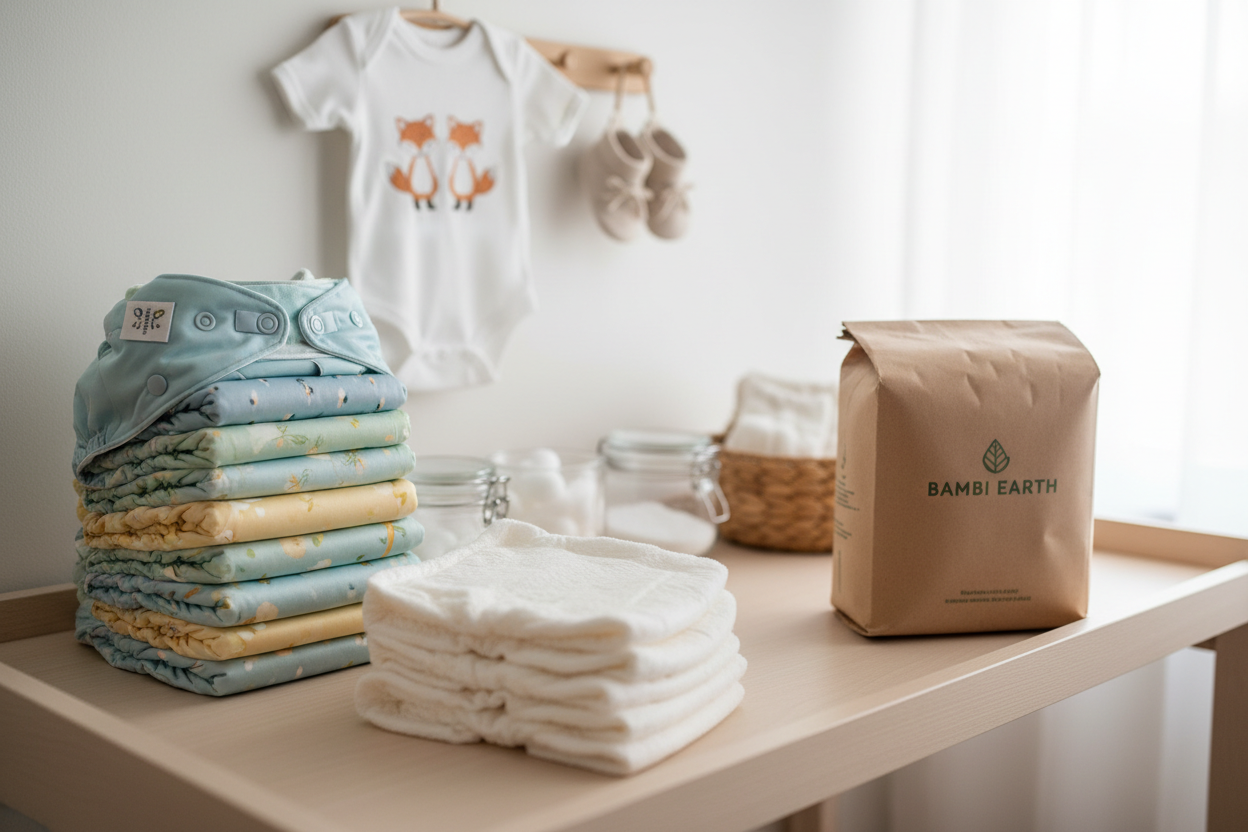
Eco-Friendly Diapering for Two: The Real Deal on Cloth vs. Bamboo Options
Last night I changed 14 diapers between my twins. That’s approximately 5,110 diapers per year—double the environmental footprint of a singleton. When you’re staring at twin mountains of dirty diapers, the environmental impact becomes impossible to ignore. Choosing sustainable twin parenting solutions isn’t just about being eco-conscious; it’s about managing the sheer volume in a way that won’t overwhelm your home, budget, or the planet.
For parents navigating the 2026 eco-diapering landscape, the cloth versus bamboo debate requires some serious consideration, especially when you’re doing everything twice.
The Environmental Math: Real Numbers on Diapering Twins
Before diving into options, let’s acknowledge what twin parents are up against:
| Diapering System | Annual Cost (Twins) | Environmental Impact | Laundry Load |
|---|---|---|---|
| Traditional Disposables | $2,400-3,000 | 2 tons landfill waste | None |
| Bamboo Disposables | $3,100-3,800 | 1.2 tons biodegradable waste | None |
| Hybrid Systems | $1,800-2,400 | 0.8 tons mixed waste | 3-4 loads weekly |
| Full Cloth System | $800-1,200 initial + $600 annual | 0.5 tons water/energy impact | 8-10 loads weekly |
These numbers reflect the latest 2026 production methods and materials, showing significant improvements in biodegradability across all options.
Cloth Diapering Twins: Practical Realities
When I committed to cloth diapering my twins, I quickly learned several truths that most single-baby guides never mention.
The Rotation Reality
For sustainable diapering twins, you need approximately 40-50 cloth diapers in your rotation. This isn’t just double a singleton stash—it’s insurance against the dreaded “both babies had blowouts while half your diapers are in the wash” scenario.
The latest antimicrobial bamboo inserts have dramatically reduced the stink factor compared to earlier generations. No more vinegar soaks or sunning diapers on your porch like it’s 1950.
The Washing Protocol
With twins, you’ll run a diaper load almost daily. Here’s my streamlined system:
1. Pre-rinse cycle with cold water
2. Main wash with hot water and plant-based detergent
3. Extra rinse to ensure no residue remains
4. High-efficiency dryer on medium or line-dry when possible
Using the new enzyme-activated detergents specifically designed for cloth diapers has cut my wash time by 30% and improved absorbency maintenance.
Bamboo Disposables: The Compromise Position
After six months of cloth diapering, I incorporated non-toxic nursery twins principles into my diapering approach and added bamboo disposables to our rotation. Here’s what I discovered:
The Biodegradability Factor
Modern bamboo diapers now decompose within 3-5 years versus the 500+ years for traditional disposables. The 2026 models use significantly less processing chemicals while maintaining absorption capacity.
The Subscription Math
When calculating for twins, subscription services for bamboo diapers can reduce costs by approximately 15-20%. However, even with discounts, you’re looking at an annual cost nearly three times that of cloth systems.
Twin Tactics: Pro-Level Shortcuts
- The 2-2-2 System: Keep two changing stations, two wet bags, and two diaper pails to minimize cross-contamination and streamline changes.
- Color-Coding: Assign each twin their own diaper color/pattern to track output patterns individually.
- Strategic Hybrid Use: Use cloth at home and bamboo disposables for outings and overnight to balance convenience and sustainability.
- Batch Prep: Pre-stuff and arrange 10-12 diapers at each station to enable one-handed changes while holding the other twin.
- Laundry Timing: Run diaper loads during off-peak electricity hours for environmental and cost savings.
Finding Your Balance: The Realistic Approach
The most sustainable diapering system for twins is the one you’ll actually stick with. Many twin parents find success with a hybrid approach:
– Cloth diapers for daytime home use
– Bamboo disposables for nighttime and outings
– Occasional traditional disposables during illness or travel
This balanced approach reduced our household waste by 65% compared to full disposable use, while keeping our sanity intact.
Building a Sustainable Twin Diaper Station
Your setup needs to accommodate double the volume without doubling the space. The new wall-mounted diaper organizers with sanitizing UV compartments have been game-changers for twin parents.
For cloth systems, invest in two large wet bags rather than a single diaper pail. This allows you to alternate loads without ever being without storage.
The Unexpected Benefits of Eco-Diapering Twins
Beyond the environmental impact, I’ve noticed:
1. Fewer diaper rashes with cloth and quality bamboo options
2. Earlier potty training awareness (around 22 months for my twins)
3. Significant cost savings by year two
4. Less frequent garbage disposal needs
The new moisture-sensing materials in both cloth and bamboo options have dramatically improved skin health outcomes compared to products available just a few years ago.
The Efficiency Expert’s Pro-Tip
Create a “diaper emergency kit” for each vehicle containing: two prefitted cloth diapers, four bamboo disposables, a mini wet bag, and a change of clothes for each twin. This hybrid approach ensures you’re never caught unprepared without sacrificing your sustainability goals during unexpected situations.
Best, Elena